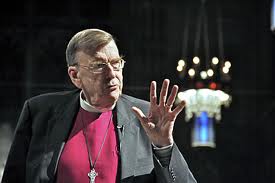
Jack concludes his five day lecture series by explaining the Crucifixion in the fourth Gospel. (filmed June 27, 2014) Our friends at College Street United Church in Toronto will be hosting Jack April 17-18, 2015. I shall post more details when they are available.
Jack explains how the 4th Gospel creates a symbol from the presence of Christ’s mother. This is the fourth lecture of a five lecture series. Filmed June 26, 2014 at the Chautauqua Institution.
Recorded last week (June 25, 2014) at Chautauqua, John Shebly Spong, doing what Jack does best, opening listeners to new ways of understanding the New Testament. Enjoy!
This week as the city of Toronto welcomes millions to the World Pride Celebration, it is so very appropriate that the lectionary provides a reading that has the potential to open us up to a more radical understanding of what WELCOME might mean for those who yearn to follow Jesus. This sermon on Matthew 10:37-42 uses two stories to posit questions about who Jesus might be. The context of World Pride provides us all with an invitation to welcome the ONE who comes to us in all sorts of shapes, sizes, and gender-identities. The imagined conversation with Jesus is taken from New Zealand preacher Clay Nelson’s excellent sermon on this text entitled “I Know I Am a Priest, But Am I A Christian?”.
There’s a story that I learned years ago when I was exploring the riches of the Buddhist religion and rediscovered in Wayne Muller’s LEGACY OF THE HEART. (p. 136)
There once was…. “A young widower, who loved his five-year-old son very much, was away on business, and bandits came, burned down his whole village, and took his son away. When the man returned, he saw the ruins and panicked. He took the charred corpse of an infant to be his own child, and he began to pull his hair and beat his chest, crying uncontrollably. He organized a cremation ceremony, collected the ashes, and put them in a very beautiful velvet pouch. Working, sleeping, or eating, he always carried the bag of ashes with him. One day his real son escaped from the robbers and found his way home. He arrived at his father’s new cottage at midnight, and knocked at the door. You can imagine, at that time, the young father was still carrying the bag of ashes and crying. He asked, “Who is there?” And the child answered, “It’s me, Papa. Open the door, it’s your son.”
In his agitated state of mind the father thought that some mischievous boy was making fun of him, and he shouted at the child to go away, and continued to cry. The boy knocked again and again, but the father refused to let him in. Some time passed, and finally the child left. From that time on, father and son never saw one another.Continue reading →
Marcus Borg, an elder of today’s progressive Christian movement, has commemorated his 70 birthday with the publication of Convictions: How I Learned What Matters Most. Convictions is destined to become a primer for all those who seek a succinct articulation of the faith progressives hold in common. In Convictions, Borg constructs a permeable framework within which those who are “living the questions” can explore the contours of the God “in which we live and move and have our being.” As a pastor serving a progressive congregation, I am delighted to have this new resource to share with those who are ReThinking Christianity.
I first encountered Marcus Borg during the summer of 1994, when a friend who was concerned that my preparations for seminary would lead me to a career in a church bereft of intellectual inquiry, gave me a copy of Meeting Jesus Again for the First Time. What a gift it was to meet in Borg a scholar who so simply and authoritatively articulated so much of what I’d been learning in the academy as an under-grad in Religious Studies. Borg’s books quickly became allies in my own quest for ways to express my growing frustration with institutional Christianity which seemed hell-bent on keeping its members ignorant of the exciting and enlightening work of New Testament scholars.
While sections of Borg’s memoir slip into reactions to the monolithic interpretations of the Jesus story that plague the United States and have served to bolster American Imperialism, those of us who live in the shadows of this Empire will appreciate Borg’s deconstruction of right-wing-christianity. Like his earlier work, Convictions is a must read for professional preachers and teachers who will find in it a review of progressive Christianity that is written in a manner that will inspire us to move beyond merely deconstructing conservative christianity and begin to articulate what it is that “progressives” hold in common.
As a “bit of a memoir” Convictions will engage readers from all walks of life, many of whom will discover in Borg a fellow traveller on an all too familiar journey. As always, Borg manages to express the Christian narrative in ways which embrace the riches of the tradition while opening his readers to current insights from academia into Christianity’s history. Rather than approaching the future with fear, Borg remains open to the ever-expanding knowledge of reality being generated in other fields of human endeavour and points to a way of being in God that does not rely on oversimplified personifications of a deity Borg knows as Mystery.
As an academic, Borg bravely revels his own mystical experiences. I have always suspected that Borg might be a closet mystic and his tentative accounts of his mystical experiences provide welcome insights into the bedrock of Borg’s being.
I am convinced that Borg’s Convictions will quickly achieve the status of text-book for those of us who seek ways of being Christian in the 21st century.
Fanning the Flames: a sermon for Pentecost Sunday:
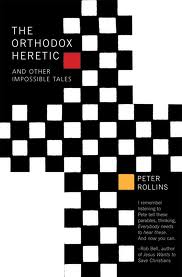
Pentecost is the birthday of the Church. Birthday celebrations lend themselves to the telling of stories. So, we begin with a parable by the radical theologian Peter Rollins. So, sit back and try to imagine that you live not at the beginning of the 21st century but at the middle of the 21st century; say about 2050. The world has changed quite a bit. “It seems that in the future laws will be passed declaring that all those who follow the teachings of Jesus are subversive. Churches have been banned and to be a follower of Jesus is illegal. You have just been accused of being a believer. You’ve been arrested, and dragged before a court. You have been under clandestine surveillance for some time now, and so the prosecution has been able to build up quite a case against you. They begin the trial by offering the judge dozens of photographs that show you attending underground church meetings, speaking at religious events, and participating in various prayer and worship services. After this, they present a selection of items that have been confiscated from your home: religious books that you own, worship CDs, and other Christian artifacts. Then they step up the pace by displaying many of the poems, pieces of prose, and journal entries that you had lovingly written concerning your faith. Finally, in closing, the prosecution offers your Bible to the judge. This is a well-worn book with scribbles, notes, drawings, and underlinings throughout, evidence, if it were needed, that you had read and reread this sacred text many times. Throughout the case you have been sitting silently in fear and trembling. You know deep in your heart that with the large body of evidence that has been amassed by the prosecution you face the possibility of a long imprisonment or even execution. At various times throughout the proceedings you have lost all the confidence and have been on the verge of standing up and denying Christ. But while this thought has plagued your mind throughout the trial, you resist the temptation and remain focused.
Once the prosecution has finished presenting their case the judge proceeds to ask if you have anything to add, but you remain silent and resolute, terrified that if you open your mouth, even for a moment, you might deny the charges made against you. Like Christ you remain silent before your accusers. In response you are led outside to wait as the judge ponders your case. The hours pass slowly as you sit under guard in the foyer waiting to be summoned back. Eventually a young man in uniform appears and leads you into the courtroom so that you may hear the verdict and receive word of your punishment. Once you have been seated in the dock the judge, a harsh and unyielding man, enters the room, stands before you, looks deep into your eyes and begins to speak. “On the charges that have been brought forward I find the accused not guilty.”
“Not guilty?” your heart freezes. Then, in a split second, the fear and terror that had moments before threatened to strip your resolve are swallowed up by confusion and rage. Despite the surroundings, you stand defiantly before the judge and demand that he give an account concerning why you are innocent of the charges in light of the evidence. “What evidence?” asks the judge in shock.
“What about the poems and prose that I wrote?” you ask. “They simply show that you think of yourself as a poet, nothing more.” “But what about the services I spoke at, the times I wept in church and the long, sleepless nights of prayer?” “Evidence that you are a good speaker and an actor, nothing more,” replied the judge. “It is obvious that you deluded those around you, and perhaps at times you even deluded yourself, but this foolishness is not enough to convict you in a court of law.” “But this is madness!” you shout. “It would seem that no evidence would convince you!” “Not so,” replies the judge as if informing you of a great long-forgotten secret. “The court is indifferent toward your Bible reading and church attendance; it has no concern for worship with words and a pen. Continue to develop your theology, and use it to paint pictures of love. We have no interest in such armchair artists who spend their time creating images of a better world. We exist only for those who would lay down that brush, and their life, in a Christlike endeavor to create a better world. So, until you live as Christ and Christ’s followers did, until you challenge this system and become a thorn in our side, until you die to yourself and offer your body to the flames, until then, my friend, you are no enemy of ours.” “
Rollins insists that this parable is true right here and right now. We don’t have to imagine a world were Christianity is illegal for this parable to be true. Rollins insists that: “If you or I were really to take the teachings of Jesus seriously, would we not sooner or later, find ourselves being dragged before the authorities? If we were really to live a life that reflected the subversive and radical message of love that gives a voice to the voiceless and a place to those who are displaced, if we were really to stand up against systemic oppression perpetrated by those in power, then would we not find ourselves on the wrong side of the lawmakers?”
On this the birthday of the church, we would do well to remember the stories our ancestors wove together about what it was like back in the beginning. Sure it was like they were on fire! There they were huddled together in fear. Afraid to go outside, incase the authorities might spot them. Tormented by their grief. Afraid the dream might be over. Some of them were even considering giving up and giving in. The Romans were just too big, too entrenched, too powerful, they didn’t stand a chance against the powers that be. Just look what they did to Jesus. Jesus had dared to speak out. Jesus had dared to challenge it all, the Empire, the religious institution and the culture itself, all in the name of freedom. Jesus had tried to set us free from the oppression of the Empire, from the power of the religious authorities, free from our prejudices, free from the lure of our own self-centeredness. Jesus had tried to let us see that there was so much more to life than survival. Jesus had taught us so much, helped us to question so much. And look where it got him. The powers that be had done their very worst and know Jesus was dead. Sure there were those who insisted that Jesus wasn’t gone, that they felt his presence, that there was no need to give up or given in, that we could still change the world. But, what to do? How do we go on? And then it was as if we were on fire! Suddenly we were alive with all that Jesus had taught us. You should have been there as the flames of justice flashed about igniting us with passion, with courage, with love. Oh we had fire in our bellies! Yes it was chaos back then with everyone from all over the place talking all at once, putting their two cents worth in to the mix. But stuff got done. We changed the world because the very Spirit of God that lived and breathed in Jesus, was living and breathing in us. You should have seen us back then; we were on fire; so much so that people came from far and wide just to try and figure out what had given us the courage to be who we were created to be.Continue reading →
These have been difficult days at Holy Cross as the results of our financial pledging program forced us to face some unpleasant realities about our ambitious hopes for the future of our ministry together. Last Sunday we announced that we could not see a way beyond the end of this year to maintain our current level of Team Ministry. This week we have grappled with the unpleasant possibility that without the necessary funding we might not be able to ensure Pastor Tom’s half-time position and indeed, Pastor Dawn’s full-time position was not assured. Toward the end of this week Council was made aware that two families have come forward with generous pledges that will allow us to maintain the current level of Team Ministry until the end of 2016. While these gracious pledges still leave us with projected deficits of approximately $10,000.00 each year, we are confident that together we can meet these needs. Holy Cross is a small community, just 47 households that graciously support many ministries, including this blog. Not many small congregations stretch themselves in the way that Holy Cross continues to stretch, employing one full-time and one half-time pastor, and a part-time musician, while bringing world-class speakers to challenge the wider community to ReThink Christianity, engaging in a lively adult education program, supporting a generous outreach program, producing splendid worship and music, engaging in a first rate Global Justice program, all while coping with the challenges of our building.
This sermon is an attempt to articulate the roller-coaster ride that we have been on this week and embrace the nature of the intensity of our wonderful life together in, with, through, and beyond the Reality we call God.
You can listen to the sermon here:
Here’s the Leonard Cohen song Anthem which haunts this sermon:
Peter Rollins is a master at disrupting that which we have become unaware is there in order to open his listeners to transformation. Recorded March 15, 2014
Way back when I first began going to church, I had one of those bibles…and I dare say many of you have probably had one too…I had a red-letter bible. For those of you who’ve never had one, a red-letter bible is a bible where all the words of Jesus are printed in red and for a long time I actually believed that if it was printed in red, then Jesus actually must have said it and there are hundreds of thousands, possibly millions of Christians who still believe that if they are printed in red they are the actually words of Jesus.
When I first began reading the New Testament, many of those red-letter words were difficult to read. The 14th chapter of the Gospel according to John was just one of the many texts that I read with great trepidation. “I am the way, the truth and the life no one comes to the Father except through me.” These particular words in red led me to believe that my family and most of the people I loved, were doomed, because they didn’t believe in Jesus. So, you can imagine my delight when I went to a young adults’ retreat and one of the pastors told us that just because words are printed in red, it doesn’t mean that Jesus actually said those words. I remember going back to my home parish and asking my pastor why he never told us about the things he was taught at the seminary about the words of Jesus and I can still hear him answering, “Most laypeople aren’t ready to hear that. It would destroy their faith.”
It’s an old argument amongst the clergy. It’s as if some of, “them” whoever “they” are, believe that the world as they know it will come to an end as they know it if they were to let lay-people in on the secrets of the trade. Should we or should we not teach laypeople about the historical critical methods that we all learned in seminary. When I say we all learned, I’m talking about the vast majority of clergy from the mainline denominations, like the Lutheran church, the Anglicans, the United Church, Mennonites, even Roman Catholics, and I dare say more than a few Baptists. We all learn the historical critical methods that academic scholars have been perfecting over the years. But the sad truth is that very few of us actually teach the historical critical methods that we have learned when we get into the parish. Many of my colleagues still argue that either laypeople aren’t ready to hear it, or that they don’t want to hear it. Either way, they’re not about to start preaching it from the pulpit and run the risk of destroying people’s faith. Besides, the folks who clearly don’t want to hear any of it just might run them out of town.
I’ve never really understood this attitude. I think perhaps the fact that as a layperson I was relieved to hear that Jesus didn’t actually say all the stuff that’s printed in red. So, from the beginning, I’ve always tried to teach the historical critical methods that I have learned to apply to my own study of the bible.Continue reading →
In a world where rape remains an weapon of war as whole populations are transformed into refugees, in a nation where the number of aboriginal women murdered soars above a thousand, in communities where mothers continue to struggle to feed, cloth, and house their children, there is no time for sappy sentiments on the day established to call for peace. Peace can only be achieved through justice and justice for mothers requires action by women and men everywhere.
Preachers have several choices when it comes to proclaiming the Gospel on Mothers’ Day. We can of course ignore the fact that it is Mothers’ Day. After all Mothers’ Day does not appear on the Church calendar of feasts and commemorations. However, Mothers’ Day is reported to be the third highest attendance day; out numbered only by Easter and Christmas! I suspect that a great many offspring choose the day to placate their mothers. So ignoring the event seems like adding insult to injury to those guilt-ridden offspring who hope that their efforts won’t go unnoticed. Sadly, the presence of the Christmas and Easter crowd, all too often tempts the preacher to resort to sentimentality in order to entertain the infrequent worshippers. The history of the creation of Mothers’ Day ought to compel preachers to resist temptation and find the courage not to compromise.
Most of us think of Mothers’ Day as a kind of conventional holiday that celebrates traditional family values; the kind of traditional values that encourage women who are mothers to keep on keeping on. But celebrating the traditional motherhood is definitely not what Mothers’ Day was originally intended for. The very first Mothers’ Day was intended to be a celebration not just of mothers, but rather it was designed to be a call to action by all women.
One of the first founders of Mother’s Day was Anna Jarvis back in 1858. Anna Jarvis gathered women of the Appalachian mountains together in what she called mother’s day work clubs. Where women worked together to eliminate poverty. When the Civil War came about, the mother’s day work clubs created medical camps. They were places of nonviolence for men from both sides who were wounded in the war.
At the end of the Civil War, Anna Jarvis organized the Mother’s Day Friendship Day, which was a call for radical peace. Anna Jarvis brought together the leaders from the north and the south for a time of reconciliation. Mother’s Day was originally about reconciliation and peace.
Then along came a woman named, Julia Ward Howe who wrote “The Battle Hymn of the Republic”. Julia Ward Howe called for women to protest the cruelties of war everywhere and to gather together to call for peace. She called for a national day of peace for all women. She issued women’s’ declaration, and from the streets women shouted :
“Arise then women of this day, arise all women who have hearts, say firmly our husbands shall not come to us reeking with the carnage for caresses and applause. Arise women of peace.”
Anna Jarvis’ daughter also named Anna Jarvis approached President Wilson and petitioned for a national Mother’s Day. It was Woodrow Wilson who called for the second Sunday of May to be the national Mother’s Day. Shortly thereafter, n anti-suffragette movement spoke out against the women who were calling for peace. So instead of being a day for women who were active and present in the world, it became a day to celebrate mothers who stayed at home with the children.
Anna Jarvis the founder of Mother’s Day was so angry with Woodrow Wilson that she filed a law suit, that petitioned the courts to put a stop to Mother’s Day because as the court papers insisted, instead of it being run by women, suddenly Mother’s Day was being run by men in an effort to keep them in the house barefoot and pregnant.
Sadly, the world was not ready for such strong willed women to shout out loud. And so, Anna Jarvis was arrested at a Mother’s Day celebration and she spent the rest of her life in a sanatorium?
On mothers’ day we would all do well to remember Julia Ward Howe’s Mothers’ Day Proclamation. Dated 1870 but sadly it is still so very relevant today:
“Arise, then, women of this day! Arise, all women who have hearts, whether your baptism be that of water or tears!
Say firmly: “We will not have great questions decided by irrelevant agencies. Our husbands shall not come to us, reeking with carnage, for caresses and applause. Our sons shall not be taken from us to unlearn all that we have taught them of charity, mercy and patience. We women of one country will be too tender of those of another to allow our sons to be trained to injure theirs.”
From the bosom of the devastated earth, a voice goes up with our own. It says, “Disarm, Disarm!” The sword of murder is not the balance of justice. Blood not wipe out dishonor, nor violence indicate possession. As men have often forsaken the plow and the anvil at the summons of war, let women now leave all that may be left of home for a great and earnest day of counsel. Let them meet first, as women, to bewail & commemorate the dead. Let them solemnly take counsel with each other as to the means whereby the great human family can live in peace, each bearing after his own time the sacred impress, not of Caesars but of God.
In the name of womanhood and of humanity, I earnestly ask that a general congress of women without limit of nationality may be appointed and held at some place deemed most convenient and at the earliest period consistent with its objects, to promote the alliance of the different nationalities, the amicable settlement of international questions, the great and general interests of peace.”
To those of you who continue to point out that the Mothers’ Day apostrophe belongs between the r and the s, all I can say is: “Move it!” Until we can move beyond thoughts about our very own mother to the realization that mothers everywhere are worthy of celebration the vision of peace that this day is designed to call us all toward will remain but a dream. Let this day be about mothers everywhere!!! Moving the apostrophe is but a small reminder that the holiday does not belong to any individual mother but to mothers every where!!! Let peace break out this Mothers’ Day!!!
For additional resources for the celebration of MOTHERS’ DAY click here to listen to a MOTHERS’ DAY sermon click here
This sermon was inspired on my own journey to Emmaus where in the space of the same afternoon I heard a stranger declare: “Christianity is dead!” and Karen Armstrong’s now famous TED talk about her call for a world Charter for Compassion.
Has anybody here ever been to Emmaus? Which one? According to the latest issue of Biblical Archeology there are at least nine possible locations that are candidates for the Biblical town of Emmaus. Historians tell us that there is no record of any village called Emmaus in any other ancient source. We simply don’t know where Emmaus might have been. Tradition, tells us that it might have been a place just a few hours walk from Jerusalem. New Testament scholar, Marcus Borg suggests that Emmaus is nowhere. Emmaus is nowhere precisely because Emmaus is everywhere. Each and every one of us has at one time, or indeed for some of us, many times, traveled along the road to Emmaus.
I know that I have been on the road to Emmaus most of my life. I’ve had lots of company on the Road to Emmaus. I’ve had many conversations along the way discussing, with anyone who’d care to accompany me, the ifs, ands, and buts of Christianity, of religion, and indeed of life. If you haven’t traveled down the road to Emmaus you must be very skilled in the fine art of turning off your brain and if you check you just might discover that your heart isn’t actually beating.
It’s so easy to imagine, those two characters striding down the Road to Emmaus that we can almost hear them talking, maybe even arguing about what happened. What on earth were they to make of all this! Jesus was supposed to be the Messiah. Jesus was the One who had come to liberate Israel, to free the people from oppression. Jesus was the One who was supposed to draw the people back to God, restore the relationship between God and God’s people. Now Jesus was gone, and what had changed? Now, Jesus was gone, and the Roman Empire was still oppressing them, still inflicting such pain and hardship, still killing them. Was it all a mistake? Was it all a lie? Had they been fooled by some kind of cruel hoax—were they wrong to put their hopes in this man from Nazareth? They had trusted Jesus believed in Jesus, followed Jesus. Their lives had been changed. They had seen the lives of others changed and they had expected even greater changes to come. Jesus had confronted corrupt powers. Jesus had charmed great crowds. Jews and Gentiles alike responded to the truth of Jesus’ teaching. Rich and poor had come to Jesus, believing in Jesus’ healing power. But Jesus had been shamed, and ridiculed, and humiliated, and crucified and now Jesus was dead. Well, was Jesus dead? Some said they’d seen Jesus, alive! Not that Jesus had survived the crucifixion by some miracle of strength, but that Jesus had risen from the dead. They seemed so totally convinced by their own experience…were they confused by their own grief? Were they delirious? Had they loved this Jesus so much—invested so much hope in Jesus life and leadership—that they simply could not let him go? And what did ‘resurrection” mean? Apparently it was not the resuscitation of a corpse. Jesus wasn’t revived to resume his former life; to take up his broken body until the day he might die again. No, somehow this was some new mode of being that seemed to be spiritual to some and yet real to others. And, if Jesus were risen from the dead, what would be the point of all that? What was the point to a Messiah—to a presumed political and religious leader—if Jesus wasn’t able to lead people here on earth? How could Jesus restore Israel when he had so easily been defeated by a handful of Roman guards? How could he bring release to the captives, how could he bring justice for the poor, how could Jesus advocate for the widows and the homeless? How could Jesus call people to account for all the ways they had strayed from God’s intent, now? What good could come from some kind of spiritual ghost? We can hear these two friends wrestling with each other and with their own hearts on the road that day!Continue reading →
This Sunday the gospel text invites us to travel down our own road to Emmaus. Stephane Brozek Cordier is a poet whose words have the power to open us to our deepest wonderings as we wander down that road.
John Philip Newell is a poet, author, and peacemaker. He is the co-founder of Salva Terra: A Vision Towards Earth’s Healing. Formerly Warden of Iona Abbey in the Western Isles of Scotland, he is currently Companion Theologian for the American Spirituality Center of Casa del Sol at Ghost Ranch in the high desert of New Mexico. For more about Newell follow this link Newell’s progressive insights are permeated by his deep understanding of Celtic spirituality. It is no surprise then that Newell calls for a renewed understanding of the sacredness of matter.
In response to the current crisis of institutional Christianity, Newell sees three responses: denial of the crisis, shoring up of the old, or to ask “What is it that is trying to be born? What is it that is trying to emerge from the human soul and how can we within the Christian household be part of leading that and serving it with humility?” Newell’s gentle invitation is challenging the church to serve the deep knowing that is in the hearts of people everywhere and to empower the deep knowing of the sacredness of the knowings that come up from the deepness of our being which is of God.
It happens every year as Doubting Thomas makes his Easter appearance. It’s a kind of resurrection of a glimmer of the faith that I long to recall in my flesh. I harken back to the time when I could embrace those wounds as proof. Oh how that faith comforted me. Resurrecting the memory of Thomas, who for years functioned as a trusted hero in my scant faith, now sends me into the dream of belief as the answer in and of itself; a kind of innocence that once gone is never forgotten. My nostalgia for my faith in belief will pass. But for just a moment or two, I pause to embrace the wounds, waiting for my doubts to open me to the evolving reality of now. Jump!!!
Now that Holy Week has come and gone and we are shouting our Alleluias, perhaps we can begin to turn our minds to the expectation of some sacred downtime. Barbara Brown Taylor is a preacher from whom I have learned so very much. I am currently enjoying the luxury of enjoying her latest book for the first time. Taylor’s earlier books are like old friends that I return to often. So her latest book, Learning to Walk in the Dark holds all the promise of a new treasured friendship. While searching for a video to introduce her new book, I came upon this video, recorded in the spring of 2009 and only recently posted online, in which Taylor offers a welcome reminder of the contours of downtime. Looking forward to a few busy weeks, and longing for those lazy, hazy days of summer, Taylor has reminded me to stop and luxuriate in the splendour of springtime. So, rather than speed through Learning to Walk in the Dark, I shall take my time and write about it when we’ve become better friends. In the
meantime enjoy Sacred Downtime…..

 Jack concludes his five day lecture series by explaining the Crucifixion in the fourth Gospel. (filmed June 27, 2014) Our friends at College Street United Church in Toronto will be hosting Jack April 17-18, 2015. I shall post more details when they are available.










 pastordawn