While Preachers Dutifully Ponder the Doctrine of the Trinity, Our Congregations Shrink???

This Sunday is Trinity Sunday.  In anticipation, preachers all over the world are dutifully pondering the Doctrine of the Trinity desperately searching for something to say to encourage their congregations.

Preachers will trot out tired old clichés conjuring up images of triangles, shamrocks around, or point to H20’s ability to appear as water, ice, or steam while still maintaining it’s unified essence. Or have you heard the one about the 3 blind men and the elephant in the room. That old chestnut is trotted out by many a desperate preacher struggling to put flesh on the doctrine of the trinity. But for the life of me I can’t see how 1 blind man touching the elephant’s trunk and presuming that there is a tree in the room, while a second blind man catching wind of the elephant’s ear is convinced that there is some sort of giant fan in the room, while a third man grabs hold of the tail and is sure that he has hold of a rope, helps you to conclude that just because they’re all sharing a room with an elephant you can now confess that God is indeed Father, Son, and Holy Spirit, one God, forever and ever amen. But all sorts of mental gymnastics will be exercised in the vain attempt to make some sort of sense of the doctrine of the Trinity!

On Trinity Sundays, mindful of the fact that trying to explain the doctrine of the Trinity usually leads to heresy: dusty theological books that have not seen the light of day since last Trinity Sunday have been poured over to ensure that the formula’s learned in seminary are repeated correctly and heresy scrupulously avoided. The imaginative among us have attempted to baffle our congregations with our theological intellect, the pragmatic among us have attempted to baffle our congregations with something akin to BS, while the desperate among us have simply tried to survive the Trinity Sunday hoping against hope that no one will notice that we haven’t a clue what we’re talking about.

Perhaps only dear old Dr. Martin Luther possessed the theological integrity sufficient to save a preacher from the perils of preaching on Trinity Sunday. So, before I launch, forth, let me remind you what the instigator of the Reformation had to say on the subject of the Trinity. Martin Luther warned that: “To deny the Trinity is to risk our salvation; to try and explain the Trinity is to risk our sanity.”

I will confess that Martin Luther had much more at stake, literally at stake, than I do, because the truth is that for centuries the punishment for heresy would have found many an ancient preacher burned at the stake. But while the death penalty for heresy has been lifted, the risk to one’s sanity remains.

Now, I will confess that when faced with a particularly difficult theological knot, I prefer to begin by quoting Jesus and not Luther, but alas Jesus remained silent on the issue of the Trinity. So, I did try to find something helpful in the words of the Apostle Paul. But alas, without some really amazing theological gymnastics that are beyond my abilities to comprehend, even the Apostle Paul remains mute on the issue of the Trinity. So keeping in mind Dr. Luther’s dire warning that to,  “To deny the Trinity is to risk our salvation; but to try and explain the Trinity is to risk our sanity.”

Let me remind you that the Trinitarian formula appears in Scripture only once, in Matthew 28, during what is called the Great Commission, when Jesus commands the disciples to go forth, baptizing in the name of the Father, and of the Son, and of the Holy Spirit. But the doctrine of the Trinity does not appear in the Bible

– The doctrine of the trinity, as we know it, was first formulated in the fourth century, by a couple of guys named Gregory and a woman called Marcrina.

– The doctrine of the Trinity was then developed over hundreds of years

– The doctrine of the Trinity was at the heart of several wars

– Thousands of Christians were killed because they came down on the loosing side of arguments over the doctrine of the Trinity

– No one has ever been able to adequately explain the Trinity

– Every explanation of the Trinity that I have ever come across includes some form of heresy

By the way, just so we’re clear, I rummaged through some of my previous sermons on the doctrine of the Trinity and I must confess that if this were the twelfth century, an angry mob would be stoking up the fires beneath my feet  because based on things I have proclaimed on various Trinity Sundays a charge of Modalism could very successfully be laid against me, as could a charge of Sabellianism. You might be interested to know, that more traditional preachers than I, will no doubt preach sermons this Sunday which will prove them guilty  of Arianism or at the very least Subordinationism. All of these heresies in a bygone age would have left us with a severe shortage of clergy in the church, as many of us would be smoldering at the stake for our crimes. Deciding who is right and who is wrong, who is in and who is out is a deadly preoccupation of humanity, a preoccupation that the church has not been able to escape. Continue reading

Pentecost: A Human Phenomenon

flaming tonguesIn the Spirit of Pentecost, I preached without a manuscript and conscripted the congregation into helping me to describe mystical experiences. The cacophony of voices you will hear captures what happened. If you fast forward past the congregational uproar you will hear a recap using Rudolph Otto’s description of the experience o the Numinous which he describes as “Mysterium, Tremendum et Facinans – Mysterious, Tremendous and Fascinating. 

You can listen to the sermon here

Multi-coloured Meanings of those Red-letter Words in John 14:1-14

coloured pencilsWay back when I first began going to church, I had one of those bibles…and I dare say many of you have probably had one too…I had a red-letter bible. For those of you who’ve never had one, a red-letter bible is a bible where all the words of Jesus are printed in red and for a long time I actually believed that if it was printed in red, then Jesus actually must have said it and there are hundreds of thousands, possibly millions of Christians who still believe that if they are printed in red they are the actually words of Jesus.

When I first began reading the New Testament, many of those red-letter words were difficult to read. The 14th chapter of the Gospel according to John was just one of the many texts that I read with great trepidation. “I am the way, the truth and the life no one comes to the Father except through me.” These particular words in red led me to believe that my family and most of the people I loved, were doomed, because they didn’t believe in Jesus. So, you can imagine my delight when I went to a young adults’ retreat and one of the pastors told us that just because words are printed in red, it doesn’t mean that Jesus actually said those words. I remember going back to my home parish and asking my pastor why he never told us about the things he was taught at the seminary about the words of Jesus and I can still hear him answering, “Most laypeople aren’t ready to hear that. It would destroy their faith.”

It’s an old argument amongst the clergy. It’s as if some of, “them” whoever “they” are, believe that the world as they know it will come to an end as they know it if they were to let lay-people in on the secrets of the trade. Should we or should we not teach laypeople about the historical critical methods that we all learned in seminary. When I say we all learned, I’m talking about the vast majority of clergy from the mainline denominations, like the Lutheran church, the Anglicans, the United Church, Mennonites, even Roman Catholics, and I dare say more than a few Baptists. We all learn the historical critical methods that academic scholars have been perfecting over the years. But the sad truth is that very few of us actually teach the historical critical methods that we have learned when we get into the parish. Many of my colleagues still argue that either laypeople aren’t ready to hear it, or that they don’t want to hear it. Either way, they’re not about to start preaching it from the pulpit and run the risk of destroying people’s faith. Besides, the folks who clearly don’t want to hear any of it just might run them out of town.

I’ve never really understood this attitude. I think perhaps the fact that as a layperson I was relieved to hear that Jesus didn’t actually say all the stuff that’s printed in red. So, from the beginning, I’ve always tried to teach the historical critical methods that I have learned to apply to my own study of the bible. Continue reading

What’s a Meta FOR? Shepherds and Gate-keepers: a sermon for Easter 4A – John 10:1-10 and Psalm 23

John chapter 10 causes me to remember Mrs Tanner, my grade ten english teacher. I can still see her handwriting all over my carefully crafted compositions. Red ink everywhere as she constantly admonished me not to mix my metaphors. Clearly the writer of the Gospel of John never had the benefit of Mrs. Tanner’s guidance, or he would not have dared to record Jesus words the way he does in his long and rambling I AM passages.

Before we even get to chapter 10, we read that Jesus says:  “I AM the bread of life.”  and “I AM the light of the world.”  In chapter 10, we read, Jesus says, “I AM the gate,” “I AM the Good Shepherd.” Later we will read, that Jesus says, “I AM the Resurrection”, “I AM life.” “I AM the true vine.”  “I AM the way.” “I AM in God.” “I AM in you.”

But in the tenth chapter the writer of the Gospel of John goes all out and has Jesus using not just a metaphor but a mixed metaphor. For in chapter 10, we read that Jesus declared: “I AM the Gate. The gate through which the sheep must pass.” and then mixes it up by saying,  “I AM the Good Shepherd.”

Which is it? Gate or Shepherd, come on, I know your Jesus but I’m trying to understand how Jesus, who is after all, the lamb of God who takes away the sin of the world is both the Gate and the Shepherd.

I wonder if Mrs. Tanner ever took her red pen to the Gospel According to John? If she did, the letters MMX would have appeared all over this Gospel. MMX = mixed metaphor wrong! Looking back, I know that Mrs Tanner was just trying to help us to be more careful about our ideas. But today I would have to ask of her, and indeed of the writer of the Gospel of John, “What’s a meta for?” Continue reading

A Way to Understand the Resurrection – Richard Holloway

Peter Callesen's Papercut Resurrection

Peter Callesen’s Papercut Resurrection

Richard Holloway, the former Primate of the Scottish Episcopal Church, interprets the story of the resurrection not as an historical tale, but as our own story. Holloway has written of his longing for a humbled and broken church. His own humility and brokenness shines through this video as Holloway embodies his own longing.

Humpty Dumpty, Doubting Thomas, and Resurrection – John 20:19-31 – Easter 2A

humpty dumptyChrist is Risen! Christ is Risen Indeed! Alleluia! Here we are still in the early days of the fifty daylong celebration of Easter and I’m already wondering how long we should keep chanting that Christ is risen! Sometimes, it seems that after the first flush of Easter Sunday’s excitement, our shouting that Christ is Risen sounds a little like we doth protest too much. The crowds of Easter are pretty much gone and churches all over Christendom are trying to keep up the excitement with the remnant of believers who turn up at church more often than Christmas and Easters. Our shouts of Christ is risen seem a little feeble; almost as if we are trying to convince ourselves that the celebrations of last Sunday actually mean something. After all it’s pretty safe to shout that Christ is risen in church. Nobody is going to challenge us in here about what we mean by that. But what if we were shouting that Christ is risen on the street corners or at work? Would we be comfortable telling people what we mean?

Christ is risen! Are we really willing to shout when it comes to declaring our belief in the resurrection? And if we are willing to shout about the resurrection, what is it that we would be shouting about? After all people have been arguing about the resurrection ever since the rumors about the empty tomb first began and after 21 centuries we still can’t agree what happened to Jesus after he died. Over the centuries the word resurrection has taken on so much baggage that it is difficult for many of us to talk about resurrection because we all bring so much to the conversation whenever we try to discuss it. Most of us grew up believing that we needed to believe in physical resurrection in order to belong. So we have learned to accept that resurrection means the physical resuscitation of a corpse. Yet even the stories that we tell in church don’t necessarily insist that Jesus physically rose from the dead.

The Irish novelist who wrote the famous book about his childhood in Ireland called Angela’s Ashes, also wrote a less famous book about his early years as a teacher in the United States. The book was called T’is and even though it didn’t sell quite as well as his first novel, McCourt’s I love it because it lends some keen insights into a teaching and teaching is one of the things I love about being a pastor. McCourt tells a story about Humpty Dumpty that illustrates some of the difficulties we face when we begin a discussion of the resurrection. McCourt tells his class the story of Humpty Dumpty to his class and for a whole class period there’s a heated discussion of “Humpty Dumpty” itself. (I’m using the term “itself” because no where in this English nursery Rhyme does it indicate what gender Humpty Dumpty is) In McCourt’s class Humpty Dumpty’s gender was automatically assumed to be male. But it was the sixties and so nobody argued about Humpty’s gender when McCourt recited the well known rhyme: “Humpty Dumpty sat on the wall, Humpty Dumpty had a great fall; All the kings horses And all the king’s men Couldn’t put Humpty together again.” Then Frank asked his class what is going on in the nursery rhyme and all the hands shot up to say things like: This egg falls off the wall and if you study biology or physics you know that you can never put an egg back together again. I mean it’s common sense really. That’s when Frank asked the question that set the class at odds with him. “Who says it’s an egg? Of course it’s an egg! Everyone knows that! Where does it say that it’s an egg? The class is thinking. They’re searching the text for egg, any mention, any hint of egg. They just won’t give in. There are more hands and indignant assertions of egg. All their lives they knew this rhyme and there was never any doubt that Humpty Dumpty was an egg. They’re comfortable with the idea of egg and why do teachers have to come along and destroy everything with all this analysis. McCourt insists that he’s not destroying. He just wants to know where they got the idea that Humpty Dumpty is an egg. Because the class insists, it’s in all the pictures and whoever drew the first picture must have known the guy who wrote the poem or he’d never have made it an egg. So Frank says, All right. If you’re content with the idea of egg we’ll let it be but I know the future lawyers in this class will never accept egg where there is no evidence of egg. And so by tacit agreement Humpty Dumpty becomes now and always an egg. (I am indebted to Bernard Brandon Scott’s reminder of the story about Humpty Dumpty in  Frank McCourt’s novel “T’is”)

For me the subject of the resurrection of Jesus has a great deal in common with Humpty Dumpty because by some sort of tacit agreement it was decided long ago that the resurrection of Jesus just has to be a physical resuscitation of a corpse; this despite the fact that the earliest writer on the subject of the resurrection, the Apostle Paul denies that the resurrection of Jesus was a physical resuscitation of a corpse. Continue reading

PRACTICING RESURRECTION – a sermon for the 2nd Sunday of Easter

resurrectionFor this sermon I used a video within the sermon to help illustrate resurrection. You can view the video within the written text of the sermon below or listen to the audio version provided. I am indebted to the work of James Rowe Adams for much of the New Testament Scholarship in this sermon.

The Scripture texts were John chapter 20:19-31 and Acts 4:32-35

Audio Version of the Sermon click here

Practicing Resurrection

Christ is Risen! Christ is Risen indeed!  Alleluia! So, Christ is Risen!  So What???What can it possibly mean to you and to me, that a rag-tag bunch of Jesus’ followers gathered together in an upper-room and talked about their experiences of Jesus and decided that not even death could extinguish the life that they experienced in Jesus? What difference does it make to you or to I that Christ is risen? The truth is that it can make absolutely no difference what so ever. Now there are a whole lot of people who will tell you that the important thing about resurrection is that you believe it. Those same folks absolutely love the story of doubting Thomas. And so every year on the second Sunday of Easter we read the story of doubting Thomas as a kind of inoculation against Thomas’ disease.

I sometimes think that the designers of the lectionary were trying to build up our resistance to doubt. Having problems believing in resurrection, well don’t do what Thomas did, don’t doubt, because you’ll be proven wrong. Jesus is alive, the wounds in his hands proved that to Doubting Thomas, so have no doubt about it the resurrection happened!  Believe in the resurrection!

The trouble with believing in stuff is that it belief can make absolutely no difference what so ever. I can believe in justice for all, but unless I’m prepared to seek justice, to be fair, or to resist injustice, it makes absolutely no difference what so ever. You can shout, “Christ is risen!” all you want but unless you are willing to live it, the resurrection means very little at all. In order to live the resurrection you have to begin practicing resurrection. In order to practice something, you have to know what it looks like, what it sounds like, or what it feels like.

I’ve been trying to figure out how to show you what resurrection looks like in the flesh. Then I remembered a video that’s been doing the rounds on the internet, so I want you to watch this modern miracle of resurrection.

WATCH THE VIDEO CLIP FROM:  Alive Inside

Christ is Risen! Christ is Risen indeed!  Alleluia!  Almost 2000 years ago, a bunch of rag-tag Jesus followers were huddled together in fear. Their beloved leader had been brutally executed by the powers that be and they were terrified that they would be next. Paralyzed by their fear, hiding behind a locked door, something happened that gave them the strength to burst forth from their own tomb and change the world. Continue reading

While We Wait for Resurrection: a reminder from John Shelby Spong

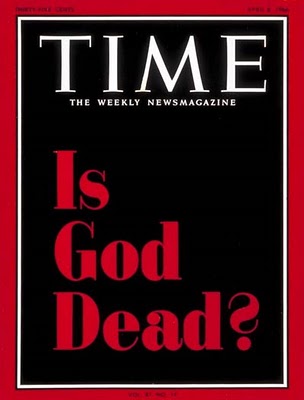
God Is Dead? – Good Friday Sermon April 18, 2014

time-is-god-deadThis Good Friday sermon was born of the theological struggles our congregations has engaged in over the past few years. It mirrors our theological journey. This year members and friends of our congregation engaged in an “Atheism for Lent” study and so the sermon begins with a parable from an atheist critique of Christianity. I am grateful to the members and friends of Holy Cross Lutheran Church for the courage and wisdom they have shared with one another as together we seek to know the unknowable. You can listen to the audio of the sermon or read the manuscript.

Jesus of Nazareth taught using parables. So, in the shadows of the horrors of the cross, let us turn to a parable; not one of Jesus’ parables, but a modern parable. This parable was first told in 1887. It was reprinted in 1969, in the Time Magazine that bore the iconic “Is God Dead?” cover.

“Have you not heard of that madman who lit a lantern in the bright morning hours, ran to the market-place, and cried incessantly: “I am looking for God! I am looking for God!” As many of those who did not believe in God were standing together there, he excited considerable laughter. Have you lost him, then? said one. Did he lose his way like a child? said another. Or is he hiding? Is he afraid of us? Has he gone on a voyage? or emigrated? Thus they shouted and laughed.

The madman sprang into their midst and pierced them with his glances. “Where has God gone?” he cried. “I shall tell you. We have killed him – you and I. We are his murderers. But how have we done this? How were we able to drink up the sea? Who gave us the sponge to wipe away the entire horizon? What did we do when we unchained the earth from its sun? Whither is it moving now? Whither are we moving now? Away from all suns? Are we not perpetually falling? Backward, sideward, forward, in all directions? Is there any up or down left? Are we not straying as through an infinite nothing? Do we not feel the breath of empty space? Has it not become colder? Is it not more and more night coming on all the time? Must not lanterns be lit in the morning? Do we not hear anything yet of the noise of the gravediggers who are burying God? Do we not smell anything yet of God’s decomposition? Gods too decompose. God is dead. God remains dead. And we have killed him. How shall we, murderers of all murderers, console ourselves?  That which was the holiest and mightiest of all that the world has yet possessed has bled to death under our knives. Who will wipe this blood off us? With what water could we purify ourselves? What festivals of atonement, what sacred games shall we need to invent? Is not the greatness of this deed too great for us? Must we not ourselves become gods simply to be worthy of it?  There has never been a greater deed; and whosoever shall be born after us – for the sake of this deed he shall be part of a higher history than all history hitherto.”

Here the madman fell silent and again regarded his listeners; and they too were silent and stared at him in astonishment. At last he threw his lantern to the ground, and it broke and went out. “I have come too early,” he said then; “my time has not come yet. The tremendous event is still on its way, still travelling – it has not yet reached the ears of men. Lightning and thunder require time, the light of the stars requires time, deeds require time even after they are done, before they can be seen and heard. This deed is still more distant from them than the distant stars – and yet they have done it themselves.”

It has been further related that on that same day the madman entered various churches and there sang a requiem. Led out and quietened, he is said to have retorted each time: “what are these churches now if they are not the tombs and sepulchres of God?”

This parable first printed in 1882, is known as The Parable of the Mad Man.” It was written by Friderich Nietzsche. One of the characteristics of a parable is that it surprises us with a truth that we already know. God is dead and we have killed him! Continue reading

Journeying Toward Resurrection: John Philip Newell


snowdropsA powerful series contemplating resurrection in ever deepening ways in order to explore what a risen christianity might look like in terms of its offering of healing and blessing for the earth. Created by John Philip Newell a poet, pastor and scholar who opens our eyes o a vision beyond doctrines and dogmas that fail to proclaim the wonders of the universe in which we live.  “Christianity will rise again to the extent that we remember the sacredness of everything that has been born in the universe.”

Good Friday Rituals or Crimes Against Divinity? – A Good Friday Sermon

A Good Friday Sermon preached at Holy Cross Lutheran Church in 2012

it is finished 22The memory of it still haunts me to this day. I was 18 years old. Some friends of mine from church convinced me to go to a big youth gathering. I don’t remember who sponsored the gathering, I do remember that most of the Lutheran youth groups in the greater Vancouver area were in attendance and various Lutheran pastors were involved in the leadership. At some point near the beginning of the event we were each given a small nail, divided into groups and asked to line up behind one of the three wooden crosses that were laying in the hall. We were then given our instructions. We were about to hear a dramatic reading of the Gospel According to John’s account of the crucifixion. When the reading was over we would be invited to proceed to the cross nearest us, knell down, take a hammer, and drive our nail into the cross. With each blow upon the nail we were asked to remember our own responsibility for the death of Jesus. We were asked to remember that it was we who had crucified Jesus, for we were the guilty sinners for whom Jesus died. It was a powerful, gut wrenching experience that still haunts me to this day.

I wasn’t the only young person who wept buckets that day. I immersed myself into the ritual act as I recounted inwardly the list of my own sins. Together with my friends, we left that hall believing that Jesus died because of us. We left judged, convicted, guilty, tormented, anguished, and full of hope, for we knew that Jesus had died to save us from our sinfulness. Like so many who have gone before us and like so many who will gather on this Good Friday, we left that hall believing that God sent Jesus to die for us; to pay the price for our sin.  Continue reading

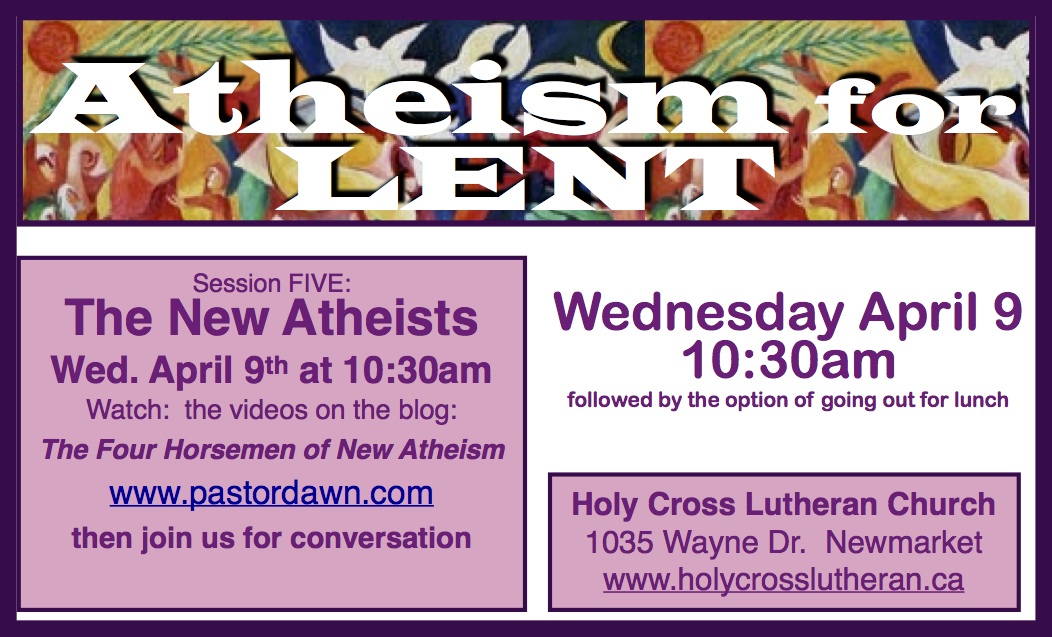
Atheism for Lent Class 5: The New Atheists

Our final class in this series provided an opportunity to explore the so-called New Atheists: Christopher Hitchens, Daniel Dennett, Sam Harris, Richard Dawkins and Lawrence Krauss. The video below includes the keynote and videos that were used to stimulate conversation in the class.

Jesus Sets Us Free to Save Ourselves: a sermon for Palm Sunday – Matthew 21:1-11

palm brsIn our parish, on Palm Sunday our liturgy stays with the commemoration of Jesus’ entry into Jerusalem. Trusting that our members will join us on Good Friday, we have not adopted the practice of rushing to the Passion of Christ. This allows us time to linger over our Hosannas. Our worship began outside with the reading of Matthew 21:1-11, followed by a procession of palm waving, hosanna cheering congregation. This year I changed the first reading to the story of Jacob’s wounding during a wrestling match with God in Genesis 32:22-31, followed by an feminist interpretation of Psalm 118, and the Gospel text John 12:12-15. I am indebted to Michael Morewood’s book “Is Jesus God” for the inspiration behind this sermon and to John Dominic Crossan and Marcus Borg’s “The Last Week” for the historical details. 

For previous Palm Sunday sermons click here, here, or here

Hosanna! Hosanna! Hosanna! Save us! Save us! Save us! Save us from who? Save us from what? Save us for what? What is all the shouting about?

Two millennia ago, on the outskirts of Jerusalem, when Jesus mounted that donkey it was pretty clear who needed saving from who; it was clear what they needed saving from and it was fairly clear what people longed to be saved for. The people longed for freedom: freedom from the brutality of their Roman rulers, freedom from the ravages of poverty, freedom from the strict oppression of their religious authorities, and freedom from the fear of illness and death. Life among the conquered peoples of first century Palestine was cruel, oppressive, impoverished and filled with fear and suspicion. Whatever hope of deliverance there was all too often false hope. Among the oppressed there are always calls for revolution and the conquered people of first century Palestine had seen more than their fair share of wanna-be saviours.  Some of their young people had fallen prey to the incitement of the Zealots and in youthful, exuberant, impatience had taken up arms against their Roman oppressors. Some of their neighbours had betrayed their own people and taken up whatever crumbs the Romans were offering, sold their souls and become collaborators, lining their own pockets at the expense of their own people. But far too many people had given up and given in, settling for whatever life they could eke out under the cruel regime hoping against hope, that someday, someone, somehow would come along and save them from the horrors of life. And so, they longed for the good old days; The days when their people and not the Romans dominated the land, the days when one of their own was king. But not just any king, they wanted a king like David; a king who would ride at the head of their army full of pride and power and conquer all their enemies. The elders, the wise ones, pointed to the past and heralded David as a Messiah; an anointed one; anointed by God to lead the people. How they longed for such a messiah to rise up among them and lead them; lead them to victory against all their foes and save them from their miserable existence. One by one, they’d hear these wanna-be messiahs, these trumped up saviours, call the people to rise up. But they knew, with each successive saviour, there was no hope that they could triumph over the mighty Roman army and so over and over again, they hunkered down, waiting and watching, longing and hoping for the one who could save them. Continue reading

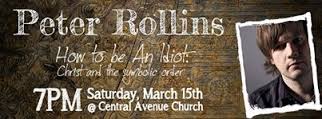
How To Be An Idiot: Christ and the Symbolic Order

rollins idiotRecorded on March 15, 2014 – Those familiar with Pete Rollins work will recognize some familiar themes and stories at the beginning of this video which then moves into some interesting new ideas about “morons, idiots and imbeciles.” Rollins provocative ideas about the relationship of Christ to the symbolic order challenges us all to move beyond our moronic ideas and practices into the roll of idiots so that we might become imbeciles. Well worth a listen for those familiar with Rollins work and for those who have never encountered him before!!!

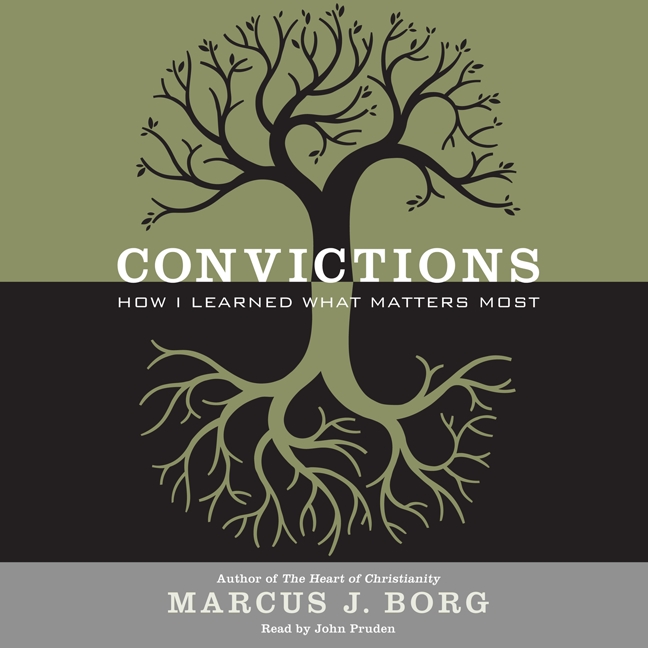
Memories, Conversions and Convictions: Thinking About Our Journeys Marcus Borg

Convictions BORGRecorded at the All Saints’ Pasadena Lent Event – March 23, 2014 – Marcus Borg begins a series of lectures which function as a teaser for his forthcoming book: Convictions: How I Learned What Matters Most (due to be released in Canada on May 20/14). Begun on the occasion of his 70th birthday the new book explores Borg’s convictions about Christianity and America. 

ATHEISM for LENT: WEEK 5 – The New Atheists

AfL 5 New AtheistsOur last class in the series will be an introduction to what has been dubbed New Atheism. We will explore the work of the 21st centuries New Atheists who have become famous or infamous for the careers they have carved out of their “unbelief.” The videos below “The Four Horsemen of New Atheism” provide an introduction for the class. The Four Horsemen include: Christopher Hitchens, Daniel Dennet, Richard Dawkins and Sam Harris.

Atheism for Lent Class 4: Delusion

4 AFL UNBELIEFOur fourth class explored the critique of religion found in the work of Sigmund Freud. Out of our conversation about Freud we began to look at Richard Dawkins’ “The God Delusion.” The video clips used during the class are included below along with the slides of the keynote presentation. Next week we will move on to the New Atheists’ critique of religion. Below, you can view a video of the Keynote/PowerPoint that was used during the class. A pdf of the class hand-out can be found here

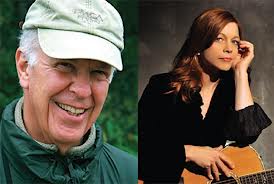
ABIDE: Carrie Newcomer and Parker J. Palmer

parker palmer Carrie NewcomerI have been a fan of Carrie Newcomer for years – her gentle way of opening me to wonder both sooths and enlightens. I can still remember discovering Parker J. Palmer when I was in seminary and having many of my assumptions about teaching challenged. So, discovering their collaboration was pure joy!!! I’ve been listening to this piece over and over again. Enjoy!!!

Singularity and the Omega Point: Jason Silva

cosmic christAs our understanding of what it means to be human changes, our theologies are changing in ways that embrace reality rather than try to deny the evidence that is revealing a whole new dynamic that is drawing us toward an appreciation of creation that is even more amazing than our ancestors could possibly have imagined. Some Christians are afraid of this ever evolving view of creation, while others of us are compelled to wander beyond the confines of our comfort-zones. My hope is that we will find  ways of staying in relationship with one another.

New Vision: Exciting and Terrifying – a sermon for Lent 4A John 9:1-41

First Reading:  “To See As God Sees” Meister Eckhart here

Second Reading: John 9:1-12   here

Gospel Reading: John 9:13-41 here

Today’s sermon includes a video clip from the short film Overview.

You can listen to the audio and watch the video clip from the “Overview” below.