All Saints’ Sunday readings: Contemporary reading: “A Return to Love: Reflections on the Principles of a Course in Miracles” by Marianne Williamson, Gospel: Luke:6:20-31 – extensive quote within the sermon from evolutionary scientist Stephen Jay Gould – the hymn sung before the gospel is “I Am the Dream” words: S. Curtis Tufts, Music: Rick Gunn
All Saints’ Day is a day for remembering. The word saint simply means “holy”. In the New Testament, all those who believe and were baptized were referred to as saints. It wasn’t until round about the third century that the church began using the word saint to refer to those who had been martyred for the faith. Over time these martyred saints were held up for veneration and people used to pray to them to intercede on their behalf. I’m not going to go into all of the institutional abuses that led Martin Luther and the later reformers to abolish the veneration of the saints. Except to say, that while the Reformation put an end to the veneration of the saints in the protestant churches, it did not abolish the concept of sainthood.
Within the mainline protestant denominations, we use the term in much the same way as it was used in the New Testament to describe the faithful. We talk about the communion of saints to describe all the faithful who have gone before us who now rest in God, together with all the living who walk in faith. So today as we celebrate the saints, we give thanks for all the faithful those living and those who have gone before us.
Today, I remember and rejoice as I give thanks and praise to God for the witness of St. Joyce of Belfast. St. Joyce who in her own way taught her children to love God and to pray always. And so today, I give thanks and praise to God for the life and witness of St. Joyce of Belfast, my Mom, who was the first to teach me the Lord’s Prayer, and who puts flesh on Christ’s command that we love our neighbours as we love ourselves.
Today I remember and give thanks for the life and witness of St. John of Wales, whose life in the church as a choir-boy was followed by long years of self-exile and whose keen wit and lack of patience with hypocrisy instilled in me a desire for honesty and integrity in the articulation and living of the faith. I give thanks for St. John, my Dad, whose open heart has stretched his discerning mind and enabled many to see the humour in this God-given life we live.
Today, I remember and rejoice as I give thanks and praise to God for the witness of St. Valerie of Ladner. St. Valerie so loved and feared God that she dared to reach out and invite a wayward soul to come and worship God. St. Valerie sang God’s praise, rejoiced in the communion of saints and helped a young friend find a home in God’s holy church. And so toady, I give thanks and praise to God for the life and witness of St. Valerie, my high school friend, who was the first to invite me to come and worship God.
Today, I remember and rejoice as I give thanks and praise to God for the witness of St. Wilton of Lunenburg. St. Wilton loved God all the days of his life and served God with gladness and distinction. St. Wilton went far beyond his call as pastor, he opened up the scriptures to those who eagerly sought the truth of God’s Word with love and dedication and he went on to inspire a diligence to scholarship that nurtured the faith of so many young people. And so today, I give thanks and praise to God for the life and witness of St. Wilton, my first pastor, who taught me to be uncompromising in my study of the scriptures, and steadfast in my love for God.Continue reading →
Recorded Oct.16, 2016: Matthew Fox preaches on Luke 18:1-8 at All Saints Church in Pasadena. Fox defines prayer as, “a radical response to life; a profound or deep response to life.” As such, working for justice is the embodiment of our response.
Before I read our Gospel text I took a few moments to reflect upon the story from the Torah that was our First Reading (Gen.32). I showed the short film below which was created by Jewish scholars to help rabbis teach the stories of the Torah to young children.I use this video to teach the stories of the Torah to our Confirmation students.I think it is important for those of us who follow the teaching of the Rabbi Jesus, to pay attention to the way in which the stories that spoke to Jesus continue to speak to Jewish people here and now. Watch the video and then listen to the sermon here
Our Gospel reading comes to us from a story told by an anonymous writer named Luke, who tells a parable that he attributes to the Rabbi Jesus:According to Luke: “Jesus told the disciples a parable on the necessity of praying always and not losing heart.“Once there was a judge in a certain city who feared no one—not even God.A woman in that city who had been widowed kept coming to the judge and saying, ‘Give me legal protection from my opponent.’For a time the judge refused but finally the judge thought, ‘I care little for God or people, but this woman won’t leave me alone.I’d better give her the protection she seeks or she’ll keep coming and wear me out!’”Jesus said, “Listen to what this corrupt judge is saying. Won’t God then do justice to the chosen who call out day and night?Will God delay long over them?I tell you, God will give them swift justice.But when the Promised One comes, will faith be found anywhere on earth?”
I too have met this tiresome, troublesome, annoyingly, persistent widow who constantly cries out for justice.This woman won’t leave me alone.I must confess that I would rather not have this woman clamouring at my door!Each and every time I encounter this woman, she goes on and on, she wears me out!I cannot go anywhere without seeing this woman.She is everywhere.Pointing to her oppressor and demanding justice.She is on the radio in my car as I go about my business.She is on my computer screen as I try to keep up with the news of the day.She is in my living room as I try to relax flipping channels seeking respite from her persistent cries for justice.She appears in my facbook feed, and tweets at me from my phone, I cannot escape her cries for justice.I am sick and tired of this annoying woman.I cannot escape her shouts for justice. I’m not sure that anything at all can be done to secure justice for this annoying woman.Too much time has passed.There are no witnesses.Boys will be boys.She needs to forgive, forget and move on.Why doesn’t she just leave me alone.There’s nothing that I can do for her.There’s nothing I want to do for her. I have my own troubles.People to see, places to go, things to do.If only she’d leave me alone.Her persistent cries for justice have begun to haunt me and not even sleep gives me respite from her persistent cries for justice.If only she’d stop going on and on and on and on about her oppressor, about the injustice that has been perpetrated against her. Maybe if she would just shut up about it, I wouldn’t have to wrestle with her in the night.Round and round we go, pinning one another down, she demanding justice, me pleading for peace.This wrestling over things beyond my control is wearing me down.I’m starting to wonder who this woman thinks she is.Hell, I’m beginning to wonder who I think this woman is.In the darkness of the night I sometimes wonder if this persistent, complaining woman, is just some trumped up version of myself.In her eyes, I sometimes think I see a glimmer of something far too familiar, something ugly, fearsome, unpleasant, and lurking in my own memories.In the wee hours before dawn, I think I can actually see myself in her. But no, I’m not going there.We are not going there.Women all over the world don’t want to go there.Defenseless, innocent, naive children all over the world we dare not see them in the face of this persistent woman. And then, just when I think that I have her pinned down and I’m about to wrestle something anything out of this insane encounter, the light begins to dawn on me, as I realize that there in the face of this persistent woman is the ONE in whom we all live and breathe and have our being; the ONE whose name eludes us. I awaken to the realization that this place where we have all been, this place where we cannot escape is indeed Peniel, for here and now, in the face of this persistent woman, in the face of every persistent woman, indeed in the face of every persistent man, woman, and child, crying out for justicewe have seen God face to face.It isn’t always pretty, it isn’t always what we want to see or where we want to see it, but it is the face of the ONE that we call God;the face of God shouting, crying, pleading, for justice. Wrestling with the persistent, pleading, ones who continue to demand justice from me, I rise wounded from Peniel – the place where I know that I have seen God face to face, and yet my life has been spared.Limping away, forever changed, knowing that the wound that changes the way I walk in this world is the blessing given to me by those who have the courage to cry out for justice.Transformed by this wound I begin to see that I am at one and the same time both the judge who has the power to create justice and the one who cries out for justice. In this Peniel, is where ever and when ever we have the courage to look into the face of another and see the face of God, and our lives have been preserved.We cannot walk away from an encounter such as this without responding to the ONE in whom we see the face of God, with justice.Whether our role in this life long wrestling match is that of the judge or the seeker of justice, may we see God face to face.
A conversation sermon on Jesus’ parable of the Rich Person. This parable has often been interpreted in ways that fail to see beyond the parable to the hell of our making to the possibility of creating heaven here and now. The website referred to in the in the conversation is http://www.globalrichlist.com Listen to the sermon/conversation here
John 10:22-31 The time came for Hanukkah, the Feast of Dedication, in Jerusalem. It was winter, and Jesus was walking in the Temple area, in Solomon’s Porch, when the Temple authorities surrounded him and said, “How long are you going to keep us in suspense? If you really are the Messiah, tell us plainly.” Jesus replied, “I did tell you, but you don’t believe. The work I do in my Abba’s name gives witness in my favour, but you don’t believe because you’re not my sheep. My sheep hear my voice. I know them and they follow me. I give them eternal life, and they will never be lost. No one will ever snatch them from my hand. Abba God, who gave them to me, is greater than anyone, and no one can steal them from Abba God. For Abba and I are One.” With that, the Temple authorities reached again for rocks to stone him.
With that, the Temple authorities reached again for rocks to stone Jesus. Welcome home. On this Homecoming Sunday, we are reminded that home is not always a safe place. The buffalo have ceased their roaming, the deer and the antelope no longer play, and all too often is heard a discouraging word. Welcome home. As many of us know all too well, home may be where the heart is, but home is also a place where the most cutting of family arguments can wound even those of us who’s strength of character has lead us far from home. Jesus never faired well at home. Whether it was his home in Nazareth where his neighbours wanted to toss him off a cliff, or his spiritual home in Jerusalem, where the Temple authorities reached again for rocks to stone him, Jesus words, his teaching, his way of being in the world made the people at home so angry they could kill him. There was something about this fellow Jesus that got on people’s nerves. I mean the nerve of the fella, imagine insisting that he, Jesus, and Abba are ONE. Bad enough that Jesus had the audacity to call God Abba, “daddy” as if he and the Creator are on intimate terms, but then to suggest that God, the Creator of all that IS, and all that ever shall be, to insist that he and God are ONE, well is it any wonder that the Temple authorities reached again for rocks to stone him. After all the Temple authorities are charged with the solemn responsibility of preserving good order. Every home needs rules and when it comes to the rules the Temple authorities know the rules backwards and forwards, and this guy Jesus seems incapable of sticking to the rules. Everyone knows that according to the rules God is up there and out there, beyond us and from time to time God comes down here and the best place to find God is in God’s house, and in God’s house we have rules about who, how, and when people can approach the ONE who IS the source of all life. God’s house has rules for a reason. Without rules there is chaos and chaos is the very thing that the Creator established creation for. In our earliest myths we imagined that in the beginning there was chaos and God’s Spirit hovered over the chaos and said, “Let there be light!” and so began the slow and steady evolution out of the muck and the mire of chaos and into the natural order of things, with God up there in the heavens and we earth creatures down here, going about our business, and remembering to pay homage from time to time to the ONE who makes it possible for us all to feel at home here in creation. Then along comes Jesus, suggesting that God is not safely out of reach but that indeed God is ONE with him, why the next thing you know people will be imagining all sorts of things, and some one will suggest that we are all ONE with God. Quick find some rocks so we can stone this guy before things get out of control. After all our home is our castle, and we need to stay in control of the castle lest our carefully held ways of doing things devolves into chaos. We’ve got to keep God safe from such ideas.Ideas are far too dangerous to be allowed to infect the masses, pardon the pun. If ideas are allowed to fester, the next thing you know we won’t recognize our homes anymore and we’ll have to find new ways of living together.Get me a rock, will you? I can’t stand it when my home is threatened by an idea; especially an idea that is so dangerous that it threatens my image of who I am by suggesting that the god I worship and adore might be something other than who or how I want god to be. If you don’t believe me, just look at our neighbours in the United Church of Canada. If only they’d reached for their stones a little sooner, then that Greta Vosper woman would never have gotten all the attention she’s getting now and she’d never have been able to infect their house with ideas about God being dead. JEEZUS H CHRIST! Just imagine what might happen if people are allowed to suggest that God is dead! Ok, I know, I am grossly over-simplifying things here.But we are at home here aren’t we. We’re family and we don’t have to spell everything out do we.We know who we are and whose we are. Whether we say it out loud in here, where we all know what we mean, our whisper it out there where people might not understand, we know that God being dead is precisely the foundation upon which many of our homes have been built for generations. Jesus said, “I and Abba are ONE.” and we all know how that worked out. Jesus was executed by the state, aided and abetted by the Temple authorities, Jesus died at the hands of those who firmly believed that he was a troublemaker capable of creating chaos. Jesus died believing that he was ONE with God. We have been taught to believe that JESUS and God are ONE, so dear friends and family, here in this house we can safely say that God did indeed die. God died and was buried. The good news is that we also believe that death does not have the final word. God is dead. Long live God! For we in this house know the sweet beauty of resurrection. We know that God dies over and over again, precisely because we know that when Jesus said, “I and Abba are ONE.” Jesus pulled God out of the heavens and the faraway God of our ancestors was reborn as the Abba whose intimacy with us is so palpable that we can say that Abba and I are ONE. We are ONE with God. The community of people who followed Jesus after his death understood this. The Apostle Paul understood that God was no longer up, there, far away, distant, beyond our reach, or tucked away in the Holy of Holies. The Apostle Paul, knew that that particular God died upon the cross with Jesus, but death did not have the final word. The power of the resurrection empowers us to know that God is the ONE in whom we live and move and have our being. We are ONE with God and this dear family means chaos. For if we are ONE with God, then those people out there, those other humans, indeed all those other beings, in fact creation itself, is ONE with God. That means that every life is precious, including the life of this planet. That means that all the walls in the world won’t be able to separate us from the ONE in whom live and move and have our being. It means that even the biggest, baddest, most scary ones out there, are ONE with God. How will we know how to be in the world when each and everyone we meet is kin? God is Dead! Our lovely, God, the one we created in our image, the one who we safely tucked away up in heaven, the one we allowed to come into our sanctuaries only if he behaved and followed our rules, that god, the image formed by the art and thought of mortals, is dead. Long live God. Long live the ONE in whom we live and move and have our being. Long live the ONE with whom we are ONE. We can throw all the stones we want at the Gretas of this world, who dare to point out that our images of the ONE are for all intents and purposes dead, but our rocks won’t help us preserve the order that we are counting on to save us from chaos. Life is chaotic. Our rules, regulations, and houses can offer us sanctuary from time to time from the chaos, but the rules and regulations, the carefully held beliefs, the doctrines and the dogma, even the images we hold dear cannot save us. We can toss all the rocks we want, but alas, the ONE in whom we live and move and have our being, lives and dies over and over and over again, in, with, through, and beyond us, that’s the beauty of the chaos that the light brings into view. The ONE in whom we live and move and have our being is more than we can begin to imagine. The “Idea of the Holy” is in and of ITSELF, “Mysterium, Tremendum, et Facinans” (Rudolf Otto) Mysterious, Tremendous, and Fascinating. Take and eat. Taste and see for LIFE in the ONE is Mysterious, Tremendous and Fascinating. Chaotic, always transforming, ever changing, awe-inspiring, terrifying, delicious, pungent, devastating, jaw-droopingly real, compelling, exhausting, dangerous, sublime, enchanting, revolting, magnificent, challenging, refreshing, frightening, unimaginable, surprising, beyond our ability to express, and yet this Chaos of which we are ONE, is home. So, welcome home. Take and eat. Taste and see. For it is, in the words of our ancestors, good, very good. And be prepared, because the ONE in whom we live and move and have our being, lives and dies, over and over again. For we dear family are the people of the resurrection. We are the ones who proclaim, “God has died. God is risen. God will come again and again, and again.” Welcome home: Taste and see. For God is God. Can I get an Amen?
Recorded Aug 8/2016 at the Chautauqua Institution.
Diana Butler Bass moves from her latest book Grounded‘s focus on nature to examine the sacredness of the city. Bass explores the theological images that appear in scripture that help us to think in new ways about the urban environments of our day. Seeking transformative images to usurp our tendency toward building empires toward a vision of the “urban cosmos” that empowers its inhabitants to live with justice, love, and humility, Bass paints a seductive vision of a universal city on a hill; a dwelling place of peace. In contrast to the system of globalization which seeks market control in the service of empire, Bass points to cosmopolitanism, a world view based upon our shared common humanity.
Earlier this week I was reminded of the fact that one of the most basic parts of my job of being a pastor is pointing out the sacred. Most of what I do revolves around noticing when we are in the presence of the Holy, the Mystery, the One who is so much more that we are, the Love that lies at the heart of all that is. My job is to point to the sacred Oneness, the Love that many call God and say “there,” or “here,” or “now,” “don’t miss it.” All too often we find ourselves in the company of angels, messengers of the LOVE that IS God, and we don’t even notice it. For the most part we humans can’t quite grasp the magnitude of the Mystery that lies at the very heart of reality and so we do what humans always do: we personify this ONEness, or we use symbols and metaphors to indicate the presence of the sacred in our midst, and we tell stories. Stories that include burning bushes, ladders into the sacred realm, shepherds, lost coins, all sorts of symbols and metaphors that point to the ONE who IS. We have told some of those stories so often that the Reality of the Mystery that these stories were created to bring down to earth, seems ever so distant and far away, lost in the mists of time. The Reality that so many call God has been cast out there far away beyond our reach. So, week after week, I try to bring the stories, symbols and metaphors a little closer to the world that we inhabit so that you might be able to see in your own stories the angels that you have entertained without even knowing it. This morning I’d like to tell you a story that I’ve told twice before. It’s been about seven years since I last told this story, so some of you may not have heard it before and those of you who have heard it before; well we’ve been on quite a journey here at Holy Cross, and you’ve all helped me to understand my own story in a completely new way. The story takes place back in October of 1977, when I was twenty years old. I was young and adventurous. With a rail pass in my hand, a back pack slung over my shoulders and several hundred dollars worth of American Express Travellers cheques in my pocket, I boarded a train in Zurich, Switzerland, bound for Athens, Greece. I was tired. Several months of back-packing in Northern Europe had left me weary. In just five days my rail-pass would expire, so I decided to head for Greece, where the living is easy, where the warm sun, blue skies and equally blue waters held the promise of rest and relaxation. As the train made its way through the Alps, I remembered a similar trip which I had made the year before and I tried to calculate whether my remaining funds would allow me to return to the village of Chania on the island of Crete. I knew that on Crete I could find work. So, I planned to mix a lot of rest and relaxation with just a little work and try to live out the winter on the Mediterranean. As the train rattled through Austria, towards what was then called Yugoslavia, it began to get dark. I was disappointed that my journey through Yugoslavia would be completed in darkness. I remembered my previous journey, by car, through Yugoslavia and how at the time, I had marvelled at the diversity of this strange little country. I remembered men and women driving oxen as they ploughed their fields in much the same way as their ancestors had done. I also remembered my surprise at entering the ultra modern city of Belgrade; the showcase of what was then Tito’s communist regime.I fell asleep pondering the sharp differences between the lives of the poor people in the villages who appeared to live without any modern conveniences at all and the lives of those who inhabited the city of Belgrade with its towering sky-scrapers and streets filled with automobiles. Several centuries seemed to co-exist in Yugoslavia. I was awakened from my dreams by the sound of people shuffling to find their papers as the train conductor instructed us to get our passports and visas ready for customs inspection. When the Yugoslavian custom officials, with their rifles over their shoulders boarded our train they were preceded by men guided by vicious looking German shepherds. Even though I knew that I had all the right papers and that my back pack contained nothing more offensive than some dirty laundry, the sight of the dogs, guns, and uniformed officials struck fear into my heart. I nervously handed over my precious passport to an official who looked younger than my twenty years. He carefully read over the Visa which I had obtained in Zurich the day before; a visa that I could not read because it was written in an unfamiliar language and an unfamiliar alphabet.The young man handed my passport over to an older official and before I knew what was happening, I was being escorted off the train. I was shaking so badly that the young men on either side of me had to hold me up. I am not sure that my feet even touched the ground. After a long lonely wait in a drab windowless room, a woman entered. In broken English she told me that my visa was not in order. I gathered from what she was trying unsuccessfully to explain to me, that my passport contained the visa from my previous visit to Yugoslavia, but was missing an official exit stamp. She demanded to know why there was no exit stamp in my passport. Needless to say, I could not explain. I told her that I had only spent a little over a week in Yugoslavia the year before and then gone on to Greece. I told her that I didn’t know that an exit stamp was necessary and that I couldn’t understand why the Yugoslavian consulate would have issued my current visa if my paper work was not in order. She kept insisting that I needed an exit stamp. After several fruitless attempts to try and get her to tell me what I was supposed to do, I found myself in a small room. Its only window was reinforced with bars. In the darkness of a Yugoslavian holding cell, I sat down and I began to cry. I cried like I have never cried before or since. I was terrified and my sobbing was uncontrollable. After a while I became conscious of a sound that did not come from me. “Susssssssssh.” I realized that I was not alone in the darkness. Someone else was in the room with me. In the shadows, I could make out the shape of a woman. My sobbing began to subside as she continued, “Shussssssh.” The woman began to pace back and forth in our tiny room and gradually her shusssh turned into humming. She hummed unfamiliar tunes that somehow managed to calm me. Occasionally her humming would turn to singing. She sang softly and quietly and my sobbing began to ease. In the shadows I could not tell how old she was. Her hair was long, dark and curly. She wore a plain cotton dress, ankle socks and a beaten up pair of shoes, whose laces flapped back and forth as she paced. It took only a few hours for my travelling companion to contact the British Embassy, sort out the mess and secure my freedom. The sunlight was just beginning to find its way into our room when my captor arrived to release me. As I left, I took a close look at my roommate. I smiled, hoping that she would understand my smile as gratitude for her kindness. Her tender sounds had calmed me and helped me through one of the darkest nights of my life. She returned my smile and added a wave of her own. Then the guard roughly escorted me out into the bright lights of the customs house. Before I boarded a train that would take me safely out of Yugoslavia, I thought that perhaps I should try to help my roommate. Maybe I should try to find out why she was being detained. Perhaps I should try to help her get out. But this was not a place that welcomed questions and the warm sun of Greece beckoned me. And so, I boarded the train and I left. My few hours of captivity – I chalked up to just one more adventure on the road and I rarely thought of my room-mate again.Continue reading →
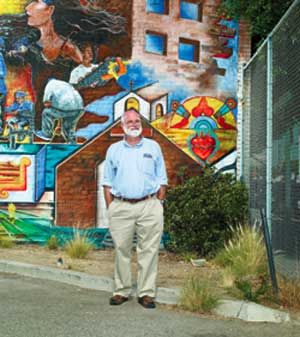
During my visit to Chautauqua last week, I was introduced to Fr. Gregory Boyle. As the Chaplain for the week, Fr. Boyle introduced us to his work at Homeboy Industries in Los Angeles. “Homeboy Industries provides hope, training, and support to formerly gang-involved and previously incarcerated men and women allowing them to redirect their lives and become contributing members of our community. Each year over 10,000 former gang members from across Los Angeles come through Homeboy Industries’ doors in an effort to make a positive change. They are welcomed into a community of mutual kinship, love, and a wide variety of services ranging from tattoo removal to anger management and parenting classes. Full-time employment is offered for more than 200 men and women at a time through an 18-month program that helps them re-identify who they are in the world, offers job training so they can move on from Homeboy Industries and become contributing members of the community – knowing they count!” Fr. Boyle’s work in and of itself is astonishing. But his ability to share the wisdom his work has taught him through the art of storytelling is miraculous. It was a joy to sit at this master’s feet!!! Here’s a talk he gave back in 2012. I’ve already ordered his book Tattoos on the Heart and look forward to gleaming more from this wise holy man!!!
Jesus’ parable of the Good Samaritan is one of the most familiar stories of all time. The trouble with such a familiar story is that we all know it so well that we hear it on autopilot. We know the characters almost as well as we know how we are expected to respond to this story. We can point to the priest and the Levite and explain why they acted the way they did. We can even explain how shocking it would have been to a first century Jewish audience to hear a Samaritan described as “good.” Most of us have heard this parable interpreted so many times that we already know exactly how we are expected to feel when we hear it and what we are expected to learn from it. “Love God with all your heart, with all your soul, with all your strength, and with all your mind and love your neighbour as yourself” and who is your neighbour, why even the lowly Samaritan, the one you would least expect is your neighbour. We know this story backwards and forwards and yet like any good story, there is always something that we can learn from it or it wouldn’t have been told as often as we have all heard it. But just in case familiarity with the story is getting in our way of hearing the radically outrageous truth to which this story points, let me tell it one more time with a slightly different twist.
Like all parables this didn’t actually happen but then again it is always happening. Last week on my way back from Chautauqua, let’s say somewhere near Buffalo, I was attacked by a band of thieves. They stole my car and left me lying by the side of the road. A bishop happened to be passing on her way to Toronto, she saw me lying there bruised and battered, but she had people waiting for her, meetings to attend, and she could not be late, after all she is a bishop and people are counting on her. So, she put her foot down on the accelerator and hurried past me. Later, a bunch of pastors who were car-pooling home from a spirituality retreat came tooling down the highway. They saw me lying by the side of the road and they considered stopping to lend a hand but they had congregations to return to, members to visit, and sermons to consider. So after much consideration the pastors decided to hurry past lest they be waylaid by my problems. Suddenly, travelling from the opposite direction came a sleek, decked out bus with the words “TRUMP Make America Great Again!” in bold letters along the side. Lo and behold it was the orange fellow himself, Donald J. Trump heading up to Buffalo to appear before a “huuuge crowd” of adoring fans. Without hesitating for a moment, the Donald appears with a first-aid kit and begins to dress my wounds. I recognized him right away, and wanted to crawl away and die, but the Donald just loads me into the back of his bus and off we go to the nearest casino, which he just happens to own. At the casino the Donald puts me up in a room fit for a queen and instructs the staff to take very good care of me. It sure wasn’t easy being helped like that, by such a loathsome, despicable man. You know that I’d have to be in a very vulnerable state to accept help from the likes of Trump and his merry band of nut-bars. Thank goodness that this didn’t actually happen. But I can’t help wondering what I might learn about my own prejudices from such an encounter, or what I might learn about his woundedness, or indeed what we both might learn about our shared humanity. (stop it now!!! I know what you’re thinking…just try to remember the Donald is human)
Over the years, I believe that I have played most of the characters in the Parable of the Good Samaritan. I suspect that most of you have as well. Most of us have at one time or another played the role of the lawyer, trying to get Jesus to explain the secrets of life to us. Most of us have at one time or another played the role of the priest when we see a broken down car on the side of the road, with its occupants standing around looking desperate for help, but we pass by, not because we are bad people, but because the rules of our society tell us that only fools would consider stopping on the side of the road to help strangers. After all it might be a trap, and surely they have a cell phone so they can call the police who will surely come soon to help them and all of you have surely played the role of the Levite. Oh, you may want to be a good Samaritan, but there are just too many street people, too many requests for money, too many people sleeping out in the cold, and to many vacant faces staring up at us. It’s so difficult to know how or who to help. So, we strike up uneasy compromises with to salve our consciences. We give away whatever coins we happen to have as if a few coins can really help. We go about our business failing to even bother asking how we might help, for fear that from the vacant face, we might hear a voice that demands more of us. Continue reading →
Pentecost Sunday is a day for stories about the nearness of God. So we begin with the story of the Tower of Babel from Genesis 11:1-9, then make our way to the anonymous gospel-storyteller we call Luke’s story of the early followers of Jesus’ encounter with the Holy Spirit at Pentecost in Acts 2:1-21, and then the anonymous gospel-storyteller we call John’s story of Jesus’ insistence that he and God are one, before rounding off with Sandy Eisenberg Sasso’s excellent children’s book God In Between.
It is unusually cold and stormy here today. So, I walked on the treadmill and watched Rob Bell’s latest re-telling of the story of humanity. Well worth watching. To my colleagues who scoff at Bell, I dare you to watch this and not come away with several sermon ideas!!! To those of you who love Rob Bell, you’ll love this. If you’ve never heard of Rob Bell, “where’ve you been?” Enjoy!!! If you know where I can get my hands on a whiteboard like his, hook me up!
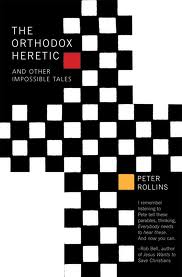
Pentecost is the birthday of the Church. Birthday celebrations lend themselves to the telling of stories. So, we begin with a parable by the radical theologian Peter Rollins. So, sit back and try to imagine that you live not at the beginning of the 21st century but at the middle of the 21st century; say about 2050. The world has changed quite a bit. “It seems that in the future laws will be passed declaring that all those who follow the teachings of Jesus are subversive. Churches have been banned and to be a follower of Jesus is illegal. You have just been accused of being a believer. You’ve been arrested, and dragged before a court. You have been under clandestine surveillance for some time now, and so the prosecution has been able to build up quite a case against you. They begin the trial by offering the judge dozens of photographs that show you attending underground church meetings, speaking at religious events, and participating in various prayer and worship services. After this, they present a selection of items that have been confiscated from your home: religious books that you own, worship CDs, and other Christian artifacts. Then they step up the pace by displaying many of the poems, pieces of prose, and journal entries that you had lovingly written concerning your faith. Finally, in closing, the prosecution offers your Bible to the judge. This is a well-worn book with scribbles, notes, drawings, and underlinings throughout, evidence, if it were needed, that you had read and reread this sacred text many times. Throughout the case you have been sitting silently in fear and trembling. You know deep in your heart that with the large body of evidence that has been amassed by the prosecution you face the possibility of a long imprisonment or even execution. At various times throughout the proceedings you have lost all the confidence and have been on the verge of standing up and denying Christ. But while this thought has plagued your mind throughout the trial, you resist the temptation and remain focused.
Once the prosecution has finished presenting their case the judge proceeds to ask if you have anything to add, but you remain silent and resolute, terrified that if you open your mouth, even for a moment, you might deny the charges made against you. Like Christ you remain silent before your accusers. In response you are led outside to wait as the judge ponders your case. The hours pass slowly as you sit under guard in the foyer waiting to be summoned back. Eventually a young man in uniform appears and leads you into the courtroom so that you may hear the verdict and receive word of your punishment. Once you have been seated in the dock the judge, a harsh and unyielding man, enters the room, stands before you, looks deep into your eyes and begins to speak. “On the charges that have been brought forward I find the accused not guilty.”
“Not guilty?” your heart freezes. Then, in a split second, the fear and terror that had moments before threatened to strip your resolve are swallowed up by confusion and rage. Despite the surroundings, you stand defiantly before the judge and demand that he give an account concerning why you are innocent of the charges in light of the evidence. “What evidence?” asks the judge in shock.
“What about the poems and prose that I wrote?” you ask. “They simply show that you think of yourself as a poet, nothing more.” “But what about the services I spoke at, the times I wept in church and the long, sleepless nights of prayer?” “Evidence that you are a good speaker and an actor, nothing more,” replied the judge. “It is obvious that you deluded those around you, and perhaps at times you even deluded yourself, but this foolishness is not enough to convict you in a court of law.” “But this is madness!” you shout. “It would seem that no evidence would convince you!” “Not so,” replies the judge as if informing you of a great long-forgotten secret. “The court is indifferent toward your Bible reading and church attendance; it has no concern for worship with words and a pen. Continue to develop your theology, and use it to paint pictures of love. We have no interest in such armchair artists who spend their time creating images of a better world. We exist only for those who would lay down that brush, and their life, in a Christlike endeavor to create a better world. So, until you live as Christ and Christ’s followers did, until you challenge this system and become a thorn in our side, until you die to yourself and offer your body to the flames, until then, my friend, you are no enemy of ours.” “
Rollins insists that this parable is true right here and right now. We don’t have to imagine a world were Christianity is illegal for this parable to be true. Rollins insists that: “If you or I were really to take the teachings of Jesus seriously, would we not sooner or later, find ourselves being dragged before the authorities? If we were really to live a life that reflected the subversive and radical message of love that gives a voice to the voiceless and a place to those who are displaced, if we were really to stand up against systemic oppression perpetrated by those in power, then would we not find ourselves on the wrong side of the lawmakers?”Continue reading →
El Shaddai, Eloheim, Rauach, Chokma, Rechem, YAHWEH, these are the ancient biblical Hebrew names for the reality that we call God. El Shaddai which translates as “she – breasted one, ”Eloheim which is the feminine plural for “majesty,” Rauach a feminine word for “wind” “breath” “spirit,” Chokma, a feminine word for “wisdom.” Rechem also a feminine word which translates as “ womb love” mother love, compassion. YAHWEH – I AM, WHO AM or I shall be who I shall be Ancient biblical Hebrew names for the reality that we call God.
During the time of Jesus there was another name for God that was used by the Jewish people: El Shekinah which translates as “she who dwells among us.” There were other words for the reality that we call God which the writers of the New Testament would have been so familiar with; Greek words like: Theos — a feminine noun which translates simply as “God,” Sophia – which is the Greek translation of the Hebrew word Rauach for “Wisdom,” Pnumena – the feminine noun which is the Greek translation of the Hebrew word Chokma which means: wind, breath or spirit. That these names for the reality that we call God are all feminine nouns is remarkable when you look at how these words were translated by the Roman Empire into Latin: Patris et Filii et Spiritus Sancti Father, Son, and Holy Spirit. Stripped of her breasts and her womb-love, the One we call God, the Chokma who Dwells among us, is given the aura of a powerful young Roman God as the word for breasts is translated as “Almighty” and whose Rechem – womb-love is reserved for those who fear HIM.
Yet despite the Empire’s attempt to penetrate the sacred feminine with masculinity’s youthful vigor, (yes, I did mean that pun) this reality we call God will age over the centuries to become a bearded old grandfather-like figure who lives up there somewhere, and woe to those who dare to expose His transgendered history; for God is male and that’s that. The image of the great I AM erected by the male hierarchy to be worshipped and glorified, forever and ever, as Father, Son, and yes, even the nebulous Holy Spirit becomes HE in order to penetrate His Bride the church. No room for talk of breasts or womb as SHE who dwells among us, Chokma, Sophia, Wisdom is banished to the mists of time. That is until women began to be admitted to the sacred halls of the academy; until women began in significant numbers to study the ancient texts and unravel the ancient languages and begin to question the work of their male predecessors and contemporaries. Female academics, female theologians, and female translators’ questions lead to the discover of the long hidden, often denied, and ever present breasts and womb which now that they have been exposed will never again be cast out from their dwelling place among us. Wisdom, Sophia has been emancipated she is woman hear her roar.Continue reading →
For those who were not able to attend our Pub Night, here’s the video that kicked off our conversations. Diana Butler Bass, speaking at All Saints’ in Pasadena in December of 2015 introduces her book Grounded: Finding God in the World, A Spiritual Revolution. The struggle between the conventional images of God and the emerging images of God sparked some interesting conversation!















 pastordawn
