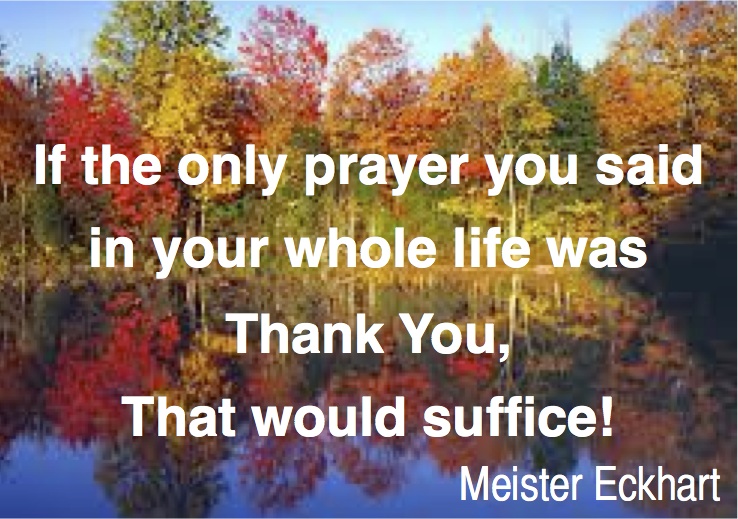
A sermon for Thanksgiving inspired by Garrison Keillor and Joan Chittister; two of the best storytellers I know.
Let me tell you a classic Thanksgiving story created by the brilliant Garrison Keillor, which takes place on the outskirts of Lake Wobegon, where “All the women are smart. The men are good looking. And the children are above average.”
“It’s been a quiet week in Lake Wobegon.” Keillor’s old home town. “There was a holiday this last week and the return of the exiles. The exiles who come back to their home. Children who’d grown up and moved away and had families, and learned how to complicate their lives in all sorts of new and interesting ways. They come back every year to a little town so much the same it’s hard to look at it and not believe you’re still twelve years old and that’s just how some of the returning children behaved too, when they came back.
A lot of them drive up from the cities with their families and they make a last stop at the Cross Roads Lounge, about ten miles down the road, as they come up over the rise and down into town, the last drags are taken on a lot of last cigarettes, and the first of a lot of breath mints are popped into their mouths and the last warnings are issued to their children, the grandchildren, in the back seat, not to talk about you know what, in front of grandpa and grandma, and remember that at grandpa and grandma’s house before we eat grandpa bows his head and we’re all supposed to be quiet that’s called asking the blessing or saying grace and grandpa is talking to God. So you remember to be quiet then and close your eyes and don’t say a word.
One of the Olsen boys was giving this speech to his children coming into town on Wednesday. He explained all of the rules and was surprised to hear a little voice pipe up from the backseat. And his daughter said, “Who is God daddy?”
He said, “Jesus Christ! What am I gonna do now?” “Two blocks from home! It’s a little late to get this kid shined up for the parents so she looks Lutheran you know.” Continue reading →
The Season of Creation ends today with the commemoration of St. Francis and the rhetoric of election season together with the events chronicled in Paul Moses book “The Saint and the Sultan: The Crusades, Islam, and Francis of Assisi’s Mission of Peace” inspired this sermon.
The reading from St. Francis and the Scripture reading can be found here
Then Jesus brought a little child into their midst and putting his arm around the child, said to the Twelve, “Whoever welcomes a child such as this for my sake welcomes me. And whoever welcomes me welcomes not me but the One who sent me.” Readings included Exodus 40:34-38, Mark 9:33-37
Homecoming after a splendid summer respite. Readings Proverbs 1:20-23; Ephesians 4:11-13 and John 8:30-32. I am indebted to Peter Rollins for his excellent insights into the need for church to be a place where we consult our suffering. I highly recommend the short video from which I have quoted which you can view here: Peter Rollins video – Giving the Three Fingers. The story about the starfish on the beach is one I first heard many years ago. There is a version of the story in Marc Gellman’s book “And God Cried, Too: A Kid’s Book of Healing and Hope”
It is a holiday weekend here in Ontario. So, in the midst of our relaxed worship, I decided not to preach the sermon I had written and simply spoke briefly in response to the video animation which was shown after the reading of the Gospel John 6:24-35. You can watch the video: The Stonecutter here and listen to the recording of my comments here. The sermon which I prepared but did not preach is printed below.
Following the video The Stonecutter (1960) Japanese Folklore view here
Jesus said, “Do not work for the food that perishes, but for the food that endures for eternal life.” Food that endures for eternal life: WOW! Talk about satisfying. Who wouldn’t want some of that? Who isn’t hungry for food that does not perish but lasts for eternal life? No wonder the people cried out to Jesus. “Sir, give us some of that.” To which Jesus replied, “I AM it!” It’s clear that were not talking about ordinary food here. Jesus said to them, “I AM the bread of life. Whoever comes to me will never be hungry, and whoever believes in me will never be thirsty.”
But isn’t hunger and thirst the very stuff of life? Isn’t hunger, thirst, desire, longing, yearning, the very thing that drives us all? Don’t we all hunger for a better, fuller, more satisfying life? Don’t we all want to feed that emptiness that lies within? Aren’t we all looking for something?
If I were to try to tell that ancient Japanese fable in our modern Canadian context what might it sound like? You’re driving along in the car, widows open, listening to some tunes thinking hey look at me, I’ve got it pretty good, when all of a sudden a guy pulls up along side of you in a beautiful in a sleek e-type jag convertible, woe! If I could afford a car like that, just think about how great it would be to pull away from all the other traffic, the wind blowing through my hair, wouldn’t that be great. Well you save your pennies and you finally get the car of your dreams, and your driving along and you see this house, not just any house, but the most beautiful house in the neighbourhood, and you know there’s just got to be a pool in the backyard, and you wonder maybe, just maybe there’s a Jacuzzi in one of the dozen or so rooms and you know that if you could come home to a place like that, well then you’d be really happy. So you work hard and you scrimp and you save and one day, you get your hearts desire and you turn the key in the lock an all of a sudden your living in the house of your dreams. But there’s the pool to clean, and the gardens to maintain, and a lot of rooms that need dusting and you see that your neighbours have a pool boy, a gardener, and a housekeeper and you know if you could only afford to hire some help then you’d be happy. You know that with just a few more bucks in your bank account you’d be happy. So, you wish and you wish and one day you win the 649 and you have millions of dollars, several beautiful cars, lots of staff to keep everything ticking over, and no one to share it with.Continue reading →
I chose to extract two readings from the lectionary to reflect upon sanctuary for refugees. Splitting the prescribed gospel text into the first and second readings and using the epistle text as the Gospel: Mark 6:30-34, Mark 6:53-56, Ephesians 2:11-22. The video which was shown during the sermon, along with the English translation, can be viewed here, listen to the sermon here
The beheading of John the Baptist is an unusual subject for a beautiful summer morning. However, from time to time the lectionary takes us where we are reluctant to go. Our readings included: Mark 1:1-11, Mark 1:14-15 and Mark 6:14-29
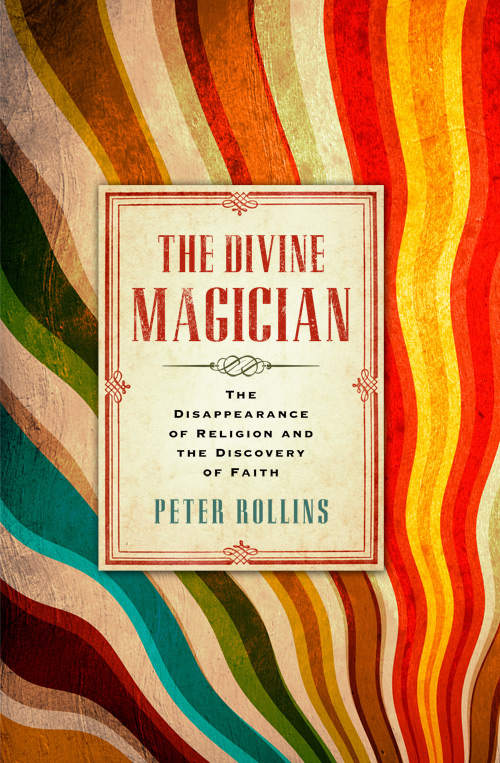
In April, I had the privilege of travelling to Belfast to attend Peter Rollins’ Festival of Light where he gathered together some of the thinkers who have influenced his thinking. In his book The Divine Magician the fruit of this influence provides an expression of radical theology which has the power to ignite what Pete calls “pyrotheology”. Here are a few short videos which are designed to fan the flames. Enjoy!
The opportunity to baptize my lovely granddaughter brought with it the task of preparing a sermon on the sacrament of baptism. So, I diligently prepared a carefully thought out sermon for the occasion. Standing in the pulpit after reading the Gospel text from Matthew 19:13-15, the sight of all seven grandchildren challenging the abilities of their parents and grandparents to maintain order and decorum gave me pause. Fortunately our pulpit at Holy Cross is on wheels, so I quickly pushed it aside and reached into my missal for a folder I had placed there so that during the announcements I could draw the attention of our members to some very good news about the success of a child of the congregation. The folder contained a story which I proceeded to tell in place of my carefully prepared sermon. You can listen to the story here. I am indebted to the author, Travis Dermott for providing the good news on this very happy occasion. As promised, the text of the carefully and lovingly prepared, undelivered sermon is provided below.
When someone places a newborn human in your arms, it opens you to MORE. Humans have a strange relationship to MORE. Most of us spend our entire lives longing for more, looking for more, hungering for more, desiring more, striving for more, waiting for more, searching for more. Holding a newborn in your arms opens us to the power of MORE. I’m not talking about the more that the world so often gets caught up in seeking, more stuff, more money, more things, more wealth, more land, more resources, more power, more sex, more popularity, more gadgets, more food, more, more, more, more, for me and mine, more. I’m talking about the MORE with a capital M. MORE. The kind of MORE a newborn baby lying in your arms opens us to is the kind of MORE that poets, storytellers, artists, musicians, and messiah’s have been trying to capture for centuries. Holding a newborn in your arms opens us to this MORE because the reality of this new little being connects us to some Beyond ourselves.
Cradling a newborn you can’t help but wonder and marvel at the miracle of life itself. Gently rocking a newborn in your arms opens you to the powers of the cosmos coming together for billions and billions of years to create life. Gazing down at a newborn softly breathing in your arms fills your heart with emotions so powerful that in just an instant you can fall in love. Adoring a newborn in your arms transforms you out of the confines of the ordinary and mundane and into the reaches of time itself as you search for signs of ancestors long gone in tiny features that draw us into futures as yet unknown. And just when you think your heart is going to explode from the shear magnificence of the miracle in your arms, suddenly the newborn in your arms opens up the power of their new little lungs and you can’t help but be stunned by this tiny little creature’s ability to turn your world upside down.Continue reading →
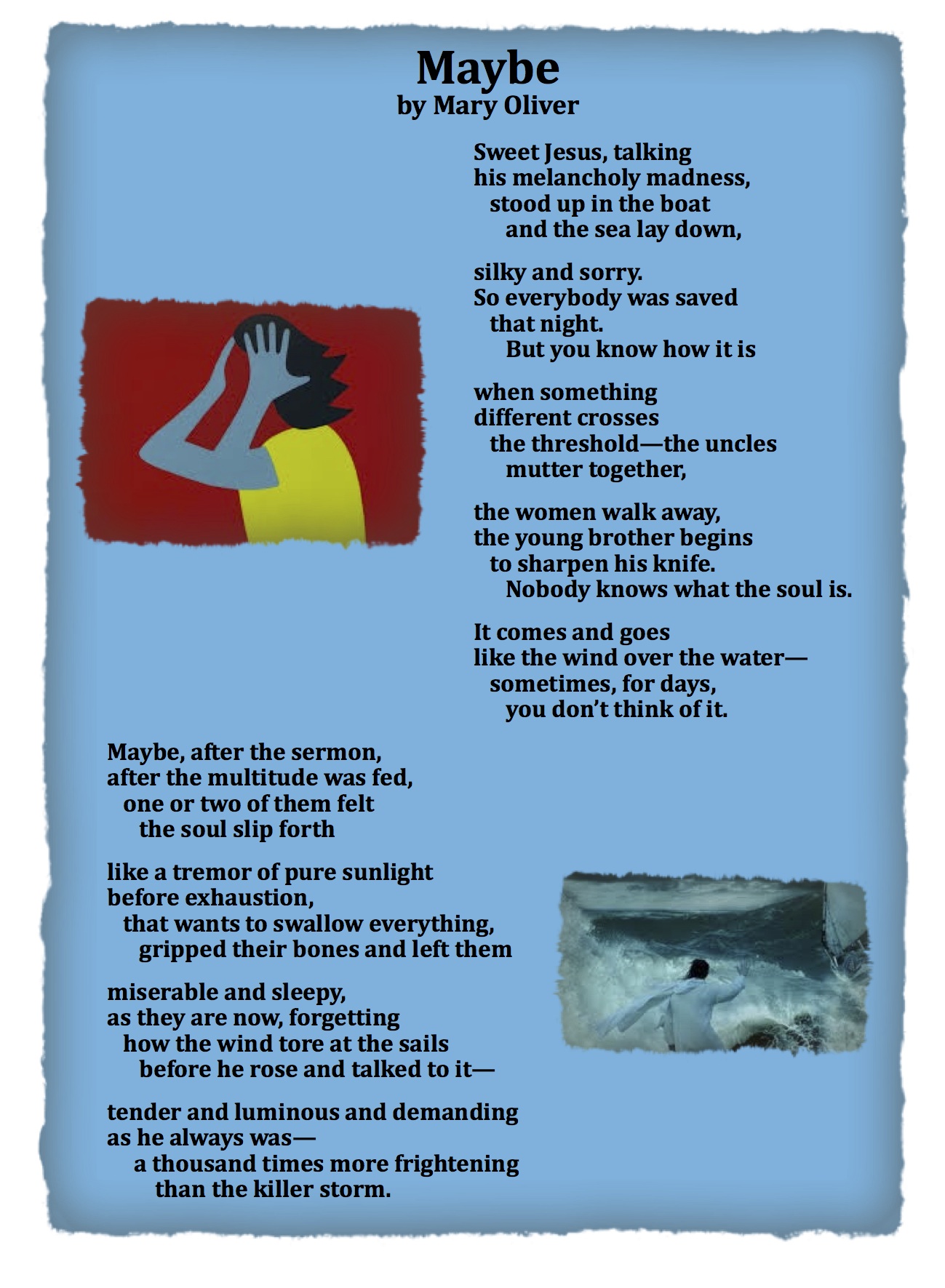
The gospel reading prescribed for this coming Sunday (Mark 3:20-35) paints a daunting picture of the perceptions of the people of Jesus’ hometown. The folks who knew Jesus, including his family worried that he might just be “out of his mind.” This is indeed a contrast to the ways in which Jesus is typically portrayed. This is a dangerous Jesus who ran the risk of being perceived as deranged. In his book “The Underground Church: Reclaiming the Subversive Way of Jesus” Robin Meyers captures some of this danger when he points to Mary Oliver’s poem “Maybe” in which Jesus’ “melancholy madness” is seen by his fellows as more dangerous than a storm. Safely ensconced in our imaginations, Jesus is rarely allowed to threaten the status quo to which we cling for dear life. Are we prepared for the stormy waters that would be stirred up should we take Jesus at his word? Maybe…
When I was just a kid, I had what can best be described as an adolescent crush on a teacher. Looking back on it now, I’d have to say that I fell head over heels in love with my teacher. It was the kind of love that only a 13 year-old girl could have; so intense and all consuming. I came to believe that this teacher was the wisest, kindest, most interesting person in all the world. This teacher knew more than anyone else, especially my parents. This teacher was cooler, funnier, more daring and definitely more in tune with my life than anyone I had ever met. I was convinced that if I could only be just like this teacher would mean that I too would be cooler, funnier, more daring and definitely more in tune with life. So, like most adolescent girls who are suffering from a crush I became obsessed with this teacher. I was young and I was in love, and like most thirteen year-old’s the I was convinced that the world revolved around me, so I set about pursuing my passion. This teacher taught English, so naturally, I decided that when I grew up I too would teach English. This teacher loved poetry, so I too became passionate about poetry.
One day this teacher announced that we could gain extra-credit if we wanted to enter a local poetry writing contest; and even though I was pretty sure that year I’d be getting a mark that would be somewhat better than an A, I began to write poetry. I was very serious about my poetry writing. I carried a pad of paper with me everywhere I went, and I began to ruminate about my life. I don’t remember any of those early attempts to wax poetical, but I do remember that each and every one of those poems was about me; me and my life, me and my unrequited love, me and my passion, me and the horrible way that no one paid much attention to me. Me, Me, Me, Me, it was all about me.
As the time drew near for us to submit our poetry to the competition, my teacher announced that there would be a special class after school, so that those of us who were planning to enter the competition could get some feedback on our efforts. So, by the end of the week, I would have to choose one of my great works for feedback. I spent hours pouring over one poem in particular. Tinkering with the words, trying to get things just right. I was so very proud of the final draft. I’d carefully copied it out on to a crisp piece of foolscap. Arranged the letters in the middle of the page so that they looked just so. I could hardly wait for school to be over so that I could rush to see what comments my beloved teacher had placed in the margin. There were barely a handful of us who stayed after school.
Looking back on that scene, we were a nerdy little crew. I was positively breathless as my teacher handed my offering back to me. To this day, I can’t remember a single line of my great work, but I can tell you word for ward what was scribbled in red in the margin of the ever so white foolscap. “A little self-involved, try looking outward.” I was devastated. How could anyone be so cruel? I’d poured my heart out only to have it stomped on by the indifference of truth. Continue reading →
I am indebted to Jim Kast-Keat, a pioneering preacher who inspired me to open this sermon with the video below. I am also indebted to Bishop John Shelby Spong for teaching me more that I can articulate with words. His excellent book The Fourth Gospel: Tales of a Jewish Mystic opened the Gospel According to John in ways that have helped me to see aspects of the Divine to which I was once blind. Much of the sermon consists of extensive quotes from chapter 9 of Jack’s book.
Readings: John Chapter 2 and John 3:1-17
Watch the video below carefully before reading or listening to the sermon the sermon below.
Listen to the sermon:
So, before tackling the story of Nicodemus, I want to toss two balls into the congregation. The first ball I want to toss over here to this side of the congregation represents something all too familiar, biblical literalism. We know all too well that this particular ball has been distracting the church and most of the western world for the past few centuries. The second ball I want to toss over here to this side of the congregation represents historical biblical criticism. This particular ball is newer. It’s only been seriously tossed about for the past couple of centuries, but it is a really serious contender for our attention. But these balls have acquired a rather rhythmic bounce that tends to mesmerize us. Add to that these other balls the balls of church doctrine and theological dogma and before you know it we are so distracted that we forget what game we were trying to play in the first place as we try to keep up with the various passes made by players that have taken on a professional edge that leaves us watching from the sidelines unable to focus one of them.
None of these balls commanded the attention of the early Christians. They simply weren’t interested in taking the scriptures literally, nor were they particularly interested in the historicity of the scriptures. As for doctrine and dogma, well they were left to the professionals who only came to town on those unpleasant occasions when the league needed to ensure that it’s franchises continued to rake in enough money to keep the game on a sure footing. The scriptures, like all sacred writings, were about so much more than words scribbled on a scroll. The scriptures, like all scared writings, are about the mysteries of life. But these balls have been served up for us to play with and literalism and concerns about historical accuracy have done a magnificent job of distracting us from what really matters in these texts. Our fascination with the details of the fight-patterns of the balls that are tossed around whenever the stories in these texts play through our lives, have caused us to miss so many moon-dancing bears over the years.
Please don’t get me wrong, I love tossing these balls around and over the years I’ve learned to play ball with the best of them. But when a moon-walking bear dances onto the court, at the very least, we ought to notice the bear’s moves because the only way we’re going to learn to dance with these bears is by paying attention.Continue reading →
Last year, in the Spirit of Pentecost, I preached without a manuscript and conscripted the congregation into helping me to describe mystical experiences. The cacophony of voices you will hear captures what happened. If you fast forward past the congregational uproar you will hear a recap using Rudolph Otto’s description of the experience o the Numinous which he describes as “Mysterium, Tremendum et Facinans – Mysterious, Tremendous and Fascinating.
Fanning the Flames: a sermon for Pentecost Sunday:
Pentecost is the birthday of the Church. Birthday celebrations lend themselves to the telling of stories. So, we begin with a parable by the radical theologian Peter Rollins. So, sit back and try to imagine that you live not at the beginning of the 21st century but at the middle of the 21st century; say about 2050. The world has changed quite a bit. “It seems that in the future laws will be passed declaring that all those who follow the teachings of Jesus are subversive. Churches have been banned and to be a follower of Jesus is illegal. You have just been accused of being a believer. You’ve been arrested, and dragged before a court. You have been under clandestine surveillance for some time now, and so the prosecution has been able to build up quite a case against you. They begin the trial by offering the judge dozens of photographs that show you attending underground church meetings, speaking at religious events, and participating in various prayer and worship services. After this, they present a selection of items that have been confiscated from your home: religious books that you own, worship CDs, and other Christian artifacts. Then they step up the pace by displaying many of the poems, pieces of prose, and journal entries that you had lovingly written concerning your faith. Finally, in closing, the prosecution offers your Bible to the judge. This is a well-worn book with scribbles, notes, drawings, and underlinings throughout, evidence, if it were needed, that you had read and reread this sacred text many times. Throughout the case you have been sitting silently in fear and trembling. You know deep in your heart that with the large body of evidence that has been amassed by the prosecution you face the possibility of a long imprisonment or even execution. At various times throughout the proceedings you have lost all the confidence and have been on the verge of standing up and denying Christ. But while this thought has plagued your mind throughout the trial, you resist the temptation and remain focused.
Once the prosecution has finished presenting their case the judge proceeds to ask if you have anything to add, but you remain silent and resolute, terrified that if you open your mouth, even for a moment, you might deny the charges made against you. Like Christ you remain silent before your accusers. In response you are led outside to wait as the judge ponders your case. The hours pass slowly as you sit under guard in the foyer waiting to be summoned back. Eventually a young man in uniform appears and leads you into the courtroom so that you may hear the verdict and receive word of your punishment. Once you have been seated in the dock the judge, a harsh and unyielding man, enters the room, stands before you, looks deep into your eyes and begins to speak. “On the charges that have been brought forward I find the accused not guilty.”
“Not guilty?” your heart freezes. Then, in a split second, the fear and terror that had moments before threatened to strip your resolve are swallowed up by confusion and rage. Despite the surroundings, you stand defiantly before the judge and demand that he give an account concerning why you are innocent of the charges in light of the evidence. “What evidence?” asks the judge in shock.
“What about the poems and prose that I wrote?” you ask. “They simply show that you think of yourself as a poet, nothing more.” “But what about the services I spoke at, the times I wept in church and the long, sleepless nights of prayer?” “Evidence that you are a good speaker and an actor, nothing more,” replied the judge. “It is obvious that you deluded those around you, and perhaps at times you even deluded yourself, but this foolishness is not enough to convict you in a court of law.” “But this is madness!” you shout. “It would seem that no evidence would convince you!” “Not so,” replies the judge as if informing you of a great long-forgotten secret. “The court is indifferent toward your Bible reading and church attendance; it has no concern for worship with words and a pen. Continue to develop your theology, and use it to paint pictures of love. We have no interest in such armchair artists who spend their time creating images of a better world. We exist only for those who would lay down that brush, and their life, in a Christlike endeavor to create a better world. So, until you live as Christ and Christ’s followers did, until you challenge this system and become a thorn in our side, until you die to yourself and offer your body to the flames, until then, my friend, you are no enemy of ours.” “
Rollins insists that this parable is true right here and right now. We don’t have to imagine a world were Christianity is illegal for this parable to be true. Rollins insists that: “If you or I were really to take the teachings of Jesus seriously, would we not sooner or later, find ourselves being dragged before the authorities? If we were really to live a life that reflected the subversive and radical message of love that gives a voice to the voiceless and a place to those who are displaced, if we were really to stand up against systemic oppression perpetrated by those in power, then would we not find ourselves on the wrong side of the lawmakers?”Continue reading →
Mothers’ Day is not on the church’s liturgical calendar and yet the statisticians tell us that church attendance on Mothers’ Day is surpassed only by Christmas and Easter. Worship leaders who fail to mark the importance of this day do so at their peril; the same kind of peril that compels so many reluctant offspring to accompany their mothers to church. However, a simple liturgical nod in the direction of mothers or an over-the-top sentimental sermon all too often fails to capture the magnitude of the day’s significance in the history of women. Planning the liturgy is challenging enough, but writing the sermon is a challenge which promises to keep me toiling away into the dark hours of this coming Saturday. So, for my colleagues who share a similar plight: below you will find links to previous attempts to commemorate this day of days. Feel free to share your efforts with me in the comments section. Please! I need all the help you can offer!!!
Currently the Adult Education Class at Holy Cross Lutheran Church is exploring ways in which the church can once again become communities of resistance. We began with an exploration of Cynthia Moe-Lobeda’s book “Resisting Structural Evil Love As Ecological-Economic Vocation” and we have moved on to the excellent work of Robin Meyers whose Beecher Lectures have been published in “Spiritual Defiance: Building a Beloved Community of Resistance”. Below you will find the 3rd lecture in the series, UNDONE: Faith as Resistance to Empire, which we are studying in depth. For those who would like to delve deeper all three Beecher Lectures, along with a brief bio of Robin Meyers, can be found here

 A sermon for Thanksgiving inspired by Garrison Keillor and Joan Chittister; two of the best storytellers I know.













 pastordawn