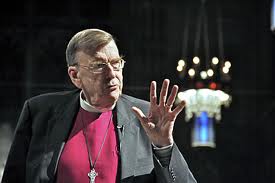
Over and over again, in conversations with people who have long since left the institution of church behind I hear: “Why don’t clergy pass on what they learned at seminary?” The plea usually comes after I’ve articulated Christianity in a way that makes sense to a 21st century mind. Below are a series of snippets of Church of England clergy articulating what they call “liberal” perspectives of Christianity. I am all too aware of the multitude of reasons/excuses that prevent some clergy from articulating Christianity the way it is taught in the academy, but I can’t help believing that there is a great hunger out there for the kind of theology that does not require church-goers to check their brains at the door!
Tag Archives: theology
“The First Muslim” – Lesley Hazleton
Lesley Hazleton’s is always worth reading! But her new book, “The First Muslim: The Story of Muhammad” is a must read for those of us who live in the West! I have blogged about Lesley Hazleton before (here and here) because I believe that as a Jewish agnostic she is a brilliantly articulate story-teller who is uniquely placed to bring a much needed understanding of Islam to Westerners. If you are looking for a great introduction to the life of Muhammad or if you’ve slogged through other biographies of Muhammad, this book will provide you with a powerful view of the Prophet who continues to speak to millions. In this video, Hazleton discusses her work.
Listening to the Drums of War and Contemplating the History of God
They’re at it again, the powers that be, calling for a military strike to punish a dictator for a military strike that went too far. As the drums of war sound, I hear phrases like “We must stand with Israel”, “Christians are being persecuted” and “Muslim Brotherhood”. When will the children of Sarah, Abraham and Hagar stop their squabbling? Surely, it’s time for us to move beyond our tribal ways? Are we doomed to go on repeating the patterns of the past or can we look into our past as a way of moving beyond our history?
“We cannot be religious in the same way as our ancestors. Our perspective has entirely changed. We have looked at the world from outer space for example. Each generation has the task of looking back at its traditions, looking back at its scriptures and looking at its own peculiar and unique circumstances and making a creative jump to apply the past tradition to the problems of the present.”
Theologian/historian/lecturer Karen Armstrong’s book A HISTORY OF GOD forms the basis for this documentary which explores the way humans have perceived the idea of a supreme being throughout history. During these days, of warmongering we would do well to reflect upon our shared histories.
An Agnostic Christian Hungering After Transcendency and Preaching a Gospel of Uncertainty
He was once the Primate of the Episcopal Church in Scotland but these days Richard Holloway describes himself as an agnostic Christian hungering after transcendency and preaching a gospel of uncertainty. The kind of religion that Holloway envisions includes the
sort of faith that bends toward inklings of transcendence in ways that exercise humility in loving ways. Holloway’s autobiography: Leaving Alexandria is as delightful a read as it is a challenge to the church to move beyond certainty to embrace doubt as the foundation of faith. Richard Holloway wears his soul as well as his heart upon his sleeve in this video. Enjoy!
Jesus Through a 21st Century Lens: Michael Morwood
I first became aware of Michael Morwood several years ago when I was looking for prayer resources that did not use anthropomorphic images of God as if the Divine is some far off character who lives somewhere out or up there waiting for us to speak the correct incantations or pass judgement prior to intervening on our behalf. We can talk, preach, teach and even insist that God is not an old angry bearded guy in the sky, but if our liturgies, prayers and hymns continue to beseech mercy from the Lord we will continue to inscribe an anthropomorphic deity upon the hearts and in the minds of those
few worshipers who continue to worship in our sanctuaries while generations of our neighbours continue to reject our sacred assemblies. Michael Morwood’s little book Praying a New Story gave me the courage to begin creating more sources for worship that move beyond theism. Since then I learned so much from Morwood as I have read all of his books, especially: God Is Near, Is Jesus God and his latest, It’s Time. I’m convinced that Morwood’s thirty years as a parish priest have provided him with the necessary insights to articulate Christianity in ways that 21st century Christians can understand. The videos below feature Michael Morwood doing just that. I encourage you to take the time to listen and learn from this brilliant theologian.
Jesus You’ve Got to be Kidding!!! a sermon Luke 14:25-33 and Deuteronomy 30:15-20 for Pentecost 16C
Still enjoying a wonderful vacation, and I am grateful not to have to preach on the difficult text assigned for this Sunday. Here’s a facsimile of the sermon I preached a number of years ago on the gospel text.
Now large crowds were travelling with Jesus and he turned and said to them, “Whoever comes to me and does not hate father and mother, wife and children, brothers and sisters, yes, and even life itself, cannot be my disciple. Whoever does not carry the cross and follow me cannot be my disciple. For which of you, intending to build a tower, does not first sit down and estimate the cost, to see whether he has enough to complete it? Otherwise, when the foundation is laid and the tower cannot be finished, all who see it will begin to ridicule the builder, saying, “This person began to build and was not able to finish.’ Or what king, going out to wage war against another king, will not sit down first and consider whether he is able with ten thousand to oppose the one who comes against him with twenty thousand? If not, then, while the other is still far away, he sends a delegation and asks for the terms of peace. So therefore, none of you can become my disciple if you do not give up all you possession Luke: 14:25-33
Jesus you’ve got to be kidding! “Whoever comes to me and does not hate father and mother, wife and children, brothers and sisters, yes and even life itself, cannot be my disciple?…None of you can become my disciple if you do not give up all your possessions?”
Hate your father; hate your mother; hate your wife; hate your children; hate you brothers; hate your sisters; hate even life itself and oh yes while you are at it give up all you possessions and then, and only then will you be ready to take up your cross and follow Jesus. What is Jesus talking about? Has Jesus forgotten about the fourth commandment? Are we to forget about honouring our parents? Wasn’t it Jesus who said that we are to love our neighbours as we love ourselves? Didn’t Jesus try to talk people into loving their enemies? Has Jesus forgotten that God is love? Why does Jesus rant and rave about hating our father’s, mothers, children, sisters, brothers and even life itself?
It is difficult to recognize the Jesus in this text. This is not the gentle Jesus of my childhood. This is not the happy Jesus who smiled out from the pictures in my illustrated Bible.This is not the Jesus that the rightwing conservative Christians point to when they harp on about family values. This is not the gentle Jesus we have come to expect. This Jesus sounds to harsh. This Jesus wants to turn us into religious fanatics who hate everybody and give up everything, even life itself.
For a few years now, there has stood on the shelf above my desk a quotation from Deuteronomy 30. I put it there so that these word’s of God might guide me in my decision making. According to the writers of Deuteronomy, God says: “I have set before you life and death, blessings and curses. Choose life so that you and your descendants may live”. God says “Choose life!” How do I reconcile this to the Gospel lesson in which Jesus says whoever does not hate even life itself, cannot be a disciple of Jesus? Why was Jesus so harsh? What is going on here? Continue reading
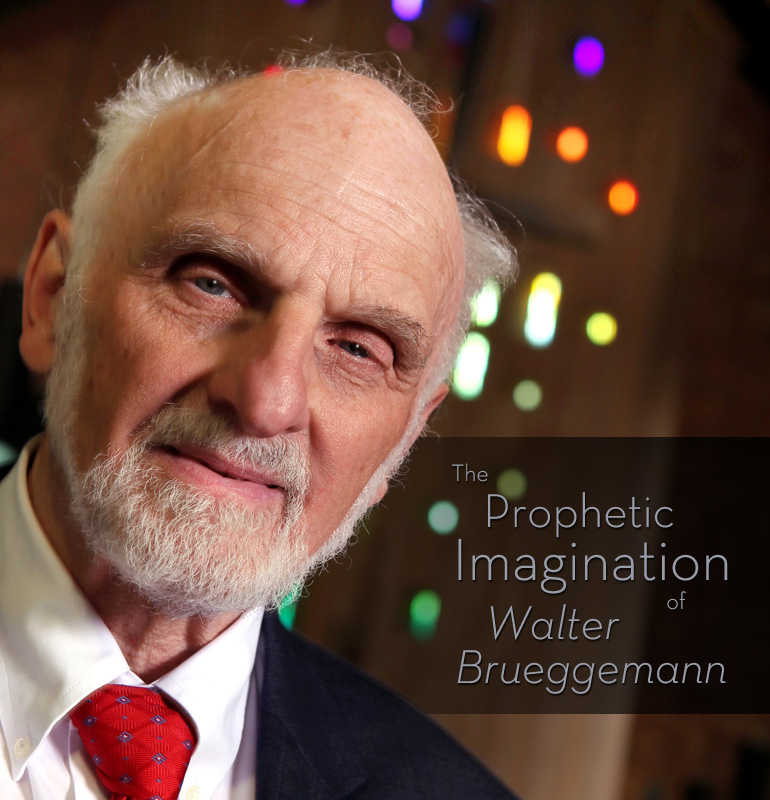
Prophetic Imagination: Walter Brueggemann
Those of us who presume to preach on the prophetic books of the Bible do so at our own peril. One of the best ways to avoid much of that peril is to first consult the work of the great Walter Brueggemann. Krista Trippett’s extended interview of this eminent theologian provides delightful insights into the faith of the man who has influenced several generations of preachers. Enjoy!
Radically Faithful: Passionate Christianity Confronting Empire and Savage Inequality – John Dominic Crossan
John Dominic Crossan is by far my favourite New Testament scholar. That he just happens to be one of the leading New Testament scholars in the world has something to do with why I hold his work in such high esteem. More importantly, my love for Dom stems from the generosity with which he has shared his gifts, talents, wit and considerable charm with our little congregation. Holy Cross has been blessed to play host to Dom twice and during his weekends with us we learned so very much from him.
In the videos below, Dom delivers three lectures at All Saints Church in Pasadena (2010). The dvd education program mentioned at the beginning, “The Challenge of Jesus” is brilliant. Holy Cross’ Adult Education Class used it in 2011 and I highly recommend it!!!
The Guests Watched Jesus Closely: sermon – Pentecost 15C – Luke 14:1, 7-14
On vacation, so:
here’s a facsimile of the sermon I preached three years ago when Luke 14:1, 7-14 last appeared in the lectionary.
One Sabbath, when Jesus came to eat a meal in the house of one of the leading Pharisees, the guests watched him closely. Jesus went on to address a parable to the guests, noticing how they were trying to get a place of Honour at the table. “When you’re invited to a wedding party, don’t sit in the place of honour, in case someone more distinguished has been invited. Otherwise the hosts might come and say to you, ‘Make room for this person,’ and you would have to proceed shamefacedly to the lowest place. What you should do is go and sit in the lowest place, so that when your hosts approach you they’ll say, ‘My friend, come up higher.’ This will win you the esteem of the other guests. For all who exalt themselves will be humbled, and those who humble themselves will be exalted.” Then Jesus said to the host, “Whenever you give a lunch or dinner, don’t invite your friends or colleagues or relatives or wealth neighbours. They might invite you in return and thus repay you. No, when you have a reception, invite those who are poor or have physical infirmities or are blind. You should be pleased that they can’t repay you, for you’ll be repaid at the resurrection of the just.
I have often heard Jesus’ teaching about who sits where at a wedding feast used to encourage a kind of humility that requires those who would follow Jesus to take a back seat or better still adopt a cloak of invisibility lest we be mistaken for the proud and self-righteous. Canadians have a special affinity for this particular way of interpreting this text. It seems to me that the image of Canadian humility suggests that Canadian Christianity has had a huge impact upon our national psyche. I know that there are many who would insist that our humble national character is a direct result of living in the shadow of the Americans, whose national identity is anything but humble. I have to admit that the constant drumbeat of “We’re number one!”, “We’re number one!” coupled with a patriotism that champions the idea of American Exceptionalism which is the notion that the United States alone has the right, whether by divine sanction or moral obligation, to bring civilization, or democracy, or liberty to the rest of the world, by violence if necessary. With such pride of place, you can be sure that each and every one of our American cousins is endowed with the confidence on knowing exactly where they belong at the head table. So, is it any wonder that living next-door to a nation that instills such patriotic ardor in its citizens, that we Canadians would find a more humble approach more appealing.
Don’t get me wrong; I know that stereotypes rarely express the full character of a nation and so, it would be a mistake to paint all Americans with the same brush. But I dare say that you’d be hard pressed to find a Canadian who would disagree that even the most enlightened of our American cousins who might be found from time to time to speak softly, doesn’t underneath it all carry a big stick. Where Bravado flows through our American cousin’s national character, most Canadians prefer a quieter, softer, gentler approach, lest we be confused with the worst of American stereotypes: “the ugly American.” Continue reading
The Muslim Jesus
Only in Canada eh? Last week, I enjoyed a quintessential Canadian vacation at a rented cottage in Muskoka. Our neighbours in the cottage next-door were delightful companions around the campfire of an evening. It didn’t talk long for us to learn that our neighbours came to Canada from Afghanistan as refugees during the Soviet invasion. When our conversation moved into the realm of religion, I was dismayed that some of the Christians around our campfire were surprised by one of our new friend’s who explained that, “A person cannot be a Muslim unless they believe in Jesus!”
In a country like Canada, were we have worked together to achieve a level of multiculturalism that most Canadians take pride in, it is disappointing to be reminded how little Christians seem to know of Islam, particularly when it comes to the role Jesus plays in the Islamic faith. I am grateful to our new Canadian-Afghani friends for their patience as they gently explained to my companions their love for the prophet we revere in common.
I have blogged before on the subject of Jesus in the Qur’an. I also commend this British documentary: The Muslim Jesus. The more we learn about one another, the better able we are to love our neighbours.
The Bible, Women and Violence: Amy-Jill Levine
As always Dr. Amy-Jill Levine’s consummate scholarship encourages and enables her listeners to seriously and holistically engage biblical texts. Violence against women in all its forms, whether they be physical, sexual, emotional, economical, or psychological types of violence, is a global, national, denominational and domestic problem that has all too often been enabled by interpretations of the bible that fail to take the bible seriously or engage its texts adequately. Please watch, listen, digest, and go forth and do likewise.
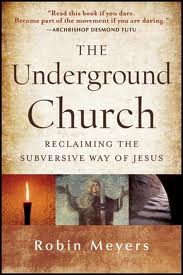
“Church: A Nine Pound Sparrow that is Afraid to Fly”
At the beginning of his latest book, “The Underground Church: Reclaiming the Subversive Jesus”, Robin Meyers quotes Fred Craddock to ask how the church became a nine pound sparrow that is afraid to fly? Questioning the domestication of what was once an underground church, Meyers bemoans the church’s current state of
domestication and sentimentality. I’ve blogged about Meyer’s before and highly recommended his earlier book: “Saving Jesus from the Church: How to Stop Worshiping Christ and Start Following Jesus.” I have just re-read both books and I think that they are must-reads for anyone who cares about the future of Christianity. Watch this brief video for a sample of Meyers dreams for the subversive way toward the Reign of God where everyone has enough.
Escaping Our Survival Mentality: John Shelby Spong
Bishop Spong interviewed in his home on August 17, 2013
Jack speaks about his new book The Fourth Gospel: Tales of a Jewish Mystic Listen to the extended interview here
The Bent Over Woman – Luke 13:10-17
It was hot. Already the sun had parched the earth. The air was still. The ground beneath her feet radiated the heat. She was tired. Earlier she had thought about staying at home. Her weary body could use a rest. All week long she had toiled in the heat of the sun. On this Sabbath she longed to rest her crumpled, aching body. She tried to ignore the weakness she felt. She had suffered long and hard. She couldn’t even remember when or how she had become so weak. Over the years, her weakened spirit had left her body bent and crippled. The evidence of her heavy burdens could be seen in her crooked spine. She was ashamed of her appearance.
It had been eighteen long years since she had stood straight and tall. She vaguely remembered running when she was a child. She ran everywhere back then. She ran faster than anyone else in the town. She loved to run. Running made her feel free.
Her mother used to warn her not to run. Her mother tried to stop her. But she was so full of life. She wanted to see everything. She wanted to do everything. She wanted to go everywhere.
Her mother warned her not to be so curious. Her mother tried to keep her busy. Her mother tried to keep her out of trouble. But it was no use, no matter how many tasks her mother gave her; she always managed to find time to explore. She had so many questions. She wanted to know how things worked. Life was so very exciting. She dashed from one adventure to the next. She ran everywhere, everyday. Except of course on the Sabbath. On the Sabbath she walked. She walked with her family to the synagogue. She loved to go to the synagogue. As her father and brothers took their places at the feet of the rabbis, she sat quietly with her mother and sisters and the other women and girls in the back of the synagogue. She listened carefully as the men and boys talked. Continue reading
Starry, Starry, Darkness: sermon for Pentecost 12C
I’m a Doubter Not a Believer – Preparing to Preach on FAITH
Preaching on Luke 12:32-40 and Hebrews 11:1-16
“Do not be afraid, little flock, for it is your Abba’s good pleasure to give you the kin-dom” So begins the gospel reading for this coming Sunday. But I am afraid and my fear is not about the the thief who this text insists may break into my house or that the Human One is coming at some unexpected hour. No my fear is wrapped up in my desire to pay little or no attention to the second reading prescribed for this Sunday from the letter to the Hebrews:
“Faith is the reality of all that is hoped for; faith is the proof of all that is unseen. Because of faith, our ancestors were approved b God. By faith, we understand the world was created by the word from God, and that what is visible came into being through the invisible…..”
Do I have faith? Do any of us have faith? For that matter: What is faith? According to Hebrews faith “is the reality of all that is hoped for; faith is the proof of all that is unseen.” Faith is the stuff that makes it possible for us to hear Jesus words: “Do not be afraid, little flock, for it is your Abba’s good pleasure to give you the kin-dom.” Faith is the stuff that makes it possible for us to believe. So I wonder: Do I have faith? Do I have the faith that makes it possible for me to believe? Do you? Do any of us?
I write this as one who finds it difficult and sometimes even impossible to believe much of anything. I am a doubter by nature. Doubting is part of who I am. I know that there are those who are more inclined to believe and I am envious of believers. I envy those who are sure and are able to find comfort in the Scriptures. For a very long time I was ashamed of my inability to believe. I often sat in church and wondered if I might just be a hypocrite. I wondered if someone who had as many doubts as I have belongs in the church. And so, I tried to conquer my doubts by studying the Scriptures. Continue reading
At the Heart of Happiness Lies Compassion for Others: Karen Armstrong
Karen Armstrong, a provocative original thinker whose many books on religion have educated a generation of modern seekers. Armstrong has a unique perspective. She’s a former nun who moved on to academia to study comparative religion and has become an advocate for the Golden Rule. Her books on Islam, Buddhism, Judaism, Christianity and the History of God are a wealth of information and have become must reads for those who study or practice religion. He autobiographical works are well worth reading: The Spiral Staircase is particularly compelling!
Reordered at Conway Hall by Action For Happiness on April 18, 2013
“Why Christianity as We know It is Dying” Bishop John Shelby Spong
Here’s Jack’s first lecture from the “Future of the Progressive Church” conference held on August 3, 2013 at the Community Christian Church in Springfield, MO. (the sound has now been corrected, thanks to Dr. Roger Ray and the good folks of his congregation for sharing this amazing conference!). You can watch Jack’s second lecture here. As always, Jack’s charming wit coupled with his keen insight is able to move us to places we might never have dreamed of going!!! Well worth watching!!!
What do the Feast Day of the Transfiguration and Hiroshima Day Share?
Today is Hiroshima Day. It is also the Feast of the Transfiguration. So I am reposting this as it appeared earlier this year in preparation for the Sunday of the Transfiguration.
You Have the Power
to Transfigure the Face of God
When our images of God are tied to the idol of a supernatural sky-dweller who has the power to solve all our problems, despair is sure to follow as our super-hero fails time after time to impress us.
When I was a very little girl, I was absolutely convinced that I had the power to change the mind of God! Confident that I held such power, I never missed an opportunity to exercise it. Now, I’ll grant you that like most children, I was also convinced that the universe itself actually revolved around me, so believing that I was powerful enough to change God’s mind, wasn’t exactly much of a stretch. In fact, when I was a child, it wasn’t all that difficult to change God’s mind. For instance, I could stop God from breaking my mother’s back simply by leaping over a crack in the pavement. “Don’t step on a crack and break your mothers back.” Now, in my young mind the only one powerful enough to crush my mother’s powerful spine, must be God. I also knew that God wasn’t particularly fond of ladders, and that if I refrained from walking under them, God would smile upon me.
I had no idea why black cats, or spilling salt, or breaking mirrors, or opening umbrellas inside, or leaving hats on the bed, or putting new shoes on the table, would annoy God, but I knew enough to avoid doing such things. I was absolutely sure that God would respond positively if I managed to pull a turkey’s wishbone apart in just the right way so that I was left holding a piece larger than the piece my brother was left with. God also responded well if I knocked on wood, or caught sight of a falling star, or if I crossed my fingers and hoped to die.
I didn’t need to understand why my activities worked to influence the heart and mind of God, I simply knew that they did and would continue to do so just as long as I continued to avoid the necessary evils and indulge in an apple a day, and managed to blow out all the candles on my birthday cakes.
The universe that revolved around me might have been full of all sorts of rules, but it would continue to revolve exactly the way I wanted it to if I managed to placate the old guy up in the sky who was pulling every body else’s strings. I never once considered that that old God in the sky was pulling my strings because I was absolutely confident in my ability to do what was necessary to pull God’s strings.
But as I grew up, I began to learn that despite my best intentions, the universe did not revolve around me. Little by little I learned that I didn’t have what it takes to influence all of the things that were having an impact upon my life. And just as surely as my powers waned, so too did the powers of God. Continue reading
Bishop John Shelby Spong interviewed on the day DOMA was consigned to the history books
“You don’t resist consciousness, nor do you turn it around. Nobody would contemplate re-segregating; no one would contemplate taking the vote away from women. Nobody will contemplate forcing gay and lesbian people to go back into the closet today – we just passed that, and consciousness doesn’t go in a two-way street; it’s always a one-way direction. You’re always more open to the future.” – Bishop John Shelby Spong
I first met Jack Spong in 2008 when he travelled to what he called “the frozen north” to help us launch our Re-Thinking Christianity Speaker Series at Holy Cross Lutheran Church in Newmarket. At that time, from the confines of my church imposed closet, I and many others were working together to end the Evangelical Lutheran Church in Canada’s discrimination against LGBT members. The terms of my closeted existence meant that I could not speak publicly about who I am lest my denomination take actions against me because of who I love. So, Jack and I spoke privately about the struggle that my life had become. His gentle encouragement “to be all that I am created to be” together with the love and support of so many others gave me the courage to come out into the struggle in more public ways as Holy Cross defied the discriminatory policies of our denomination.
Jack has returned to Holy Cross several times over the years and each time his love and support has been a blessing to our congregation and to so many people in our part of the world. A great deal of water has flowed under a good many bridges since our first meeting. Over the years, our community has continued to be blessed by Jack’s visits and his considerable support. The Evangelical Lutheran Church in Canada has removed constitutional barriers to the full inclusion of LGBT members and we continue the work of living into our vision of equality for all. Even though I have married the love of my life, I continue to serve as the pastor of what Jack has dubbed “the jewel of the north” and surprise, surprise, the sky has not fallen in. My wife Carol and I are both grateful to Jack and his lovely wife Christine for their ongoing love and encouragement!
The interview below took place on June 26th, 2013, the day the U.S. Supreme Court announced its monumental decisions on the Defence of Marriage Act and California’s Proposition 8. As I watched it, I was reminded that the struggle for the rights of LGBT folk is only one of many human-rights struggles that Jack has engaged in during his long and distinguished career. Jack is a giant among men; and not just because of his great height or his former office, but because he lives the benediction he teaches: “If God is the source of life, I worship God by living. If God is the source of love, I worship God by loving. If God is the Ground of Being, I worship God by being more fully human; the embodiment of the Divine.” Thank-you Jack for all you’ve done to help so many of us to embrace our humanity and thereby embody our Divinity!!!