The Reign of God Is At Hand: Our Hands – a sermon for Pentecost 7B – Mark 6:14-29

John the Baptist's headThe beheading of John the Baptist is an unusual subject for a beautiful summer morning. However, from time to time the lectionary takes us where we are reluctant to go. Our readings included: Mark 1:1-11, Mark 1:14-15 and Mark 6:14-29
Listen to the sermon here

Time to stop holding our noses as we suspend reality! Let’s tinker with the rite of baptism…

Baptismal Liturgy pastordawnOver and over again, I hear from colleagues who find it difficult to use prescribed baptismal liturgies. In my own denomination, the Evangelical Lutheran Worship hymnal was published in the 21st century (2006). But the liturgical rite for Holy Baptism still prescribes the use of questions which contain images that harken back to medieval times. We have long since given up teaching our members to personify evil in the form of the devil. But the authors of our new liturgical texts insist that we continue to ask parents and sponsors to “renounce the devil an all the forces that defy God”; locking participants into some sort of cosmic battle in hich both evil and indeed God are personified in ways that most 21st century folks find archaic. As a confessional church, creeds continue to include proclamations of a virgin birth; an obstacle that seems laughable to people who have had the benefit of New Testament scholarship. Clergy who preside at baptisms are expected to hold our noses, while participants suspend reality and still the church continues to bemoan the fact that few and few parents bring their children to our fonts. In an effort to work with parents and sponsors to create baptismal rites that allow for the possibility that the Spirit is alive and well and working in, with, through, and beyond our feeble attempts to celebrate the miracle of new life, I have over the years tinkered with the rite of baptism. We have for several years now celebrated the rite of baptism using the liturgy which is provided here as an inspiration for others to tinker with the rite. 

click here for a pdf of our 21st Century Baptismal Liturgy

Peter Rollins on Radical Theology

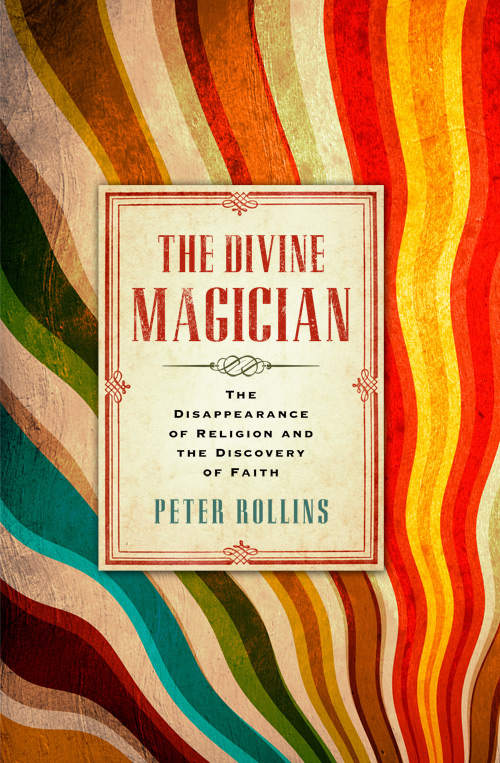
thedivinemagicianIn April, I had the privilege of travelling to Belfast to attend Peter Rollins’ Festival of Light where he gathered together some of the thinkers who have influenced his thinking. In his book The Divine Magician the fruit of this influence provides an expression of radical theology which has the power to ignite what Pete calls “pyrotheology”. Here are a few short videos which are designed to fan the flames. Enjoy!  

A Little Knowledge Is A Dangerous Thing: a sermon for Pentecost 2B

Schrodinger's Cat

Readings: Genesis 3:8:15 and Mark 3:20-35

Listen to the sermon Pentecost 2B sermon

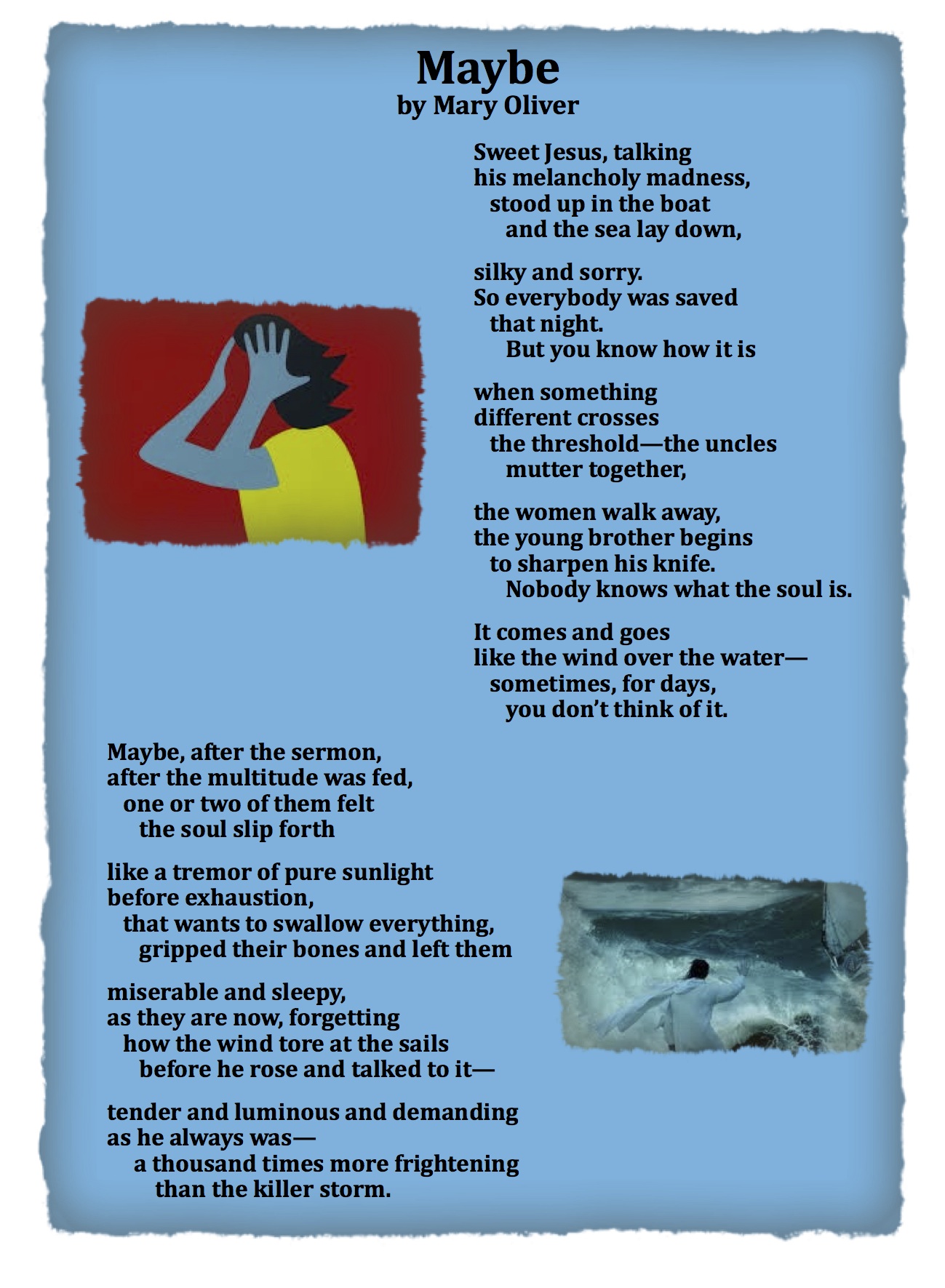
Maybe Jesus was as the Gospel says, “out of his mind.”

The gospel reading prescribed for this coming Sunday (Mark 3:20-35) paints a daunting picture of the perceptions of the people of Jesus’ hometown. The folks who knew Jesus, including his family worried that he might just be “out of his mind.” This is indeed a contrast to the ways in which Jesus is typically portrayed. This is a dangerous Jesus who ran the risk of being perceived as deranged. In his book “The Underground Church: Reclaiming the Subversive Way of Jesus” Robin Meyers captures some of this danger when he points to Mary Oliver’s poem “Maybe” in which Jesus’ “melancholy madness” is seen by his fellows as more dangerous than a storm.  Safely ensconced in our imaginations, Jesus is rarely allowed to threaten the status quo to which we cling for dear life. Are we prepared for the stormy waters that would be stirred up should we take Jesus at his word? Maybe…

Maybe Mary Oliver pastordawn

Moving beyond doctrines of Original Sin, The Fall, and maybe even the Doctrine of Grace, so that we can embrace our role in the Evolution of Humanity – a sermon on Genesis 3:8-15 for Pentecost 2B

We Are Stardust!!! Billion Year Old Carbon!!!

We Are Stardust!!! Billion Year Old Carbon!!!

Try to remember the summer of 69. Pierre Trudeau had only been in office for a year. Richard Nixon was in the White House. The Vietnam was raging. Chappaquiddick and the Manson Murders dominated the news that summer. Neil Armstrong became the first man to walk on the moon. The Beatles’ Album Abbey Road was number one. Sesame Street debuted on Public television while the Brady Bunch debuted in prime time to compete with I Dream of Jeanie and Bewitched. In that last beautiful summer of the 60’s, 350,000 young people flocked to a farm in upstate New York for the three-day musical extravaganza that was Woodstock.

My family moved to Vancouver that summer and I turned twelve; too young to be a flower child of the sixties, but old enough to become a fan of the music of the sixties. Not many of us knew about Woodstock while it was happening. But when we found out, many of us wished we’d been there. Over the years millions of people have claimed that they were at Woodstock, despite the fact that the site could barely manage to accommodate the 350,000 thousand who did attend. News didn’t travel so quickly in those days. Woodstock may have captured the imaginations of millions but that was almost a year after the event when record albums began to hit the shelves.

Back then one of my prized possessions was my small transistor radio, which I held up to my ear so that I could listen to all my favorite tunes. The quality of the sound was abysmal. So, if you liked a song you heard you just had to rush out and buy a 45, for less than a dollar. I remember lining up to buy a copy of the number 1 tune that summer: Sugar Sugar by the Archies. But if you really liked a singer or a group, then you would have to save your money so that you could plunk down $5.00 for an LP, shot for Long Playing Album. That summer I spent weeks saving my baby-sitting money, about .25 cents an hour so that I could get my very own copy of The Fifth Dimension’s latest album, The Age of Aquarius. I was dancing and singing, “Let the Sunshine” and dreaming of becoming a teenager. Back then it took a whole year for the music from Woodstock to begin to seep into the culture. And so it was long after the summer of 69, that I got my very own copy of the quintessential album of the Woodstock generation: Crosby, Stills, Nash and Young – Déjà vu. I wore that album out. Our House, is a very, very, fine house! Teach your children well! Helpless, helpless, he…lpless! And then there was the best song on that album. Joni Mitchell may have written the song called Woodstock, but it took Crosby, Stills, Nash and Young to make it timeless.

Well, I came upon a child of God


He was walking along the road


And I asked him, Tell where are you going?


This he told me


Said, I’m going down to Yasgur’s Farm,


Gonna join in a rock and roll band.


Got to get back to the land and set my soul free.


I must have listened to that song a thousand times trying to learn the lyrics, but try as I might a line from the chorus eluded me. I just couldn’t figure out what they were saying. Do you remember the chorus? We are stardust, we are golden,
 We are ???? what was the next line? We are stardust, we are….something, something, and we’ve got to get ourselves back to the garden. We are stardust, we are golden… We are ….billion year old carbon,
 And we got to get ourselves back to the garden.

 Well, then can I walk beside you?


When I finally figured out the lyrics, I was no wiser, I was lost…I couldn’t for the life of me figure out what they were on about. But it sounded good!!! So, I kept playing and I kept singing.

Over the years, I’ve hummed and sung along, trusting that we’ve got to get ourselves back to the garden. And longing for a simpler time, when I was young and still believed that Adam and Eve had once frolicked blissfully in the pristine garden of Eden, and if we could only recapture the innocence of that garden all would be right with the world. I remember as a teenager, hearing sermons about Adam and Eve’s fall from grace, as the start of it all. Something went terribly wrong; if only Eve hadn’t have listened to that snake and if only Adam hadn’t listened to Eve, then evil wouldn’t have entered creation and we’d all be able to frolic in the garden with God. If only we could get ourselves back to the garden, Jesus would not have to suffer and die for us: “For we are in bondage to sin and cannot free ourselves. We have sinned against God in thought, word and deed, by what we have done and by what we have left undone. We have not loved God with our whole heart; we have not loved our neighbours as ourselves. And so for the sake of your Son , Jesus Christ, have mercy on us. Forgive us, renew us, and lead us, so that we may delight in our will and walk in your ways, to the glory of your holy name. Amen.” Week after week, year after year, Sunday after Sunday, I grew to understand that I along with all of humanity am in bondage to sin and we cannot free ourselves. Because Adam and Eve fell from grace, the stain of that original sin marks me as inherently sinful. Continue reading

Poor Old Nicodemus – Doomed to Play the Fool: a sermon on John 3:1-17, Trinity Sunday

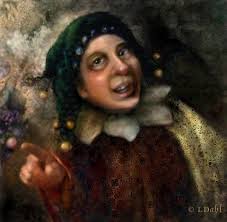
foolReadings: Psalm 29, Matthew 28:16-20, John 3:1-17

Listen to the sermon here

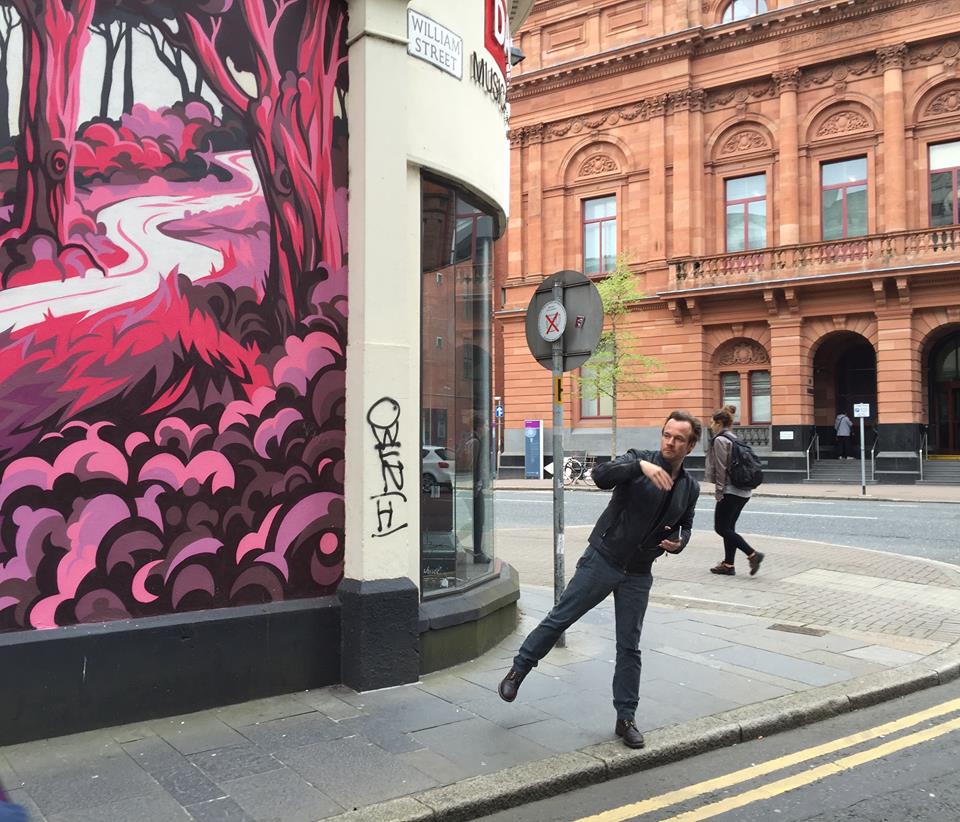
Fellow Tricksters – Belfast 2015

Tricky PeteA month ago, I journeyed back to the city where I lived when I was but a child to attend Peter Rollins’ Tricks of the Light Festival. There I was privileged to  explore radical theology with about fifty fellow tricksters from around the world. It was an amazing experience which took me into the realm of the Great Beyond. This merry band was collected together by glimpses of magic each of us has garnered from Pete Rollins’ work. Together we encouraged, challenged, comforted and inspired one another to step beyond ourselves, our ideas, our carefully constructed realities, so that we might see visions of the Perhaps that lives in, with, through, and beyond us all. For three amazing days and four rollicking nights we let loose our trickster-selves on the city of Belfast.

Fellow trickster, Laura Landry created the video below which captures the flavour of our experiences together. Iain Archer, who preformed a private concert on the closing night of the festival, provides the musical backdrop and you will see glimpses of the amazing tricksters who spoke at the festival including: John Caputo, Kester Brewin, Barry Taylor, Gladys Ganiel, the God-father of Punk – Terry Hooley, and the man himself – Peter Rollins. A big thank-you to Belfast’s own fearless, intrepid, trickster Adam Turkington  not only for keeping Pete from leading us all astray, but for ensuring that each and every one of us enjoyed so many of the sights, sounds, pleasures, and magic of Belfast! 

As for Pete, the instigator of this grand adventure, when he’s not inspiring tricksters in the flesh, he’s doing so with his work. Check out his latest book The Divine Magician: The Disappearance of Religion and the Discovery of Faith. But be warned: Pete’s work will inspire you to more than a few tricks of your own!!! As for me, I am forever changed, transformed by the tricks of the light Pete magically creates!!!

“I Pray God, Rid Me of God” – sermons for Trinity Sunday

Eckhart rid me of GodMeister Eckhart’s fervent plea: “I pray God, rid me of God” becomes a sort of mantra for me whenever the task of contemplating the Trinity rolls around on the liturgical calendar. Once again, I have failed to have the foresight to book my holidays so as to avoid the task of preaching on this festival of the church, so I find myself plumbing previous sermons in search of a way through the quagmire of doctrines which threaten to overcome even the most dedicated of preachers. I offer them here to my fellow preachers as my way of saying, “I pray God, rid me of God!!!” Shalom

click on the sermon title

While Preachers Dutifully Ponder the Doctrine of the Trinity,

Our Congregations Shrink???

“Trinity: Image of the Community that is God” Desmond Tutu

The Athanasian Creed and an Unholy Trinity

Wolf Blitzer Learned that there are Indeed Atheists in Fox-holes

Fanning the Flames: Pentecost Sunday

Pentecost: a Human Phenomenon

fanning flames pastorDawnLast year, in the Spirit of Pentecost, I preached without a manuscript and conscripted the congregation into helping me to describe mystical experiences. The cacophony of voices you will hear captures what happened. If you fast forward past the congregational uproar you will hear a recap using Rudolph Otto’s description of the experience o the Numinous which he describes as “Mysterium, Tremendum et Facinans – Mysterious, Tremendous and Fascinating.    

You Can listen to the sermon by clicking here

Click Here to find the notes I used to prepare myself

to lead this interactive sermon.

Resources for Pentecost Sunday from previous posts:

Beyond Tribalism – Preaching a 21st Century Pentecost

Celebrating Pentecost in the 21st Century

Pentecost Tongues Aflame with the Prayer attributed to Jesus

Global Engagement, Chaos Theory, the Butterfly Effect and a New Pentecost

Fanning the Flames: a sermon for Pentecost Sunday:

Pentecost is the birthday of the Church. Birthday celebrations lend themselves to the telling of stories. So, we begin with a parable by the radical theologian Peter Rollins. So, sit back and try to imagine that you live not at the beginning of the 21st century but at the middle of the 21st century; say about 2050. The world has changed quite a bit. “It seems that in the future laws will be passed declaring that all those who follow the teachings of Jesus are subversive. Churches have been banned and to be a follower of Jesus is illegal. You have just been accused of being a believer. You’ve been arrested, and dragged before a court. You have been under clandestine surveillance for some time now, and so the prosecution has been able to build up quite a case against you. They begin the trial by offering the judge dozens of photographs that show you attending underground church meetings, speaking at religious events, and participating in various prayer and worship services. After this, they present a selection of items that have been confiscated from your home: religious books that you own, worship CDs, and other Christian artifacts. Then they step up the pace by displaying many of the poems, pieces of prose, and journal entries that you had lovingly written concerning your faith. Finally, in closing, the prosecution offers your Bible to the judge. This is a well-worn book with scribbles, notes, drawings, and underlinings throughout, evidence, if it were needed, that you had read and reread this sacred text many times. Throughout the case you have been sitting silently in fear and trembling. You know deep in your heart that with the large body of evidence that has been amassed by the prosecution you face the possibility of a long imprisonment or even execution. At various times throughout the proceedings you have lost all the confidence and have been on the verge of standing up and denying Christ. But while this thought has plagued your mind throughout the trial, you resist the temptation and remain focused.

Once the prosecution has finished presenting their case the judge proceeds to ask if you have anything to add, but you remain silent and resolute, terrified that if you open your mouth, even for a moment, you might deny the charges made against you. Like Christ you remain silent before your accusers. In response you are led outside to wait as the judge ponders your case. The hours pass slowly as you sit under guard in the foyer waiting to be summoned back. Eventually a young man in uniform appears and leads you into the courtroom so that you may hear the verdict and receive word of your punishment. Once you have been seated in the dock the judge, a harsh and unyielding man, enters the room, stands before you, looks deep into your eyes and begins to speak. “On the charges that have been brought forward I find the accused not guilty.”

“Not guilty?” your heart freezes. Then, in a split second, the fear and terror that had moments before threatened to strip your resolve are swallowed up by confusion and rage. Despite the surroundings, you stand defiantly before the judge and demand that he give an account concerning why you are innocent of the charges in light of the evidence. “What evidence?” asks the judge in shock.

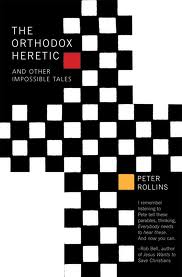
“What about the poems and prose that I wrote?” you ask. “They simply show that you think of yourself as a poet, nothing more.” “But what about the services I spoke at, the times I wept in church and the long, sleepless nights of prayer?” “Evidence that you are a good speaker and an actor, nothing more,” replied the judge. “It is obvious that you deluded those around you, and perhaps at times you even deluded yourself, but this foolishness is not enough to convict you in a court of law.” “But this is madness!” you shout. “It would seem that no evidence would convince you!” “Not so,” replies the judge as if informing you of a great long-forgotten secret. “The court is indifferent toward your Bible reading and church attendance; it has no concern for worship with words and a pen. Continue to develop your theology, and use it to paint pictures of love. We have no interest in such armchair artists who spend their time creating images of a better world. We exist only for those who would lay down that brush, and their life, in a Christlike endeavor to create a better world. So, until you live as Christ and Christ’s followers did, until you challenge this system and become a thorn in our side, until you die to yourself and offer your body to the flames, until then, my friend, you are no enemy of ours.” “orthodox herretic pastorDawn

Rollins insists that this parable is true right here and right now. We don’t have to imagine a world were Christianity is illegal for this parable to be true. Rollins insists that: “If you or I were really to take the teachings of Jesus seriously, would we not sooner or later, find ourselves being dragged before the authorities? If we were really to live a life that reflected the subversive and radical message of love that gives a voice to the voiceless and a place to those who are displaced, if we were really to stand up against systemic oppression perpetrated by those in power, then would we not find ourselves on the wrong side of the lawmakers?” Continue reading

Resisting Empire: a sermon for Victoria Day – 1 Cor. 12:12-26 and Matthew 5:23

Victoria Day Resisting Empire pastordawn

On this Victoria Day holiday weekend we explored what it might mean to be friends of the crucified and resist imperialism. Our readings included 1 Corinthians 12:12-26; The Seven Teachings Given by the Creator: A letter from Tom Little and Matthew 5:23 Listen to the sermon here

Practicing Resurrection: Sophia/Wisdom – a sermon for Mothers’ Day

Christ Sophia pastorDawnThe sermon hymn: “When Masks of God Both Age and Die” can be found here

Listen to the Mothers’ Day sermon here

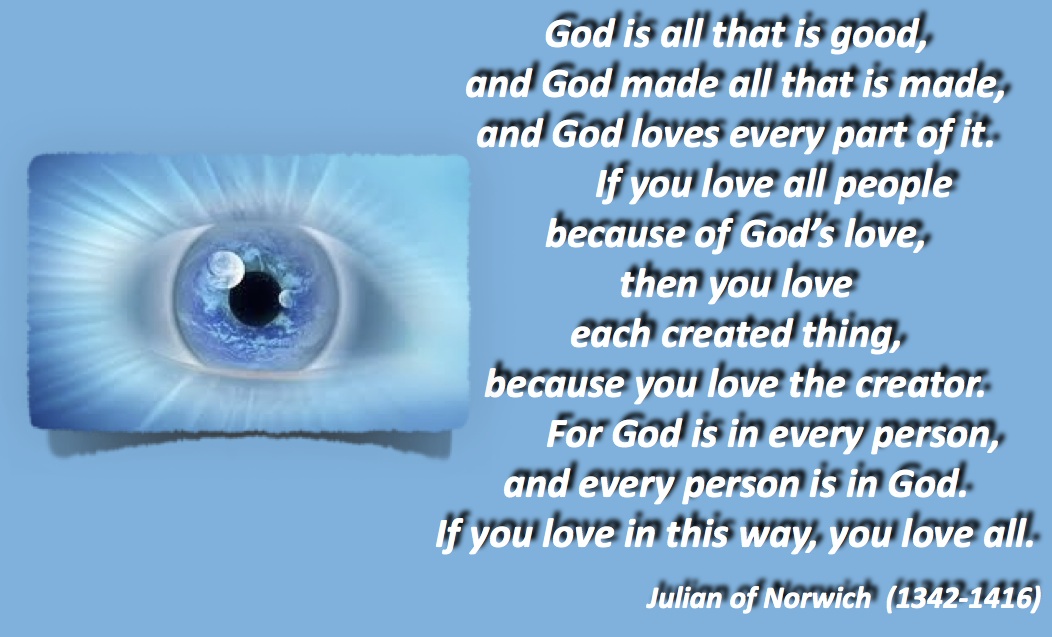
All Shall Be Well and All Manner of Things Shall Be Well – Julian of Norwich

All shall be well

Commemorating Julian of Norwich (1342-1416)

Julian of Norwich Between pastorDawnOn this her Feast Day, let us commemorate Julian of Norwich, who is perhaps one of the greatest English Mystics. Although she has never been canonized by the Roman Catholic Church she is venerated in both the Lutheran and Anglican churches. Julian is the author of the first English book ever to have been written by a woman: Sixteen Revelations of Divine Love.

Click here to listen to a meditative sung liturgy inspired by Julian’s writings

Click here to download the Worship Bulletin

which includes details of the life of Julian (designed to be printed double-sided)

Love Julian pastorDawn

Mothers’ Day Angst

True Mother Julian of NorwichMothers’ Day is not on the church’s liturgical calendar and yet the statisticians tell us that church attendance on Mothers’ Day is surpassed only by Christmas and Easter. Worship leaders who fail to mark the importance of this day do so at their peril; the same kind of peril that compels so many reluctant offspring to accompany their mothers to church. However, a simple liturgical nod in the direction of mothers or an over-the-top sentimental sermon all too often fails to capture the magnitude of the day’s significance in the history of women.  Planning the liturgy is challenging enough, but writing the sermon is a challenge which promises to keep me toiling away into the dark hours of this coming Saturday. So, for my colleagues who share a similar plight: below you will find links to previous attempts to commemorate this day of days. Feel free to share your efforts with me in the comments section. Please! I need all the help you can offer!!!

MOTHERS’ DAY – Peace is the Way

Preaching on Mothers’ Day – Don’t Compromise

Another Option for Mothers’ Day: Bring Many Names

SHE Who Dwells Among Us – A Mothers’ Day Sermon

Arise on this Mothers’ Day: a sermon


Faith as Resistance: Adult Education Class

Spiritual DefianceCurrently the Adult Education Class at Holy Cross Lutheran Church is exploring ways in which the church can once again become communities of resistance. We began with an exploration of Cynthia Moe-Lobeda’s book “Resisting Structural Evil Love As Ecological-Economic Vocation” and we have moved on to the excellent work of Robin Meyers whose Beecher Lectures have been published in “Spiritual Defiance: Building a Beloved Community of Resistance”. Below you will find the 3rd lecture in the series, UNDONE: Faith as Resistance to Empire, which we are studying in depth. For those who would like to delve deeper all three Beecher Lectures, along with a brief bio of Robin Meyers, can be found here 

Join us for conversation at 9:15am this Sunday 

It’s about LOVE not creeds!- a sermon for Easter 5B – 1 John 4:7-21

st anne'sListen to the sermon here

The Sheepskin Baggage We Bring to the Text: sermon for Easter 4B – John 10

good shepherdTraditionally the fourth Sunday in Easter is celebrated as Good Shepherd Sunday so it should not surprise us that a pesky lamb shows up. Readings:  Psalm 23, 1 John 3:16-24, John 10:11-18

Listen to the sermon here

What’s a Meta FOR? – a sermon for Easter 4B – John 10:11-18 and Psalm 23

John chapter 10 causes me to remember Mrs Tanner, my grade ten english teacher. I can still see her handwriting all over my carefully crafted compositions. Red ink everywhere as she constantly admonished me not to mix my metaphors. Clearly the writer of the Gospel of John never had the benefit of Mrs. Tanner’s guidance, or he would not have dared to record Jesus words the way he does in his long and rambling I AM passages.

Before we even get to chapter 10, we read that Jesus says:  “I AM the bread of life.”  and “I AM the light of the world.”  In chapter 10, we read, Jesus says, “I AM the gate,” “I AM the Good Shepherd.” Later we will read, that Jesus says, “I AM the Resurrection”, “I AM life.” “I AM the true vine.”  “I AM the way.” “I AM in God.” “I AM in you.”

But in the tenth chapter the writer of the Gospel of John goes all out and has Jesus using not just a metaphor but a mixed metaphor. For in chapter 10, we read that Jesus declared: “I AM the Gate. The gate through which the sheep must pass.” and then mixes it up by saying,  “I AM the Good Shepherd.”

Which is it? Gate or Shepherd, come on, I know your Jesus but I’m trying to understand how Jesus, who is after all, the lamb of God who takes away the sin of the world is both the Gate and the Shepherd.

I wonder if Mrs. Tanner ever took her red pen to the Gospel According to John? If she did, the letters MMX would have appeared all over this Gospel. MMX = mixed metaphor wrong! Looking back, I know that Mrs Tanner was just trying to help us to be more careful about our ideas. But today I would have to ask of her, and indeed of the writer of the Gospel of John, “What’s a meta for?” Continue reading

Christ Appeared on the Road to Emmaus and I Almost Didn’t Recognize Her – a sermon for Easter 3B – Luke 24:36b-48

emergencyMy most memorable journey on the road to Emmaus was taken behind the wheel of a 1981 Oldsmobile, Cutlass, Brougham. I loved that car. It was a thing of beauty. It was a gift from my home congregation so that I could travel back and forth across the country to and from seminary. Despite its propensity to guzzle gas it was the perfect combination of power and elegance. It had the most amazingly plush interior with every imaginable power amenity of its day. It handled like a dream and even though I loved driving that car, neither it nor I faired well on our journey on the road to Emmaus. Five weeks into my Clinical training at the Grand River Hospital and I’d just completed one of the toughest weeks of my life when I set off for Emmaus. Clinical Pastoral Education is what the Church calls it but seminary students have other names for it, like boot camp, torture or hell. Twelve weeks of on the job training in a busy hospital combined with daily psychotherapy, group sessions, and sleep deprivation. It’s all designed to help seminarians put two years of academic study into practice before sending them off on a yearlong internship. Ask most pastors about their Clinical Pastoral Education and they’re likely to sit you down and tell you story after story about how intense an experience it was. Many of my colleagues will tell you that it almost broke them into little pieces, or that it almost destroyed their faith, or that they didn’t think they’d survive, or how they never thought that it was possible to be that scared or insecure for that many hours every day. Boot camp, torture, or hell, it all depended on whether or not you were able to get any sleep or if the demons you faced on the wards managed to destroy whatever self-confidence you might be able to muster.

The week before I set off on the road to Emmaus, wasn’t as bad as all that. I felt like I was just beginning to get the hang of things. I thought that the worst might be over. I’d managed to conquer my fear of being called Chaplain and being expected to help people who were sick, in pain, in distress, or dying. Why that week I’d even managed to help one or two of my patients. Those nagging doubts that haunted me during the first month of Clinical training were beginning to fade. It was becoming easier to believe that God was there in the midst of all the turmoil. I thought that maybe just maybe I could do the job and the terror wasn’t quite so intense when my pager went off. I remember saying to a colleague that maybe we’d be able to get through our Clinical training without coming up against the inevitable crisis of the faith that so many of our fellow students had warned us about. I wasn’t even nervous about having pulled the short straw for the long-weekend shift. 72 hours as the on-call emergency chaplain for the entire hospital. I felt like I was ready; that with God’s help, I could face anything that came my way.

I wasn’t particularly nervous when my pager went off and I calmly dialed the operator who announced that there’d been an MVA and six patients were on route; two of them were vital signs absent. MVA – Multiple vehicle accident. Vital signs absent = that usually means dead, but only a doctor can actually pronounce death so patients without vital signs are transported to the hospital before being pronounced dead. Continue reading