Moving beyond doctrines of Original Sin, The Fall, and maybe even the Doctrine of Grace, so that we can embrace our role in the Evolution of Humanity – a sermon on Genesis 3:8-15 for Pentecost 3B

We Are Stardust!!! Billion Year Old Carbon!!!

We Are Stardust!!! Billion Year Old Carbon!!!

Try to remember the summer of 69. Pierre Trudeau had only been in office for a year. Richard Nixon was in the White House. The Vietnam was raging. Chappaquiddick and the Manson Murders dominated the news that summer. Neil Armstrong became the first man to walk on the moon. The Beatles’ Album Abbey Road was number one. Sesame Street debuted on Public television while the Brady Bunch debuted in prime time to compete with I Dream of Jeanie and Bewitched. In that last beautiful summer of the 60’s, 350,000 young people flocked to a farm in upstate New York for the three-day musical extravaganza that was Woodstock.

My family moved to Vancouver that summer and I turned twelve; too young to be a flower child of the sixties, but old enough to become a fan of the music of the sixties. Not many of us knew about Woodstock while it was happening. But when we found out, many of us wished we’d been there. Over the years millions of people have claimed that they were at Woodstock, despite the fact that the site could barely manage to accommodate the 350,000 thousand who did attend. News didn’t travel so quickly in those days. Woodstock may have captured the imaginations of millions but that was almost a year after the event when record albums began to hit the shelves.

Back then one of my prized possessions was my small transistor radio, which I held up to my ear so that I could listen to all my favorite tunes. The quality of the sound was abysmal. So, if you liked a song you heard you just had to rush out and buy a 45, for less than a dollar. I remember lining up to buy a copy of the number 1 tune that summer: Sugar Sugar by the Archies. But if you really liked a singer or a group, then you would have to save your money so that you could plunk down $5.00 for an LP, shot for Long Playing Album. That summer I spent weeks saving my baby-sitting money, about .25 cents an hour so that I could get my very own copy of The Fifth Dimension’s latest album, The Age of Aquarius. I was dancing and singing, “Let the Sunshine” and dreaming of becoming a teenager. Back then it took a whole year for the music from Woodstock to begin to seep into the culture. And so it was long after the summer of 69, that I got my very own copy of the quintessential album of the Woodstock generation: Crosby, Stills, Nash and Young – Déjà vu. I wore that album out. Our House, is a very, very, fine house! Teach your children well! Helpless, helpless, he…lpless! And then there was the best song on that album. Joni Mitchell may have written the song called Woodstock, but it took Crosby, Stills, Nash and Young to make it timeless.

Well, I came upon a child of God


He was walking along the road


And I asked him, Tell where are you going?


This he told me


Said, I’m going down to Yasgur’s Farm,


Gonna join in a rock and roll band.


Got to get back to the land and set my soul free.


I must have listened to that song a thousand times trying to learn the lyrics, but try as I might a line from the chorus eluded me. I just couldn’t figure out what they were saying. Do you remember the chorus? We are stardust, we are golden,
 We are ???? what was the next line? We are stardust, we are….something, something, and we’ve got to get ourselves back to the garden. We are stardust, we are golden… We are ….billion year old carbon,
 And we got to get ourselves back to the garden.

 Well, then can I walk beside you?


When I finally figured out the lyrics, I was no wiser, I was lost…I couldn’t for the life of me figure out what they were on about. But it sounded good!!! So, I kept playing and I kept singing.

Over the years, I’ve hummed and sung along, trusting that we’ve got to get ourselves back to the garden. And longing for a simpler time, when I was young and still believed that Adam and Eve had once frolicked blissfully in the pristine garden of Eden, and if we could only recapture the innocence of that garden all would be right with the world. I remember as a teenager, hearing sermons about Adam and Eve’s fall from grace, as the start of it all. Something went terribly wrong; if only Eve hadn’t have listened to that snake and if only Adam hadn’t listened to Eve, then evil wouldn’t have entered creation and we’d all be able to frolic in the garden with God. If only we could get ourselves back to the garden, Jesus would not have to suffer and die for us: “For we are in bondage to sin and cannot free ourselves. We have sinned against God in thought, word and deed, by what we have done and by what we have left undone. We have not loved God with our whole heart; we have not loved our neighbours as ourselves. And so for the sake of your Son , Jesus Christ, have mercy on us. Forgive us, renew us, and lead us, so that we may delight in our will and walk in your ways, to the glory of your holy name. Amen.” Week after week, year after year, Sunday after Sunday, I grew to understand that I along with all of humanity am in bondage to sin and we cannot free ourselves. Because Adam and Eve fell from grace, the stain of that original sin marks me as inherently sinful. Continue reading

Moon-Walking Bears, Jesus and Nicodemus: a sermon on John 3:1-17

moondancing bearsI am indebted to Jim Kast-Keat, a pioneering preacher who inspired me to open this sermon with the video below. I am also indebted to Bishop John Shelby Spong for teaching me more that I can articulate with words. His excellent book The Fourth Gospel: Tales of a Jewish Mystic opened the Gospel According to John in ways that have helped me to see aspects of the Divine to which I was once blind. Much of the sermon consists of extensive quotes from chapter 9 of Jack’s book.

Readings: John Chapter 2 and John 3:1-17

Watch the video below carefully before reading or listening to the sermon  the sermon below.

Listen to the sermon:  

So, before tackling the story of Nicodemus, I want to toss two balls into the congregation. The first ball I want to toss over here to this side of the congregation represents something all too familiar, biblical literalism. We know all too well that this particular ball has been distracting the church and most of the western world for the past few centuries. The second ball I want to toss over here to this side of the congregation represents historical biblical criticism. This particular ball is newer. It’s only been seriously tossed about for the past couple of centuries, but it is a really serious contender for our attention. But these balls have acquired a rather rhythmic bounce that tends to mesmerize us. Add to that these other balls the balls of church doctrine and theological dogma and before you know it we are so distracted that we forget what game we were trying to play in the first place as we try to keep up with the various passes made by players that have taken on a professional edge that leaves us watching from the sidelines unable to focus one of them.

None of these balls commanded the attention of the early Christians. They simply weren’t interested in taking the scriptures literally, nor were they particularly interested in the historicity of the scriptures. As for doctrine and dogma, well they were left to the professionals who only came to town on those unpleasant occasions when the league needed to ensure that it’s franchises continued to rake in enough money to keep the game on a sure footing. The scriptures, like all sacred writings, were about so much more than words scribbled on a scroll. The scriptures, like all scared writings, are about the mysteries of life. But these balls have been served up for us to play with and literalism and concerns about historical accuracy have done a magnificent job of distracting us from what really matters in these texts. Our fascination with the details of the fight-patterns of the balls that are tossed around whenever the stories in these texts play through our lives, have caused us to miss so many moon-dancing bears over the years.

Please don’t get me wrong, I love tossing these balls around and over the years I’ve learned to play ball with the best of them. But when a moon-walking bear dances onto the court, at the very least, we ought to notice the bear’s moves because the only way we’re going to learn to dance with these bears is by paying attention. Continue reading

“I Pray God, Rid Me of God” – sermons for Trinity Sunday

Eckhart rid me of GodMeister Eckhart’s fervent plea: “I pray God, rid me of God” becomes a sort of mantra for me whenever the task of contemplating the Trinity rolls around on the liturgical calendar. Once again, I have failed to have the foresight to book my holidays so as to avoid the task of preaching on this festival of the church. So, I find myself plumbing previous sermons in search of a way through the quagmire of doctrines which threaten to overcome even the most dedicated of preachers. I offer them here to my fellow preachers as my way of saying, “I pray God, rid me of God!!!” Shalom…

click on the sermon title

If I Could Explain the Trinity to you, I would, but I cannot.

I’m not that good a preacher!

While Preachers Dutifully Ponder the Doctrine of the Trinity,

Our Congregations Shrink???

“Trinity: Image of the Community that is God” Desmond Tutu

The Athanasian Creed and an Unholy Trinity

Wolf Blitzer Learned that there are Indeed Atheists in Fox-holes

Poor Old Nicodemus – Doomed to Play the Fool – John 3:1-17

Dream Dreams – a Pentecost sermon – Acts 1 and 2

Listen to the sermon here

I cannot begin to explain to you what happened on that day in Jerusalem, without explaining to you who I am.  My name is Mary and I come from the village of Magdala. You may know me as Mary Magdalene. But you have no idea who I am. There are many stories that have been told about me. Some of the things that have been said about me make my head spin.  Over the years, thanks to the twisted interpretations of the men in the church that I helped to give birth to, I have gained quite a reputation for being a prostitute, a whore, an adulterer. Now I will lay claim to being a sinner and God knows I have had my share of demons, but prostitution, adultery, whore, where do people get these ideas? It seems that all you need to do is use the words sinner and woman in the same sentence and all some people can think about is sex. 

Read your bibles and you will discover that, people have made me out to be something that I am not. It does not say anywhere in the New Testament that I, Mary of Magdala was ever a prostitute, the New Testament doesn’t say that, the men of the Church did that. The New Testament simply says I was a sinner who just happened to come from the city. If you insist on calling me a prostitute based on this evidence, that says more about you than it does about me.

You see, I come from a good family in Magdala. Magdala is a wealthy city on the Sea of Galilee, just south of Capernaum. My family made a lot of money in the fishing industry in Magdala. While I was growing up I lacked nothing.  But I was not happy.  I was sick. I would sit around the house moping and complaining and make everyone miserable. I was so distraught. Often, I was so upset that I pulled out my own hair. Sometimes I would be so excited that people couldn’t stop me from talking. I ran up all sorts of bills in the market place which my parents had to pay. I was always cooking up some mad scheme or other. I would rant and rave at the slightest provocation.  From time to time I would become ill and stay in bed for weeks on end. I knew something was terribly wrong and nothing seemed to ease my anxieties. I was a prisoner inside my own mind. Then I met Jesus.  Continue reading

God In Between – Pentecost Sunday

Pentecost Sunday is a day for stories about the nearness of God. So we begin with the story of the Tower of Babel from Genesis 11:1-9, then make our way to the anonymous gospel-storyteller we call Luke’s story of the early followers of Jesus’ encounter with the Holy Spirit at Pentecost in Acts 2:1-21, and then the anonymous gospel-storyteller we call John’s story of Jesus’ insistence that he and God are one, before rounding off with Sandy Eisenberg Sasso’s excellent children’s book God In Between. 

Listen to the sermon here

           There’s a children’s Book that I love. I won’t tell you the name of the book because the book’s title is also the book’s ultimate meaning. I will tell you that the book is written by Sandy Eisenberg Sasso, who just happens to be the second woman to be ordained as a rabbi back in 1974. She is also the first rabbi to become a mother.  Sandy Eisenberg Sasso brings the wisdom she has learned as a rabbi to her children’s books.  As the Christian celebration of Pentecost is intimately tied to the Jewish festival of Shavout, when the Jewish people read the Book of Ruth, it seems fitting to read to you from the book of a Jewish Rabbi. Shandy Eisenberg Sasso’s story begins:

“Once there was a town at the foot of a hill with no roads and almost no windows.  
Without roads the people of the town had nowhere to go, and they wondered what was on the other side of the hill.
Whenever they tried to leave their homes, they would sneeze through tall tangled weeds, tumble into deep holes and trip over rocks as large as watermelons.
Without windows they would sleep late into the day, and they often wondered when the sun turned night into morning.
Their houses were closed up like boxes sealed with tape.
They could never look out and their neighbours could never look in.

Continue reading

Fanning the Flames: Pentecost Sunday sermons

fanning flames pastorDawn

Click on these link for previous Pentecost sermons:

The Spirit in Our Midst

Pentecost: a Human Phenomenon

Beyond Tribalism – Preaching a 21st Century Pentecost

Celebrating Pentecost in the 21st Century

Pentecost Tongues Aflame with the Prayer attributed to Jesus

Global Engagement, Chaos Theory, the Butterfly Effect and a New Pentecost


Pentecost is the birthday of the Church. Birthday celebrations lend themselves to the telling of stories. So, we begin with a parable by the radical theologian Peter Rollins. So, sit back and try to imagine that you live not at the beginning of the 21st century but at the middle of the 21st century; say about 2050. The world has changed quite a bit. “It seems that in the future laws will be passed declaring that all those who follow the teachings of Jesus are subversive. Churches have been banned and to be a follower of Jesus is illegal. You have just been accused of being a believer. You’ve been arrested, and dragged before a court. You have been under clandestine surveillance for some time now, and so the prosecution has been able to build up quite a case against you. They begin the trial by offering the judge dozens of photographs that show you attending underground church meetings, speaking at religious events, and participating in various prayer and worship services. After this, they present a selection of items that have been confiscated from your home: religious books that you own, worship CDs, and other Christian artifacts. Then they step up the pace by displaying many of the poems, pieces of prose, and journal entries that you had lovingly written concerning your faith. Finally, in closing, the prosecution offers your Bible to the judge. This is a well-worn book with scribbles, notes, drawings, and underlinings throughout, evidence, if it were needed, that you had read and reread this sacred text many times. Throughout the case you have been sitting silently in fear and trembling. You know deep in your heart that with the large body of evidence that has been amassed by the prosecution you face the possibility of a long imprisonment or even execution. At various times throughout the proceedings you have lost all the confidence and have been on the verge of standing up and denying Christ. But while this thought has plagued your mind throughout the trial, you resist the temptation and remain focused.

Once the prosecution has finished presenting their case the judge proceeds to ask if you have anything to add, but you remain silent and resolute, terrified that if you open your mouth, even for a moment, you might deny the charges made against you. Like Christ you remain silent before your accusers. In response you are led outside to wait as the judge ponders your case. The hours pass slowly as you sit under guard in the foyer waiting to be summoned back. Eventually a young man in uniform appears and leads you into the courtroom so that you may hear the verdict and receive word of your punishment. Once you have been seated in the dock the judge, a harsh and unyielding man, enters the room, stands before you, looks deep into your eyes and begins to speak. “On the charges that have been brought forward I find the accused not guilty.”

“Not guilty?” your heart freezes. Then, in a split second, the fear and terror that had moments before threatened to strip your resolve are swallowed up by confusion and rage. Despite the surroundings, you stand defiantly before the judge and demand that he give an account concerning why you are innocent of the charges in light of the evidence. “What evidence?” asks the judge in shock.

“What about the poems and prose that I wrote?” you ask. “They simply show that you think of yourself as a poet, nothing more.” “But what about the services I spoke at, the times I wept in church and the long, sleepless nights of prayer?” “Evidence that you are a good speaker and an actor, nothing more,” replied the judge. “It is obvious that you deluded those around you, and perhaps at times you even deluded yourself, but this foolishness is not enough to convict you in a court of law.” “But this is madness!” you shout. “It would seem that no evidence would convince you!” “Not so,” replies the judge as if informing you of a great long-forgotten secret. “The court is indifferent toward your Bible reading and church attendance; it has no concern for worship with words and a pen. Continue to develop your theology, and use it to paint pictures of love. We have no interest in such armchair artists who spend their time creating images of a better world. We exist only for those who would lay down that brush, and their life, in a Christlike endeavor to create a better world. So, until you live as Christ and Christ’s followers did, until you challenge this system and become a thorn in our side, until you die to yourself and offer your body to the flames, until then, my friend, you are no enemy of ours.” “

Rollins insists that this parable is true right here and right now. We don’t have to imagine a world were Christianity is illegal for this parable to be true. Rollins insists that: “If you or I were really to take the teachings of Jesus seriously, would we not sooner or later, find ourselves being dragged before the authorities? If we were really to live a life that reflected the subversive and radical message of love that gives a voice to the voiceless and a place to those who are displaced, if we were really to stand up against systemic oppression perpetrated by those in power, then would we not find ourselves on the wrong side of the lawmakers?” Continue reading

Mothers’ Day Angst – sermons for a day not included in the liturgical calendar!

True Mother Julian of NorwichMothers’ Day is not on the church’s liturgical calendar and yet the statisticians tell us that church attendance on Mothers’ Day is surpassed only by Christmas and Easter. Worship leaders who fail to mark the importance of this day do so at their peril; the same kind of peril that compels so many reluctant offspring to accompany their mothers to church. However, a simple liturgical nod in the direction of mothers or an over-the-top sentimental sermon all too often fails to capture the magnitude of the day’s significance in the history of women.  Planning the liturgy is challenging enough, but writing the sermon is a challenge which promises to keep me toiling away into the dark hours of this coming Saturday. So, for my colleagues who share a similar plight: below you will find links to previous attempts to commemorate this day of days. Feel free to share your efforts with me in the comments section. Please! I need all the help you can offer!!! click on the links below for previous Mothers’ Day sermons:

Sophia/Wisdom

MOTHERS’ DAY – Peace is the Way

Preaching on Mothers’ Day – Don’t Compromise

Another Option for Mothers’ Day: Bring Many Names

SHE Who Dwells Among Us – A Mothers’ Day Sermon

Arise on this Mothers’ Day: a sermon

ONE in GOD – a sermon


LOVE Has Died. LOVE Is Risen. LOVE Will Come Again, and Again, and Again! – Pluralism Sunday

to listen to the audio only recording of the sermon here

A little girl held tightly to her grandfather’s hand as together they walked toward the centre of town.  Suddenly a tall, beautiful, woman dressed from head to toe in a long black flowing gown appeared in the street just ahead of them. The woman’s flowing gown gave the impression that she was floating rather than walking. Beneath the black flowing cloth which covered the woman’s head, was an elegant face encased by restricting starched white material. Below the smiling woman’s face, hung a slender silver cross. The little girl tugged on her grandfather’s sleeve and asked, “Who is that, Grand-dad?”  The little girl’s grandfather explained, “That my dear is a witch! Now mind you behave yourself or she will take you away and boil you in her stew pot”.  The little girl squeezed her grandfather’s hand tightly and resolved to stay far away from witches no matter how beautiful they looked.

I couldn’t have been more than about four years old when my grandfather and I encountered that Roman Catholic nun on the road in Belfast, Northern Ireland. I can’t tell you how many times as a child in Belfast, I was warned to behave myself or the nuns would come and take me away. Later I would learn that the threat of nuns was often used by protestant families to keep children in line.

For generations, Catholics and Protestants in Northern Ireland have spent most of their fighting with their neighbours about how to love God that they’ve barely had time to love God and they’ve never really learned how to love their neighbours. When I was growing up, I was taught that there are good religions and there are bad religions. It wasn’t very complicated; our religion was a good religion and everyone else’s religion was a bad religion. My parents left Northern Ireland to avoid the warring madness between Protestants and Roman Catholics euphemistically known as the “Troubles.” I know all too well the mess we humans can get into when we forget that there is more than one way to live and move and have your being in the MYSTERY that we call God.

For just over ten years now, congregations that identify themselves as “progressive” have been celebrating Pluralism Sunday. Pluralism Sunday was conceived as an opportunity for churches to celebrate religious diversity and affirm that there are so very many pathways into the MYSTERY that we call God. I must confess that nun/witch that I encountered in Belfast all those years ago has haunted my preparations for this Pluralism Sunday. Life seemed so much simpler back then. Continue reading

It’s about LOVE not creeds!- a sermon for Easter 5B – 1 John 4:7-21

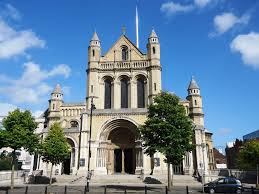
st anne's

This sermon was preached in 2015 upon my return from Belfast. I went off script for this one. So, the manuscript does not adequately reflect what was actually preached. But you can read the notes here  The audio is much better!!! I went off on a tangent using Robin Meyers’ observation that our historical creeds reduce Jesus life to a comma!

I post this on the morning of my return from another trip to Belfast, where I once again worshipped in St. Anne’s Cathedral. This time I managed to stay to the end of the service. My wife’s moderating presence may have something to do with this???

Listen to the sermon here

The Sheepskin Baggage We Bring to the Text: sermon for Easter 4B – John 10

Traditionally the fourth Sunday in Easter is celebrated as Good Shepherd Sunday so it should not surprise us that a pesky lamb shows up. Readings:  Psalm 23, 1 John 3:16-24, John 10:11-18

Listen to the sermon here

I am currently enjoying a continuing education leave in Belfast, Northern Ireland and so, it seems only right that I should begin by telling an Irish story. This particular story comes from the Irish author Frank McCourt. Some of you will be familiar with his most famous book, Angela’s Ashes. But this story comes from his autobiographical book entitled “Tis” McCourt was a school teacher and he tells this story about a particular class in which he was challenging the assumptions of his young students.

The story begins with a familiar nursery rhyme: “Humpty Dumpty sat on the wall, Humpty Dumpty had a great fall; All the king’s horses And all the king’s men Couldn’t put Humpty together again.

McCourt asks his young students to tell him what’s going on in this nursery rhymed. The hands are up like a shot. “Well, like, this egg falls off the wall and if you study biology or physics you know you can never put an egg back together again. I mean, like, it’s common sense.

McCourt asks: “Who says it’s an egg?”

“Of course, it’s an egg. Everyone knows that.

Where does it say it’s an egg?

They’re thinking. They’re searching the text for egg, any mention, any hint of egg. They won’t give in. There are more hands and indignant assertions of egg. All their lives they knew this rhyme and there was never a doubt that Humpty Dumpty was an egg. They’re comfortable with the idea of egg and why do teachers have to come along and destroy everything with all this analysis.

“I’m not destroying,” insists McCourt, “I just want to know where you got the idea that Humpty Dumpty is an egg?”

“Because,” Mr. McCourt, “it’s in all the pictures and whoever drew the first picture musta known the guy who wrote the poem or he’d never have made it an egg.”

“All right.” Says McCourt: “If you’re content with the idea of egg we’ll let it be, but I know the future lawyers in this class with never accept egg where there is no evidence of egg.”

The story of Humpty Dumpty and the missing egg has a great deal in common with the story of Jesus and the missing sacrifice for sin. When it comes to the written word, we tend to see what we’ve been conditioned to see. Today’s gospel text is a good example of our seeing and reading into the text things that are not there. The gospel of John was written at the end of the first century; at least one possibly two generations after the life, death, and resurrection of Jesus. We know that the gospel of John is not what we 21stcentury dwellers would call history. We know the story-teller that we call John wrote his interpretations of the Jesus experience to address the needs of his community who were struggling under the oppressive rule of the Roman Empire. We know that the gospel storyteller that we call John relied heavily upon the stories, myths and history of the Hebrews to convey the magnitude of the impact Jesus life, death, and resurrection had on the small band of followers of Jesus, who were struggling to survive in very troubled times. Continue reading

What’s a Meta FOR? – a sermon for Easter 4B – John 10:11-18 and Psalm 23

John chapter 10 causes me to remember Mrs Tanner, my grade ten english teacher. I can still see her handwriting all over my carefully crafted compositions. Red ink everywhere as she constantly admonished me not to mix my metaphors. Clearly the writer of the Gospel of John never had the benefit of Mrs. Tanner’s guidance, or he would not have dared to record Jesus words the way he does in his long and rambling I AM passages.

Before we even get to chapter 10, we read that Jesus says:  “I AM the bread of life.”  and “I AM the light of the world.”  In chapter 10, we read, Jesus says, “I AM the gate,” “I AM the Good Shepherd.” Later we will read, that Jesus says, “I AM the Resurrection”, “I AM life.” “I AM the true vine.”  “I AM the way.” “I AM in God.” “I AM in you.”

But in the tenth chapter the writer of the Gospel of John goes all out and has Jesus using not just a metaphor but a mixed metaphor. For in chapter 10, we read that Jesus declared: “I AM the Gate. The gate through which the sheep must pass.” and then mixes it up by saying,  “I AM the Good Shepherd.”

Which is it? Gate or Shepherd, come on, I know your Jesus but I’m trying to understand how Jesus, who is after all, the lamb of God who takes away the sin of the world is both the Gate and the Shepherd.

I wonder if Mrs. Tanner ever took her red pen to the Gospel According to John? If she did, the letters MMX would have appeared all over this Gospel. MMX = mixed metaphor wrong! Looking back, I know that Mrs Tanner was just trying to help us to be more careful about our ideas. But today I would have to ask both Mrs Tanner and the anonymous-gospel-storyteller that we call John, “What’s a meta for?” Continue reading

Christ Appeared on the Road to Emmaus and I Almost Didn’t Recognize Her – a sermon for Easter 3B – Luke 24:36b-48

emergencyMy most memorable journey on the road to Emmaus was taken behind the wheel of a 1981 Oldsmobile, Cutlass, Brougham. I loved that car. It was a thing of beauty. It was a gift from my home congregation so that I could travel back and forth across the country to and from seminary. Despite its propensity to guzzle gas it was the perfect combination of power and elegance. It had the most amazingly plush interior with every imaginable power amenity of its day. It handled like a dream and even though I loved driving that car, neither it nor I faired well on our journey on the road to Emmaus. Five weeks into my Clinical training at the Grand River Hospital and I’d just completed one of the toughest weeks of my life when I set off for Emmaus. Clinical Pastoral Education is what the Church calls it but seminary students have other names for it, like boot camp, torture or hell. Twelve weeks of on the job training in a busy hospital combined with daily psychotherapy, group sessions, and sleep deprivation. It’s all designed to help seminarians put two years of academic study into practice before sending them off on a yearlong internship. Ask most pastors about their Clinical Pastoral Education and they’re likely to sit you down and tell you story after story about how intense an experience it was. Many of my colleagues will tell you that it almost broke them into little pieces, or that it almost destroyed their faith, or that they didn’t think they’d survive, or how they never thought that it was possible to be that scared or insecure for that many hours every day. Boot camp, torture, or hell, it all depended on whether or not you were able to get any sleep or if the demons you faced on the wards managed to destroy whatever self-confidence you might be able to muster.

The week before I set off on the road to Emmaus, wasn’t as bad as all that. I felt like I was just beginning to get the hang of things. I thought that the worst might be over. I’d managed to conquer my fear of being called Chaplain and being expected to help people who were sick, in pain, in distress, or dying. Why that week I’d even managed to help one or two of my patients. Those nagging doubts that haunted me during the first month of Clinical training were beginning to fade. It was becoming easier to believe that God was there in the midst of all the turmoil. I thought that maybe just maybe I could do the job and the terror wasn’t quite so intense when my pager went off. I remember saying to a colleague that maybe we’d be able to get through our Clinical training without coming up against the inevitable crisis of the faith that so many of our fellow students had warned us about. I wasn’t even nervous about having pulled the short straw for the long-weekend shift. 72 hours as the on-call emergency chaplain for the entire hospital. I felt like I was ready; that with God’s help, I could face anything that came my way.

I wasn’t particularly nervous when my pager went off and I calmly dialed the operator who announced that there’d been an MVA and six patients were on route; two of them were vital signs absent. MVA – Multiple vehicle accident. Vital signs absent = that usually means dead, but only a doctor can actually pronounce death so patients without vital signs are transported to the hospital before being pronounced dead. Continue reading

Emmaus is Nowhere because Emmaus is Everywhere: a sermon on Luke 24 – Easter 3B

Road to EmmausThis sermon was inspired on my own journey to Emmaus where in the space of the same afternoon I heard a stranger declare: “Christianity is dead!” and Karen Armstrong’s now famous TED talk about her call for a world Charter for Compassion.

Has anybody here ever been to Emmaus? Which one? According to the latest issue of Biblical Archeology there are at least nine possible locations that are candidates for the Biblical town of Emmaus. Historians tell us that there is no record of any village called Emmaus in any other ancient source. We simply don’t know where Emmaus might have been. Tradition, tells us that it might have been a place just a few hours walk from Jerusalem. New Testament scholars, Marcus Borg and John Dominic Crossan suggest that Emmaus is nowhere. Emmaus is nowhere precisely because Emmaus is everywhere. Each and every one of us has at one time, or indeed for some of us, many times, traveled along the road to Emmaus.

I know that I have been on the road to Emmaus most of my life. I’ve had lots of company on the Road to Emmaus. I’ve had many conversations along the way discussing, with anyone who’d care to accompany me, the ifs, ands, and buts of Christianity, of religion, and indeed of life. If you haven’t traveled down the road to Emmaus you must be very skilled in the fine art of turning off your brain and if you check you just might discover that your heart isn’t actually beating.

It’s so easy to imagine, those two characters striding down the Road to Emmaus that we can almost hear them talking, maybe even arguing about what happened. What on earth were they to make of all this! Jesus was supposed to be the Messiah. Jesus was the One who had come to liberate Israel, to free the people from oppression. Jesus was the One who was supposed to draw the people back to God, restore the relationship between God and God’s people. Now Jesus was gone, and what had changed? Now, Jesus was gone, and the Roman Empire was still oppressing them, still inflicting such pain and hardship, still killing them. Was it all a mistake? Was it all a lie? Had they been fooled by some kind of cruel hoax—were they wrong to put their hopes in this man from Nazareth? They had trusted Jesus believed in Jesus, followed Jesus. Their lives had been changed. They had seen the lives of others changed and they had expected even greater changes to come. Jesus had confronted corrupt powers. Jesus had charmed great crowds. Jews and Gentiles alike responded to the truth of Jesus’ teaching. Rich and poor had come to Jesus, believing in Jesus’ healing power. But Jesus had been shamed, and ridiculed, and humiliated, and crucified and now Jesus was dead. Well, was Jesus dead? Some said they’d seen Jesus, alive! Not that Jesus had survived the crucifixion by some miracle of strength, but that Jesus had risen from the dead. They seemed so totally convinced by their own experience…were they confused by their own grief? Were they delirious? Had they loved this Jesus so much—invested so much hope in Jesus life and leadership—that they simply could not let him go? And what did ‘resurrection” mean? Apparently it was not the resuscitation of a corpse. Jesus wasn’t revived to resume his former life; to take up his broken body until the day he might die again. No, somehow this was some new mode of being that seemed to be spiritual to some and yet real to others. And, if Jesus were risen from the dead, what would be the point of all that? What was the point to a Messiah—to a presumed political and religious leader—if Jesus wasn’t able to lead people here on earth? How could Jesus restore Israel when he had so easily been defeated by a handful of Roman guards? How could he bring release to the captives, how could he bring justice for the poor, how could Jesus advocate for the widows and the homeless? How could Jesus call people to account for all the ways they had strayed from God’s intent, now? What good could come from some kind of spiritual ghost? We can hear these two friends wrestling with each other and with their own hearts on the road that day! Continue reading

Believing in the Resurrection is not the point! – sermon – Second Sunday of Easter – John 20:19-31 – Mya Angelou – Still I Rise

Readings included 1 Corinthians 15 & John 20:19-31 – between the readings we watched Mya Angelou preform her poem: Still I Rise – you can view the video here
Christ is Risen! Christ is Risen in us!  Alleluia! So, Christ is Risen!  So, What??? What can it possibly mean to you and to me, that a rag-tag bunch of Jesus’ followers gathered together in an upper-room and talked about their experiences of Jesus and decided that not even death could extinguish the life that they experienced in Jesus?  What difference does it make to you or to I that Christ is risen? The truth is that it can make absolutely no difference what so ever. Now there are a whole lot of people who will tell you that the important thing about resurrection is that you believe it.  Those same folks absolutely love the story of doubting Thomas. So, every year on the second Sunday of Easter we read the story of doubting Thomas as a kind of inoculation against Thomas’ disease. I sometimes think that the designers of the lectionary were trying to build up our resistance to doubt. Having problems believing in resurrection? — Well don’t do what Thomas did, don’t doubt, because you’ll be proven wrong.  Jesus is alive, the wounds in his hands proved that to Doubting Thomas, so have no doubt about it the resurrection happened!  Believe in the resurrection!

The trouble with believing in stuff is that belief can make absolutely no difference what so ever.  I can believe in justice for all, but unless I’m prepared to seek justice, to be fair, or to resist injustice, it makes absolutely no difference what so ever that I believe in justice.  We can shout, “Christ is risen!” all we want but unless we are willing to live it, the resurrection means very little at all. In order to live the resurrection, we need to begin practicing resurrection.  In order to practice something, we need to know what it looks like, what it sounds like, or what it feels like. Most of us have seen resurrection with our own eyes. Many of us have experienced resurrection in our own lives. The trouble is most of us would hesitate to label what we have seen with our own eyes as “resurrection.” We hesitate to call something we have seen or experienced in our own body as resurrection. It’s long past time for us to move beyond “believing in resurrection” so that we can actually rise up.

Nearly 70 years or so after the execution of Jesus of Nazareth, the anonymous gospel-story-teller that we know as John told a story of resurrection. According to this story, a bunch of rag-tag Jesus followers were huddled together in fear. Their beloved leader had been brutally executed by the powers that be and they were terrified that they would be next.  Paralyzed by their fear, hiding behind a locked door, something happened that gave them the strength to burst forth from their own tomb and change the world. Continue reading

Practicing Resurrection: Forgiveness – a sermon for the Second Sunday of Easter

Practicing Resurrection pastordawnOur first reading was the traditional gospel story for the Second Sunday of Easter in which we heard the story of Doubting Thomas for John 20:19-31. This was followed by a video in which Richard Holloway retells the story of Peter’s denial and the encounter between the resurrected Jesus and Peter. You can view the video here . This was followed by the gospel reading from John 21:15-20

Listen to the sermon here

It has been said that, “The shortest between a human being and truth is a story.” It has also been said that the greatest story ever told is the story of resurrection. Like all really good stories, the story of resurrection has been told over and over again as storytellers attempt to convey the truth. We have heard Easter’s story of resurrection so many times that you would think the truth of resurrection would be obvious to us all. Yet, we struggle to find truth in Easter’s familiar story. Some of us have been shaped by this particular story. Some of us have built our lives around the truth that others have reported to us about this story. Some of us have rejected this story and filed it with all the other idle tales in which we can find no truth. Some of us have moved on from this story convinced that there is no longer any truth to be found. Some of us love to hear this story because it takes us back to familiar truths that inspire a nostalgic sense of well-being. Some of us, are determined to wrestle with this story until it releases all the truth that it harbours in, with, and between the lines which calls us toward a new way of being that we long to embrace. I myself, I am a wrestler. Like Jacob of old, I wrestle with this familiar story determined to get from this ancient tale not just truth but an inkling of the Divine who dwells in, with, through, and beyond all of our stories.

The gospel storyteller who we know as John tells Easter’s resurrection story in a particular way, determined to reveal the truth that dwells in him and among the people with whom he dwelled. One of the things that we 21stcentury truth-seekers are particularly fond of is deconstructing stories. We love to take stories apart, dissecting every line, examining each and every detail, each and every word so as not to miss a single nuance of the author’s intent. We are also skilled in the imperfect art of attempting to place stories back into their historical context so that we can establish exactly what was going on in the first century lives of the story-teller and his listeners. We look to the historical context in the hope that we can determine the original meaning of the story. Convinced that history can tell us what the story-teller cannot, we wrestle with the facts, as best as we can determine them, so that we can be sure that the truth we thought we knew is more than just the summation of our mistaken interpretations.

Together, we have wrestled with Easter’s story of resurrection and together, I must say that we are pretty good wrestlers. We have deconstructed this story, we have applied the historical-critical method, we have approached it from all sorts of angles and employed the best 21stcentury scholars to aid us in our struggle to wrestle the truth from the piles and piles of dogma, which have been heaped upon it. But this morning, I’d like to approach Easter’s story of resurrection from the perspective, not of wrestlers determined to find the truth, but rather as people touched by the story itself. But even though we are not going to wrestle, like Jacob of old, we run the risk of being touched and even wounded by the truth as the Divine One is revealed and we are compelled by our wounds to walk in a different way. Continue reading

Preparing to Preach on RESURRECTION: Giving up the notion of a physical resuscitation.

resurrectionThis Sunday worship services will begin with the proclamation that: Christ is Risen! Christ is risen indeed.  Alleluia! Let me follow that proclamation up with a good Lutheran question:“What does this mean?”  What does it mean that Christ is risen? What does resurrection mean? The truth is that there are about as many different explanations of Christ’s resurrection as there are Christians.  And that’s a good thing, because the question of the resurrection is a question that lies at the very heart of Christianity. So, is it any wonder that Christians have been struggling to come to terms with resurrection since the very first rumours that Christ had risen began to circulate. Over the centuries the various responses to the question of resurrection have divided Christians as various camps work out various responses.

For many Christians and non-Christians alike Resurrection is the dividing line. But this is nothing new.  Indeed the drawing of that line can be seen in the earliest Christian writings that we have. The Apostle Paul himself, wrote to the community of followers at Corinth: “If there is no resurrection of the dead, then not even Christ has been raised. And if Christ has not been raised, then all of our preaching has been meaningless—and everything you’ve believed has been just as meaningless.”

There are many believers and non-believers alike who point to these line’s in scripture and say, “Ah ha, there it is, either you believe in the resurrection or you don’t!”
Continue reading

Moving on from the Tragedy of Good Friday

When tragedy strikes, we have this innate need to know the facts. What happened? It is as if the facts about what happened can save us from the horrendous impact of the tragedy. Tell us the facts. Tell us what happened: where it happened? when it happened? how it happened? Give us the facts and we will be able to figure out why it happened. If we figure out why it happened we can make sense of the tragedy, we can put the colossal impact of the tragedy into context. Once we put the tragedy into context we can get some perspective on it and begin to manage it, so that we can move on from the tragedy.

So, what are the facts? Well, what happened is, they executed Jesus. When? close to 2000 years ago. How? They nailed him to a tree, trusting that the weight of his body would in time cause his body to shut down in the most horrendous way. These are the barest of facts. In the nearly 2000 years that have passed since the tragedy of one man’s execution at the hands of a cruel Empire, we have been given many more facts about this particular tragedy. Indeed, we have been given facts, stories, legends, myths, conjectures, creeds, rituals, testimonies, and sermons about this particular tragedy. Whole libraries exist full of books written over 20 centuries trying to make sense of this tragedy, trying to put the horrendous details into context, giving us all sorts of perspectives and still we cannot make sense of this tragedy, let alone move on from it. So, we gather together, and we ask ourselves, Why? Continue reading

LOVE is Risen! LOVE is Risen Indeed! Alleluia! – with links to previous Easter Sermons

Easter sermons – click on the links

Is God Coming Back to Life here

Easter: Yes, Yes, Yes, Laugh – here 

Easter: The Greatest Story Ever Told – here

I Plead Guilty to Denying the Resurrection – But I aint’ leaving – here

Preparing to Preach on Resurrection: Giving up the notion of a physical resuscitation. here

Approaching Resurrection: What Did Paul Actually Say – here

A Resurrection Story In Memory of Nellie, My Gran – here

Words Will Always Fail Us – here

Christ is Risen! Christ is Risen Indeed! Christ is risen indeed – SO WHAT! Today, we gather to proclaim that the LOVE that we call God is more powerful than death. On Good Friday, we gathered here in this sanctuary surround by images of death. I had posted all sorts of photographic images of the kind of human failures that proclaim the power of death; images collected from the news of the day. On these walls, hung examples of human failure – graphic representations of the reality that the embodiment of LOVE, which is what we call Christ, continues to be crucified. The crucifixion did not happen once and for all when Jesus, the embodiment of the LOVE that we call God, was executed by the powers that be.

Today, over and over again, the embodiment of LOVE dies at the hands of the powers that be. The embodiment of LOVE, which is what we can the Christ, continues to be crucified each time LOVE is impoverish, starved, bombed, executed, imperiled, tortured, neglected, murdered, or forsaken, by the powers of death; powers that put selfishness, greed, indifference, and lust for power above LOVE. And so, on this Good Friday you would have seen examples of modern crucifixions in which the Earth was being ravaged and abused by our greed and indifference, animals driven out and killed by pollution and climate change, children starving in parts of the world we would prefer not to think about, First Nations people suffering without adequate housing or drinking water, homeless people neglected on our streets, war-torn ravaged villages, and a collection of modern martyrs who like Jesus, have been crucified as a result of their passion for justice. These disturbing images formed our Stations of the Cross as we lamented so many crucifixions. 

 After our Maundy Thursday service when we’d finished remembering Jesus’ new commandment that we love one another, I hung the evidence of the death of embodied LOVE upon these walls. One of the images, reduced me to tears. I suspect that the image that undid me, lies in each of your minds because this image was beamed all over the world. Continue reading

Good Friday Sermons

Holy Week marks a sharp uptick in visitors to this blog. From comments, messages, and emails I hear from fellow preachers who, like me, are daunted by the task of preparing the Good Friday sermon. That task is even more daunting for those of us who serve progressive communities. My fellow progressive-christian-preachers tell me of the dearth of progressive-christian Good Friday sermons to be found on the internet and encourage me to re-post my own attempts to rise to the occasion. So, here are the links to some of the Good Friday sermons I have preached over the years of my journey with the progressive community which I serve. The people Holy Cross Lutheran Church has over the years provided an invigorating space for me to pursue my questions. They have also provided the resources which make this blog possible. So, if you find the work posted here  of value to you and your community, please consider supporting this ministry of Holy Cross. I rarely solicit donations. But Holy Cross is a small community that continues to give to others in so many ways and your encouragement is greatly appreciated!!! (Holy Cross Lutheran Church, 1035 Wayne Dr., Newmarket, On. L3Y 1N3)

Follow the links to Good Friday sermons and feel free to use/adapt/repost

2016 I’m still working on getting my body out of the tomb in which it was laid all those years ago – reflecting on everyday crucifixions click here

2015 Not Salvation! Solidarity and Transformation click here

2014 God Is Dead? click here

2013 Giving Up the Theories of Atonement in Order to Move Toward an Evolutionary Understanding of Jesus. click here

2012 Good Friday Rituals or Crimes Against Divinity? click here

Preparing to Preach on Good Friday click here

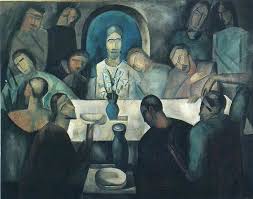
We must peer beyond Passover lambs and scapegoats if we are to understand the LOVE that we call God – a Maundy Thursday sermon

Every Sunday I stand at the altar and preside over a mystery. A mystery that has its roots in the events we remember this Holy Thursday.  On Maundy Thursday, we gather together to contemplate mystery. But just because we know what will happen tomorrow, we cannot fully comprehend this mystery.

The various gospel writers have created a record of Jesus’ last evening that is filled with bittersweet images. Our mystery begins with the foreshadowing of what is to come as we hear the name Judas Iscariot. Judas, son of Simon, is perhaps the most trusted of Jesus’ disciples, after all Judas is the one who is trusted with the financial resources of this struggling little group. Even though we know Judas’ role in this unfolding mystery, we must remember that Judas is among those who Jesus loved to the end. But long before the silver changes hands, we already know enough to dread the betrayal.

Our mystery continues with the tender intimacy of a teacher washing the dirty feet of his beloved bumbling students, as Jesus breaks the bonds of decorum to demonstrate the fierce tenderness of loving service. The image of Jesus washing the feet of his followers still seems undignified all these centuries later. So, is it any wonder that the intimacy of Jesus’ tenderness is more than Simon Peter can bear? In order to get beyond their inhibitions, Jesus must spell it out for them.  “Do you know what I have done to you? You call me Teacher and Sovereign —and you are right, for that is what I AM. So, if I, your Sovereign and Teacher, have washed your feet, you also ought to wash one another’s feet. For I have set you and example.” Jesus has washed their feet; all their feet, even Judas and the talk of betrayal continues as Jesus returns to the meal.

The writer of the Gospel of John does not record the details of the breaking of the bread or the passing of the cup. These details are recorded by Paul in his letter to the Corinthians and by the writers of the gospels of Mark, Matthew, and Luke: “on the night he was betrayed, our Savior Jesus took bread, gave thanks and broke it, saying, “This is my body, which is broken for you. Do this in remembrance of me.” In the same way, after supper, he took the cup and said, “This cup is the New Covenant in my blood. Whenever you drink it, do it in remembrance of me.  For every time, you eat this bread and drink this cup, you proclaim Jesus’ death until Christ comes.” Week after week, year after year, generation after generation, century after century Christian priests have presided over ritual communions using what have become known as the words of institution. In remembrance of Jesus we eat and drink. The body and blood of our Saviour Jesus Christ. And therein lies the mystery. The mystery of communion. Sometimes the meal has transforming power, nourishing power, restorative, profound power. At other times the meal is just one more religious ritual carried out by rote, experienced without feeling, or impact. Sometimes the meal seems foreign to us, almost alien, perhaps even barbaric. Continue reading