This sermon was preached at Holy Cross Lutheran November 28, 2010, sadly racism continues to live on in ways that threaten so many lives and the question of this sermon seems even more urgent today. The readings included Isaiah 2:1-5, “Amazing Peace” by Maya Angelou, and Matthew 24:36-44, during the sermon I read from the Qur’an Sura 19:1-30 which you can find by following the link in the body of the sermon.
While I was studying for an undergraduate degree in Religious Studies at the University of British Columbia, I worked as a volunteer women’s center. Because I was studying the religions of the world, women who were being persecuted as a result of religious belief were often referred to me.
I’d been working with a young woman who was being abused by her father and brothers because they felt that she was adopting Canadian ways and thereby abandoning Islam. I remember visiting her in the hospital emergency room after her brothers had beaten her nearly to death. She told me that the last thing her brother said to her before tossing her out of the back of a van, was that she should consider herself lucky that they had talked their father into letting them beat her, instead of doing what he had ordered in the first place which was to kill her. I sat at her bedside wondering how a brother could do such a thing to his sister. I decided that they must be religious fanatics and I wondered how any religion could drive a father to seek the death of his own daughter.
The next morning I didn’t feel much like going to my Religious Studies Methodology Seminar. The Seminar was comprised of 7 students from various faith traditions along with 4 atheists and 3 agnostics. Together we studied the various methods of studying religion. We were about to embark on the phenomenological approach to the study of religion. “The Phenomenology of Religion” is a fancy academic way of describing the study of actual religious experiences of the divine. As we stumbled to our seats the professor announced that he would be dividing us into groups of two and he wanted us to learn all that we could about our partner’s religious experience. We would have two weeks to come up with a 1,000 words describing on the phenomenology of our partner’s religious life. I was paired with an Imam who was studying Western approaches to religion prior to taking up a position in a local mosque. Ibrahim was a recent immigrant from Pakistan. But he might as well have been from Mars as far as I was concerned. On that day of all days, Muslim men were not exactly my favorite characters. Continue reading →
In the preface to her beautiful children’s book, “But God Remembered: Stores of Women from Creation to the Promised Land” Jewish writer Sandy Eisenberg Saso tells this revealing story: “Before God created man and woman, God wanted to create Memory and
Forgetfulness. But the angels protested.
The angel of Song said, ‘Do not create Forgetfulness. People will forget the songs of their ancestors.’
The Angel of Stories said, ‘If you create Forgetfulness, man and woman will forget many good stories.’ The Angel of Names said, ‘Forget songs? Forget stories? They will not even remember each other’s names.’
God listened to the complaints of the angels. And God asked the angels what kinds of things they remembered.
At first, the angels remembered what it was like before the world was formed. Then as the angels talked about the time before time existed, they recalled moments when they did not always agree.
One angel yelled at another, ‘I remember when your fiery sword burned the hem of my robe!’
‘And I remember when you knocked me down and tore a hole in my wing,’ screamed another.
As the angels remembered everything that ever happened, their voices grew louder and louder and louder until the heavens thundered.
God said, ‘FORGET IT!’
And there was Forgetfulness.
All at once the angels forgot why they were angry at each other and their voices became angelic again. And God saw that it was good.
God said, “There are some things people will need to forget.’
The angels objected. ‘People will forget what they should remember.’
God said, ‘I will remember all the important things. I will plant the seeds of remembrance in the soul of My people.’
And so it was that over time people forgot many of the songs, stories and names of their ancestors.
But God remembered.”
As we approach the Season of Advent, I can’t help wondering why the creators of the Revised Common Lectionary (the list of prescribed readings for Sunday worship) have failed to remember the stories and names of our foremothers? John the Baptist will strut across the stage again in this Sunday in churches all over the planet. We have begun a new cycle in the RCL in what is know as Year A the lectionary Gospel readings will focus upon readings from the Gospel according to Matthew. But followers of the RCL will not hear the names of Tamar, Rahab, Ruth, or Bathsheba; no, not even Mary will put in an appearance despite the fact that all of these women are mentioned in the very first chapter of the Gospel according to Matthew! Last year was the same even though the RCL focussed upon the Gospel according to Luke, neither of the women of the Luke’s first chapter make an appearance without a great deal of effort. Unless worship planners are prepared to tinker with the lectionary Elizabeth and Mary will have to cede the stage to John the Baptist. So, all you worship planners and preachers out there, I say to you, “TINKER AWAY! TELL THE STORIES!”
As this is the year of Matthew, why not invite onto centre stage those “Shady Ladies” from Matthew Chapter 1: Tamar, Rahab, Ruth, and Bathsheba, verses 1-17 make an excellent reading! John Shelby Spong is an excellent resource, you can find a transcript of his excellent sermon here. At Holy Cross we will use Matthew 1:1-17 as our first reading and Matthew 18-24 as our Gospel reading. This will allow us to usher Mary onto centre stage. Then on the Fourth Sunday of Advent we will switch over to the Gospel according to Luke for all three readings: First Reading – Luke 1:26-38, Second Reading – Luke 1:39-45, Gospel Reading – 1:46-59.
I am forever hearing people despair about biblical illiteracy as clergy and church-insiders bemoan the collective forgetfulness of our culture. I suspect that the snippets of readings that we hear year after year may be a factor in the gaps of our collective memory when it comes to the women of the New Testament. Let this Advent be different. Invite the women of the gospels onto the stage. John the Baptist will be happy out there in the wilderness until his feast day in June!
Since 1925, the last Sunday of the church year has been celebrated as Christ the King or Reign of Christ Sunday. This year at Holy Cross we celebrated “Jesus the Christ Sunday” with readings from Galatians 3:26-28 and Luke 23:33-43.
Yesterday, my Auntie died. Barbara was a kind woman. A good woman. A woman who welcomed me into her home even though we met long after the marriage that tied us together as kin had ended. A woman who welcomed me into her home even though she could scarcely afford to take care of herself and her two children. A good woman who chose to be hospitable, kind, and welcoming, when it would have been perfectly acceptable for her to send me on my way.
I was a teenager when I first met my Auntie Barb. I was doing what a lot of young people have done since time began. I left the safety of my home to travel the world. I didn’t have much money, just a back-pack on my back, a few dollars in my pocket and all the confidence of a nine-teen year-old, looking for adventure. Barbara must have been in her late forties when I arrived on her doorstep. Her marriage to my uncle was ending and she was struggling to make ends meet. Her two children, my cousins were just kids twelve and fourteen; demanding all the things that kids have always demanded of their parents. Barbara could barely afford to put their food on the table, and yet when I arrived on her doorstep, Barbara opened her door, invited me in, and took me on as one of her own. Her many kindnesses to me, came from somewhere deep inside of her that said, no matter how tough my own life is, no matter how little I have to give, I choose to give, I choose to be kind, I choose to open my door to welcome, I choose to be hospitable. My Auntie Barbara died yesterday, and the lives that she touched are sorely grieved at her passing, but the world goes on. So, what does it matter that Barbara choose kindness when there were so many other less costly options open to her?
Today, in churches all over the world, Christians are celebrating Christ the King Sunday or in as those churches that try to be more inclusive in their use of language, call it, the Reign of Christ Sunday. It is the last Sunday of the Church year and since 1925, the last Sunday of the church year has been used to declare that Christ Reigns; that despite what the world says, Christ and not the rulers of this world reigns supreme. It is no coincidence that Christ the King Sunday began in 1925, by the decree of Pope Pius the 11th. You see in Italy in 1925, there was a king other than Christ. ll Duce, Benito Mussolini rode the crest of fascism to become the supreme ruler of Italy in 1925, declaring himself the heir to the Roman Empire. Il Duce declared that the fascist state of Italy was born out of the eternal need of the Aryan and Mediterranean races to ensure the purification of their people. Christ the King Sunday was established in defiance of Il Duce. The church chose to insist that Christ and not racism ruled supreme. It wasn’t the first time that the followers of Jesus insisted that something other than fear would rule their lives. From the very beginning the followers of Jesus insisted that Jesus and not Caesar is LORD. The very first creed was as simple and as complicated as that. Jesus is LORD. Jesus rules not Caesar. This simple and yet complicated creed, was enough to get you killed in the first century. And yet, people chose to insist that the ways of Jesus would rule their lives and not the ways of the empire. So swift and harsh was the reaction of the Roman Empire to the rebel claim that Jesus rules, that hundreds and thousands of Jesus followers were crucified for insisting that there was another way to live; a way to live free from fear.
As the followers of Jesus were persecuted for living in the hope that love and not hate offered a better way, it became more and more dangerous to confess that Jesus is LORD, and so the rebels developed ways of recognizing one another that set them apart from those who lived in fear of the powers of the Empire. The Ichthys, the symbol of the fish arose as a way of identifying those who chose love over fear. Ichthys the symbol of the fish was adopted by the early followers of Jesus because the Greek word for fish, ICHTHYS was an acronym for the word fish. The first letters of the Greek words Jesus Christ Saviour of the World, spell the Greek word for fish. The symbol of the Ichthys was simple to draw; it could be traced in the dirt, quietly so the authorities would not notice, the same authorities that insisted that Caesar was the saviour of the world.
Quietly, defiantly, the followers of the way, the way of the one who first called the fishers from Galilee, the rebel Jesus of Nazareth, who dared to suggest that love was more powerful than fear, chose to identify themselves with the symbol of the fish. It wasn’t until 364, when Constantine co-opted Christianity as the religion of the Empire that the Cross usurped the fish as the symbol of Christianity. The adoption of the cross, the instrument of state execution was an act of defiance. The most fearful symbol of Roman oppression was transformed from an instrument of torture into a symbol of torture and death’s inability to kill hope. Where once the Roman Empire had used crucifixion to terrorize the peoples they had conquered, the very people they conquered used the sign of the cross to declare that hatred could not kill love.
The forces of hatred over and over again have used fear to drive out love. Over and over again, people have found ways to resist hatred in spite of their fears. History is littered with stories of leaders who have insisted that the only way to survive is to play to our fear. Fear mongering is nothing new. Fear mongering has often tried to dominate the hearts and minds of people. During the darkest days of the second world war, when the fascist regime of Germany’s Third Riche rose to power they did so, by playing on the fears of the German people. But despite the fearsome methods of the loathsome fascists, there were those who continued to choose not to be ruled by their fears.
There are all sorts of stories of those who resisted insisting that fear would not rule their lives. There is a story of quiet resistance that happened Norway after the Norwegians were defeated by the Nazi’s. In the darkest days of the German occupation some Germans, adopted the symbol of the paper clip, worn in their lapel pockets as a symbol that hatred would be defeated. As powerful and as frightening as those dark days were, there were those who choose not to be ruled by fear. A symbol as innocuous as a paper clip, declared that love and not hate would rule the day.
Once again there are those who seek power by playing to our fears. Symbols that we thought had been banished to the pages of history are being drawn on mosques and synagogues all over the world. Just this past week, in Ottawa and in Toronto Swastikas have declared that we should be afraid and let hatred rule. Once again there are those who choose not to let fear rule. Safety pins are appearing everywhere declaring that despite the best efforts of those who choose fear and hate as their rulers, hatred will not be allowed to rule those who choose love. Something as innocuous as a safety pin has become a symbol of hope as people declare themselves safe places for those who are being oppressed.
The human spirit is an amazing and fragile work of beauty. The human spirit can and is often crushed by fear and hatred. But the human spirit can also be restored and empowered by love. We can choose to live in fear, or we can choose to live in hope. Our fears can feed hatred. Our hopes can feed love.
For those of us who seek to follow the teachings of the one whose love could not be conquered by what at the time appeared to be the most powerful Empire on earth, symbols like the fish, the cross, a paper clip and a safety pin point to a way of being in the world that moves us beyond our fears so that love is empowered. The symbols in and of themselves are nothing really, just signs pointing to something beyond the powers that be, to something capable of giving life to love.
Sometimes the horrors of our history are so overwhelming that we begin to fear that fear itself with conquer us. Sometimes, in the face of the enormity of our fears, all we need is something simple like a sign, or a symbol to point us beyond our fears so that love can triumph over fear and hatred. Sometimes that sign comes in the form of a fish, a cross, a paper clip, or a safety pin, and sometimes that sign comes in the form of an open door, a welcome, a hot meal, a cup of water, a warm embrace, or the presence of a friend or ally. The symbol itself is not much in and of itself; insignificant really in the grand scheme of things, but more powerful than the most potent rulers. When you think about it, Jesus himself is but a sign, a symbol pointing beyond himself to the most potent thing in all of creation, the power of love over fear.
My Auntie died yesterday. Hers was an insignificant death in the grand scheme of things. But the love she embodied is more powerful than death. The love she embodied lives on in all the lives she touched. We can live into our fears or we can live beyond our fear. We can be ruled by those who use fear to rule or we can be ruled by a power greater than all our fears. Choose LOVE and live beyond our fears. Choose LOVE.
Traditionally the festival of Christ the King or Reign of Christ Sunday. At Holy Cross we celebrate Jesus the Christ Sunday. This sermon explores our complicated relationship with the Jesus we meet upon the cross who shared our human desire to transcend death.
She had no family. She lived alone. For the purposes of this sermon I will call her Sophia. Sophia the Greek word for wisdom. I became her pastor because she knew somebody who used to be a member here and when the doctors told her that she was dying she thought she ought to have a pastor. I was summoned to her bedside. I was afraid. I had been told that she only had a few weeks before the cancer would take her. To be present to a stranger when they are so close to death is a daunting task. No time for gentle hello’s, or warming up to one another, just a long, painful and sometimes awkward good-bye.
I went to Sophia’s bedside every day. Some days, when she was able, the questions just tumbled out of her. She wanted to know what I believed. No pat answers or trite platitudes if you please, just the facts. I liked her no-nonsense approach even though I knew that the meager facts that I possessed might not sustain us on our journey. It didn’t take me long to figure out that she’d spent a great deal of time in the church. Her parents saw to it that she was raised in the church, but a lifetime of tragedy and heartache had lead her far away from the faith she’d grown up with. But as death drew near she longed for the certainty of her youth.
She’d like to believe. It would be nice to think that there would be a place for her, not exactly heaven per se but someplace heavenly, perhaps like Paris in the springtime. She so loved Paris in the springtime, if only heaven were full of cafés, or patisseries where she could while away the hours talking with others who appreciate the finer things of life.
Life, would there be life beyond death? She’d like to believe so.
One morning, I stopped by Eduard’s bakery on Main Street and picked out the most European pastries I could find, then I swung by Starbuck’s and had them grind some fresh beans. As I brewed the coffee in Sophia’s kitchen, the aroma wafted up the stairs and she shouted down and asked me to heat up some milk so that we could have lattes. It was as heavenly a breakfast as we could muster and our conversation took us back to Paris and a springtime before I was born when Sophia was young and beautiful and the men fell at her feet.
Some of her stories actually made me blush. We laughed and laughed and laughed until we cried. After Paris, we travelled to London by way of some excellent fish n’ chips and a few glasses of cider. It was cold and wet in London and Sophia managed to complete her nursing studies even though a certain young man begged her to give up work and come and be his love. Over sausages and beer, we travelled to Hamburg where Sophia fell in love with an orphanage full of refugee children. By the time our conversations took us to India, Sophia was too ill for a curry so we sipped tea as we wept over her stories of poverty and disease.Continue reading →
Despite the fact that my parents named me Dawn, I have never been much of a morning person. Those who know me well would probably agree that I should have been called Dusk instead of Dawn. But Dawn I am and so from time to time, I actually venture out to explore this phenomenon for which I am named. Earlier this week, after a long sleepless night, of tossing and turning, wondering and worrying, I decided that as sleep was eluding me, I might as well give up and get up. The sun was about to rise and so out I went into the quiet world of our little subdivision. We moved into our subdivision nine years ago. The subdivision was built about six years before we moved in, so our little community is only about fifteen years old. Before the subdivision was built, the land was used by a farmer to grow corn. On the fringes of our subdivision, they are expanding further into the cornfields. The neighbourhood is expanding, growing, and changing. The demands of modern life are encroaching on a lifestyle that is disappearing from countrysides all over the planet. Modern subdivisions are built to a pretty standard plan. Before the streets and infrastructure can be developed, some pretty basic problems need to be addressed, not the least of which is water run-off. As near as I can tell, modern developers deal with the problem of drainage by establishing ponds which function as catchment basins for rainwater runoff. At the foot of our subdivision there are four such ponds around which the developers created footpaths so that we suburbanites can at our leisure have someplace to take a walk.
When we first moved in, the ponds weren’t exactly picturesque. Just open pits into which runoff had poured, surrounded by paths and building sites. In the beginning these ponds were more like scares on the landscape and failed to inspire us to wander past very often. Indeed, if we wanted to take a walk, Carol and I would often get in the car and drive to a nicer spot to walk. But over the past nine years something miraculous has happen and in our neck of the woods Mother Nature has healed the Earth’s wounds and those ponds have become a favorite place to walk. Where once there was just muck and the open wounds of the Earth, now there are well healed pathways, beautiful bushes, fruit filled trees, and a whole host of wildfowl. Nature has repaired what we humans came close to destroying.
So, as the sun was rising in the east, I couldn’t help thinking about the natural rhythms and blessings of this life. And because I had been kept awake by worrying about the content of this Reformation sermon, my mind began to think about the similarities between the relationship of nature to the pond which humans created where once there was no pond and the relationship between God and the church humans created where once there was no church.Continue reading →
Recorded Oct.16, 2016: Matthew Fox preaches on Luke 18:1-8 at All Saints Church in Pasadena. Fox defines prayer as, “a radical response to life; a profound or deep response to life.” As such, working for justice is the embodiment of our response.
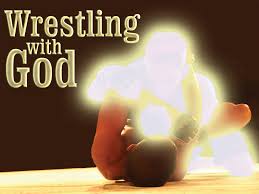
Before I read our Gospel text I took a few moments to reflect upon the story from the Torah that was our First Reading (Gen.32). I showed the short film below which was created by Jewish scholars to help rabbis teach the stories of the Torah to young children.I use this video to teach the stories of the Torah to our Confirmation students.I think it is important for those of us who follow the teaching of the Rabbi Jesus, to pay attention to the way in which the stories that spoke to Jesus continue to speak to Jewish people here and now. Watch the video and then listen to the sermon here
Our Gospel reading comes to us from a story told by an anonymous writer named Luke, who tells a parable that he attributes to the Rabbi Jesus:According to Luke: “Jesus told the disciples a parable on the necessity of praying always and not losing heart.“Once there was a judge in a certain city who feared no one—not even God.A woman in that city who had been widowed kept coming to the judge and saying, ‘Give me legal protection from my opponent.’For a time the judge refused but finally the judge thought, ‘I care little for God or people, but this woman won’t leave me alone.I’d better give her the protection she seeks or she’ll keep coming and wear me out!’”Jesus said, “Listen to what this corrupt judge is saying. Won’t God then do justice to the chosen who call out day and night?Will God delay long over them?I tell you, God will give them swift justice.But when the Promised One comes, will faith be found anywhere on earth?”
I too have met this tiresome, troublesome, annoyingly, persistent widow who constantly cries out for justice.This woman won’t leave me alone.I must confess that I would rather not have this woman clamouring at my door!Each and every time I encounter this woman, she goes on and on, she wears me out!I cannot go anywhere without seeing this woman.She is everywhere.Pointing to her oppressor and demanding justice.She is on the radio in my car as I go about my business.She is on my computer screen as I try to keep up with the news of the day.She is in my living room as I try to relax flipping channels seeking respite from her persistent cries for justice.She appears in my facbook feed, and tweets at me from my phone, I cannot escape her cries for justice.I am sick and tired of this annoying woman.I cannot escape her shouts for justice. I’m not sure that anything at all can be done to secure justice for this annoying woman.Too much time has passed.There are no witnesses.Boys will be boys.She needs to forgive, forget and move on.Why doesn’t she just leave me alone.There’s nothing that I can do for her.There’s nothing I want to do for her. I have my own troubles.People to see, places to go, things to do.If only she’d leave me alone.Her persistent cries for justice have begun to haunt me and not even sleep gives me respite from her persistent cries for justice.If only she’d stop going on and on and on and on about her oppressor, about the injustice that has been perpetrated against her. Maybe if she would just shut up about it, I wouldn’t have to wrestle with her in the night.Round and round we go, pinning one another down, she demanding justice, me pleading for peace.This wrestling over things beyond my control is wearing me down.I’m starting to wonder who this woman thinks she is.Hell, I’m beginning to wonder who I think this woman is.In the darkness of the night I sometimes wonder if this persistent, complaining woman, is just some trumped up version of myself.In her eyes, I sometimes think I see a glimmer of something far too familiar, something ugly, fearsome, unpleasant, and lurking in my own memories.In the wee hours before dawn, I think I can actually see myself in her. But no, I’m not going there.We are not going there.Women all over the world don’t want to go there.Defenseless, innocent, naive children all over the world we dare not see them in the face of this persistent woman. And then, just when I think that I have her pinned down and I’m about to wrestle something anything out of this insane encounter, the light begins to dawn on me, as I realize that there in the face of this persistent woman is the ONE in whom we all live and breathe and have our being; the ONE whose name eludes us. I awaken to the realization that this place where we have all been, this place where we cannot escape is indeed Peniel, for here and now, in the face of this persistent woman, in the face of every persistent woman, indeed in the face of every persistent man, woman, and child, crying out for justicewe have seen God face to face.It isn’t always pretty, it isn’t always what we want to see or where we want to see it, but it is the face of the ONE that we call God;the face of God shouting, crying, pleading, for justice. Wrestling with the persistent, pleading, ones who continue to demand justice from me, I rise wounded from Peniel – the place where I know that I have seen God face to face, and yet my life has been spared.Limping away, forever changed, knowing that the wound that changes the way I walk in this world is the blessing given to me by those who have the courage to cry out for justice.Transformed by this wound I begin to see that I am at one and the same time both the judge who has the power to create justice and the one who cries out for justice. In this Peniel, is where ever and when ever we have the courage to look into the face of another and see the face of God, and our lives have been preserved.We cannot walk away from an encounter such as this without responding to the ONE in whom we see the face of God, with justice.Whether our role in this life long wrestling match is that of the judge or the seeker of justice, may we see God face to face.
Recorded Aug 8/2016 at the Chautauqua Institution.
Diana Butler Bass moves from her latest book Grounded‘s focus on nature to examine the sacredness of the city. Bass explores the theological images that appear in scripture that help us to think in new ways about the urban environments of our day. Seeking transformative images to usurp our tendency toward building empires toward a vision of the “urban cosmos” that empowers its inhabitants to live with justice, love, and humility, Bass paints a seductive vision of a universal city on a hill; a dwelling place of peace. In contrast to the system of globalization which seeks market control in the service of empire, Bass points to cosmopolitanism, a world view based upon our shared common humanity.
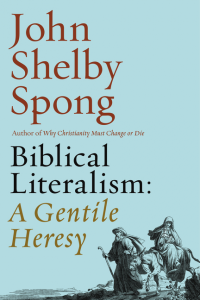
Thanks to the generosity of my congregation, I am provided with time for Continuing Education. So, last week I journeyed down to the Chautauqua Institution to listen to Jack Spong articulate the thesis of his latest “last” book: Biblical Literalism: A Gentile Heresy. Jack’s 85 years have afforded him much wisdom when it comes to exploring the sacred texts of Christianity in ways that can open us to new visions of a Christianity capable of nourishing 21st century minds. I’m happy to report that Jack has yet another “last” book scheduled for publication in 2018 under the working title: “Charting a New Reformation.” As always it was a blessing to be guided by Jack!!! Thanks to the Chautauqua Institution for making Jack’s lectures available to a wider audience.
The song sung prior to the Gospel is Jann Aldridge-Clanton’s “Welcome New Wineskins” sung to the tune of Blessed Assurance. (Inclusive Hymns for Liberating Christians). As for my appropriation of the Beach Boys, “Help Me Rhonda”…my apologies! I am indebted to Christopher B. Zeichmann’s article “Rethinking the Gay Centurion” in The Bible and Critical Theory Vol 11 #1, 2015.
Pentecost Sunday is a day for stories about the nearness of God. So we begin with the story of the Tower of Babel from Genesis 11:1-9, then make our way to the anonymous gospel-storyteller we call Luke’s story of the early followers of Jesus’ encounter with the Holy Spirit at Pentecost in Acts 2:1-21, and then the anonymous gospel-storyteller we call John’s story of Jesus’ insistence that he and God are one, before rounding off with Sandy Eisenberg Sasso’s excellent children’s book God In Between.
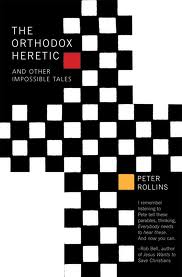
Pentecost is the birthday of the Church. Birthday celebrations lend themselves to the telling of stories. So, we begin with a parable by the radical theologian Peter Rollins. So, sit back and try to imagine that you live not at the beginning of the 21st century but at the middle of the 21st century; say about 2050. The world has changed quite a bit. “It seems that in the future laws will be passed declaring that all those who follow the teachings of Jesus are subversive. Churches have been banned and to be a follower of Jesus is illegal. You have just been accused of being a believer. You’ve been arrested, and dragged before a court. You have been under clandestine surveillance for some time now, and so the prosecution has been able to build up quite a case against you. They begin the trial by offering the judge dozens of photographs that show you attending underground church meetings, speaking at religious events, and participating in various prayer and worship services. After this, they present a selection of items that have been confiscated from your home: religious books that you own, worship CDs, and other Christian artifacts. Then they step up the pace by displaying many of the poems, pieces of prose, and journal entries that you had lovingly written concerning your faith. Finally, in closing, the prosecution offers your Bible to the judge. This is a well-worn book with scribbles, notes, drawings, and underlinings throughout, evidence, if it were needed, that you had read and reread this sacred text many times. Throughout the case you have been sitting silently in fear and trembling. You know deep in your heart that with the large body of evidence that has been amassed by the prosecution you face the possibility of a long imprisonment or even execution. At various times throughout the proceedings you have lost all the confidence and have been on the verge of standing up and denying Christ. But while this thought has plagued your mind throughout the trial, you resist the temptation and remain focused.
Once the prosecution has finished presenting their case the judge proceeds to ask if you have anything to add, but you remain silent and resolute, terrified that if you open your mouth, even for a moment, you might deny the charges made against you. Like Christ you remain silent before your accusers. In response you are led outside to wait as the judge ponders your case. The hours pass slowly as you sit under guard in the foyer waiting to be summoned back. Eventually a young man in uniform appears and leads you into the courtroom so that you may hear the verdict and receive word of your punishment. Once you have been seated in the dock the judge, a harsh and unyielding man, enters the room, stands before you, looks deep into your eyes and begins to speak. “On the charges that have been brought forward I find the accused not guilty.”
“Not guilty?” your heart freezes. Then, in a split second, the fear and terror that had moments before threatened to strip your resolve are swallowed up by confusion and rage. Despite the surroundings, you stand defiantly before the judge and demand that he give an account concerning why you are innocent of the charges in light of the evidence. “What evidence?” asks the judge in shock.
“What about the poems and prose that I wrote?” you ask. “They simply show that you think of yourself as a poet, nothing more.” “But what about the services I spoke at, the times I wept in church and the long, sleepless nights of prayer?” “Evidence that you are a good speaker and an actor, nothing more,” replied the judge. “It is obvious that you deluded those around you, and perhaps at times you even deluded yourself, but this foolishness is not enough to convict you in a court of law.” “But this is madness!” you shout. “It would seem that no evidence would convince you!” “Not so,” replies the judge as if informing you of a great long-forgotten secret. “The court is indifferent toward your Bible reading and church attendance; it has no concern for worship with words and a pen. Continue to develop your theology, and use it to paint pictures of love. We have no interest in such armchair artists who spend their time creating images of a better world. We exist only for those who would lay down that brush, and their life, in a Christlike endeavor to create a better world. So, until you live as Christ and Christ’s followers did, until you challenge this system and become a thorn in our side, until you die to yourself and offer your body to the flames, until then, my friend, you are no enemy of ours.” “
Rollins insists that this parable is true right here and right now. We don’t have to imagine a world were Christianity is illegal for this parable to be true. Rollins insists that: “If you or I were really to take the teachings of Jesus seriously, would we not sooner or later, find ourselves being dragged before the authorities? If we were really to live a life that reflected the subversive and radical message of love that gives a voice to the voiceless and a place to those who are displaced, if we were really to stand up against systemic oppression perpetrated by those in power, then would we not find ourselves on the wrong side of the lawmakers?”Continue reading →
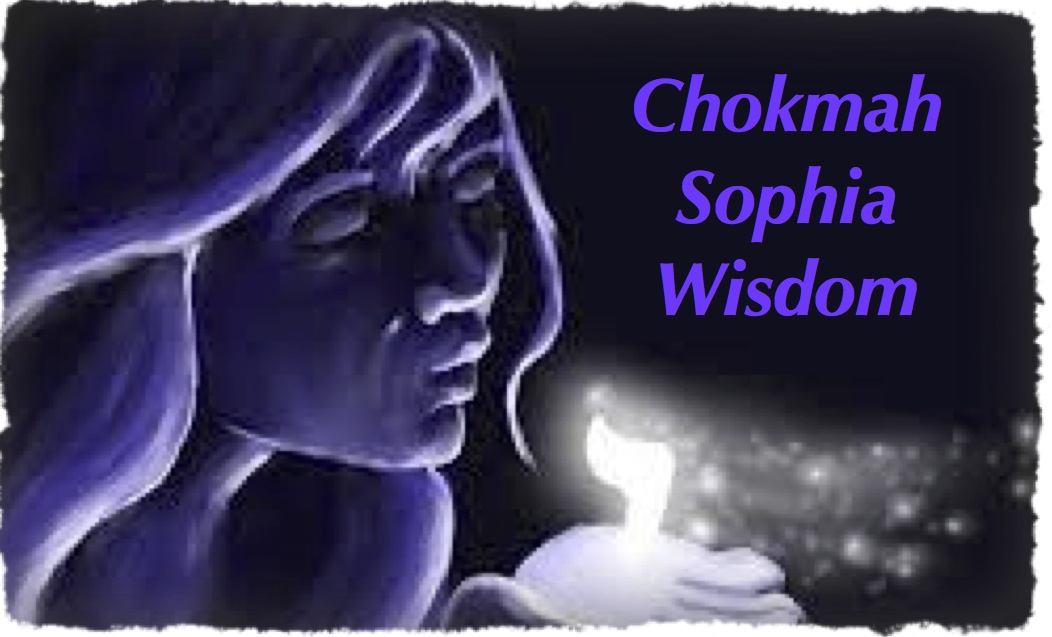
El Shaddai, Eloheim, Rauach, Chokma, Rechem, YAHWEH, these are the ancient biblical Hebrew names for the reality that we call God. El Shaddai which translates as “she – breasted one, ”Eloheim which is the feminine plural for “majesty,” Rauach a feminine word for “wind” “breath” “spirit,” Chokma, a feminine word for “wisdom.” Rechem also a feminine word which translates as “ womb love” mother love, compassion. YAHWEH – I AM, WHO AM or I shall be who I shall be Ancient biblical Hebrew names for the reality that we call God.
During the time of Jesus there was another name for God that was used by the Jewish people: El Shekinah which translates as “she who dwells among us.” There were other words for the reality that we call God which the writers of the New Testament would have been so familiar with; Greek words like: Theos — a feminine noun which translates simply as “God,” Sophia – which is the Greek translation of the Hebrew word Rauach for “Wisdom,” Pnumena – the feminine noun which is the Greek translation of the Hebrew word Chokma which means: wind, breath or spirit. That these names for the reality that we call God are all feminine nouns is remarkable when you look at how these words were translated by the Roman Empire into Latin: Patris et Filii et Spiritus Sancti Father, Son, and Holy Spirit. Stripped of her breasts and her womb-love, the One we call God, the Chokma who Dwells among us, is given the aura of a powerful young Roman God as the word for breasts is translated as “Almighty” and whose Rechem – womb-love is reserved for those who fear HIM.
Yet despite the Empire’s attempt to penetrate the sacred feminine with masculinity’s youthful vigor, (yes, I did mean that pun) this reality we call God will age over the centuries to become a bearded old grandfather-like figure who lives up there somewhere, and woe to those who dare to expose His transgendered history; for God is male and that’s that. The image of the great I AM erected by the male hierarchy to be worshipped and glorified, forever and ever, as Father, Son, and yes, even the nebulous Holy Spirit becomes HE in order to penetrate His Bride the church. No room for talk of breasts or womb as SHE who dwells among us, Chokma, Sophia, Wisdom is banished to the mists of time. That is until women began to be admitted to the sacred halls of the academy; until women began in significant numbers to study the ancient texts and unravel the ancient languages and begin to question the work of their male predecessors and contemporaries. Female academics, female theologians, and female translators’ questions lead to the discover of the long hidden, often denied, and ever present breasts and womb which now that they have been exposed will never again be cast out from their dwelling place among us. Wisdom, Sophia has been emancipated she is woman hear her roar.Continue reading →
For those who were not able to attend our Pub Night, here’s the video that kicked off our conversations. Diana Butler Bass, speaking at All Saints’ in Pasadena in December of 2015 introduces her book Grounded: Finding God in the World, A Spiritual Revolution. The struggle between the conventional images of God and the emerging images of God sparked some interesting conversation!
Three years ago, on the heels of Peter Rollins visit to our congregation, I preached this Earth Sunday sermon which flows out of Peter’s work. You can listen to Peter’s sermon which is the jumping off point for this Earth Day sermon here
The video of the excerpt from Chief Seattle’s Response is below
On April 22nd this planet will celebrate Earth Day; a time to pause and celebrate the wonders of this planet and to consider the fate of this planet. The church has no day on its calendar to either celebrate the Earth or to pray for the survival of the Earth. Indeed, there are churches in Christendom that actively pray for the demise of the planet, so as to hasten the arrival of Christ. We here at Holy Cross have been celebrating Earth Sunday since 2007. This week I went back over my sermons for the past six Earth Sundays and discovered that I usually point out some ecological disaster and encourage us all to take better care of the planet. While there are plenty of ecological disasters that I could point to that’s not what I want to talk to you about today because let’s face it, I’d only be preaching to the choir. All of you know that the planet is in grave danger and that we all have a role to play in saving the planet. Today, I want to talk to you about something that lies at the very heart of our abuse not only of the planet but of one another. You see all week; I’ve been haunted by a line from Pete Rollins sermon last week.
Peter was talking about the gift that Christianity has to offer the world a gift that has the potential to move us beyond religion toward a more connected holistic way of being in the world. The line that has been haunting me all week came near the end of Peter’s sermon. It was almost a throwaway line and with Belfast Peter’s accent and the speed with which he speaks, I almost missed it. Peter said that all too often what we see in religion is our desire to have some sort of holy experience; a burning bush experience like Moses. We want to find this place where the Holy is and there always seems to be things getting in the way of our having this holy experience.
There are people getting in the way and structures getting in the way of this burning bush experience. Pete insisted that in the what he described as the Apostle Paul’s conversion of bedazzlement, in this incomprehensible blinding revelation that seems so incomprehensible, so transformative has the power to transform us so that we can see inside of ourselves and we can begin to see that every bush is burning. We can begin to see that the sacred are everywhere; that the persecuted ones are the place of our transformation and our conversion.Continue reading →
Recorded February 7, 2013: Marcus Borg and Charles Holt discuss Jesus’ resurrection.During this Season of Easter conversations about the meaning of resurrection are crucial to help us move beyond carefully constructed doctrines which we were once instructed to “believe”. At Holy Cross we are exploring the question: “Can the ways in which we tell the stories of resurrection transform us into followers of Jesus who embody a way of being in the world that can nourish, ground, and sustain the kind of peace that the world yearns for?” Marcus Borg and Charles Holt’s conversation contributes so much to this broader conversation.
On the third Sunday of Easter 2013, Peter Rollins was our guest preacher and took us beyond the surface of the story of Paul’s revelation toward the darkness from which we all too often hide.
The scripture readings can be found here – The Worship Bulletin here

 This sermon was preached at Holy Cross Lutheran November 28, 2010, sadly racism continues to live on in ways that threaten so many lives and the question of this sermon seems even more urgent today. The readings included Isaiah 2:1-5, “Amazing Peace” by Maya Angelou, and Matthew 24:36-44, during the sermon I read from the Qur’an Sura 19:1-30 which you can find by following the link in the body of the sermon.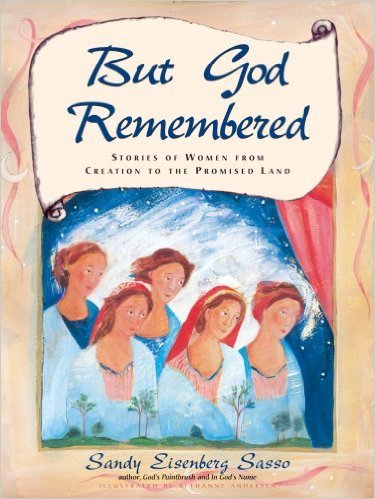








![peter rollins_thumb[1]](https://pastordawn.com/wp-content/uploads/2013/03/peter-rollins_thumb1.jpg)
 pastordawn