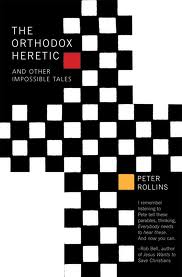
Drawing on John Caputo’s book “The Folly of God,” Peter Rollins articulates four ways of thinking about God. As our adult education class explores relationship to the Divine in a world beyond the creeds of our ancestors, these ways of thinking about God provided us with lenses to see beyond what is all too often a theological darkness. To view more of Pete’s facebook live videos click here or check out his website here
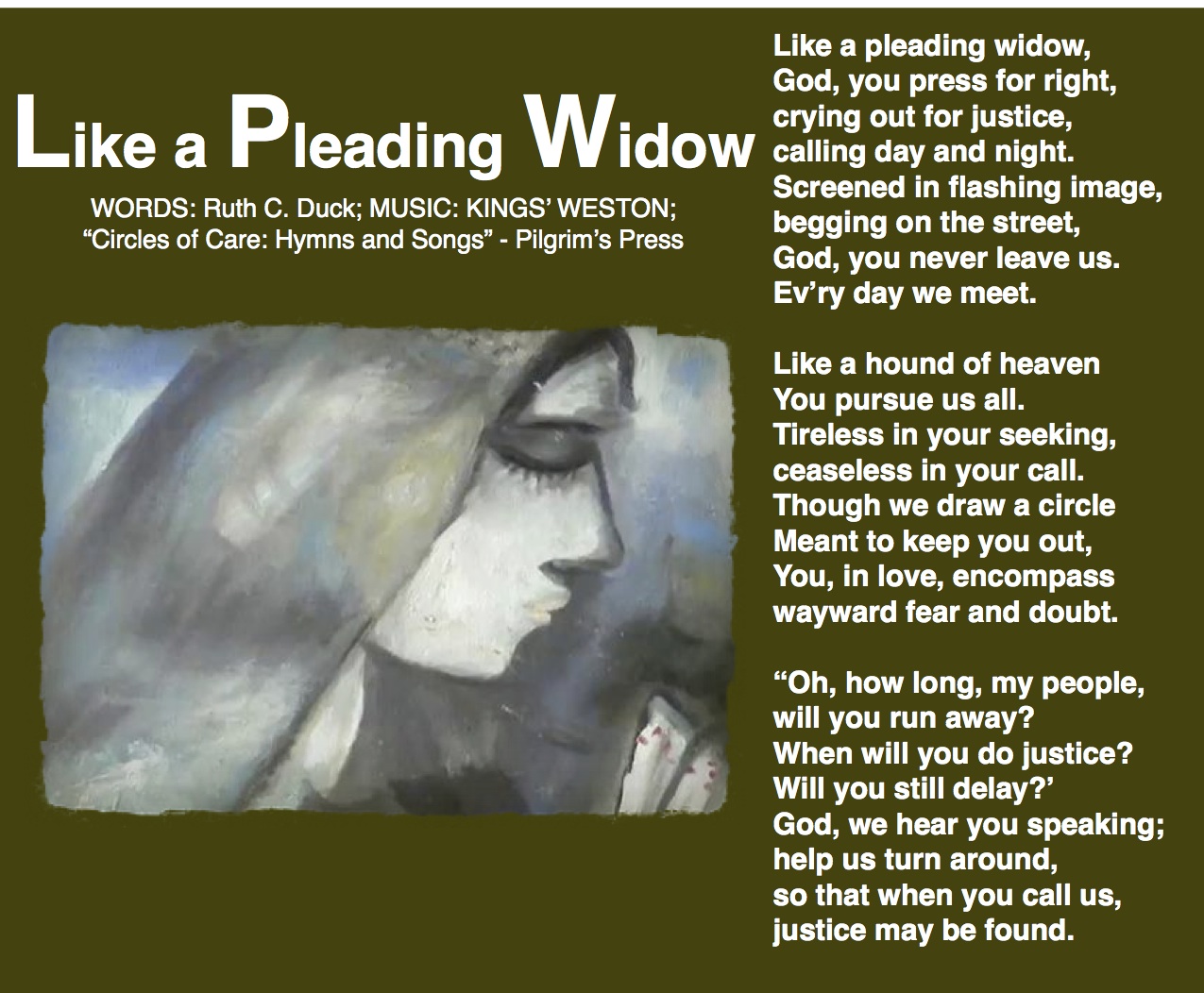
Recorded Oct.16, 2016: Matthew Fox preaches on Luke 18:1-8 at All Saints Church in Pasadena. Fox defines prayer as, “a radical response to life; a profound or deep response to life.” As such, working for justice is the embodiment of our response.
For those of you preaching on the text from Genesis 32:3-31:
You may not be able to tell from looking at me. But let me assure you that you are looking at someone who used to be a champion wrestler. Believe it or not, my wrestling skills actually helped me rise to the level of a world champion wrestler. Well, perhaps I should qualify that statement. When I was an amateur wrestler, I was a world-class champion wrestler. But like so many athletes, when my status changed from amateur to professional, I lost my championship status and although I still qualify as a professional wrestler, and I like to see myself as a champion, I’m no longer what you would call world-class.
Like many professional wrestlers my career began when I was but a child. Growing up I had a very clear advantage as I developed my wrestling skills. You see having a brother who was just 18 months younger than me meant that I had ample opportunities to hone my wrestling skills. My brother and I were always at it. I’ve got to say that even though we shared the same weight class for most of our childhood, when it came to world class wrestling holds, I had him beat. I had this wicked arm-hold sleeper, and that together with my full Nelson followed by a knee-arm press, was guaranteed to have my brother screaming uncle and agreeing to be my obedient servant until in no time at all. For years I reigned as the champion of our little world! I was unbeatable. My brother didn’t stand a chance. My reign as world champion would have continued if it weren’t for the abrupt ending of my amateur status.
One morning when I was about 13 and my brother was 9 and a half, we were going at it, and to his credit my bother had me in an ingenious hold. Somehow, he’d managed to secure me with what we professional wrestlers call an arm bar. That’s where you’re opponent wrenches your arm behind your back and applies just enough pressure to cause pain, but not enough to break anything. But just when Alan was approaching the point of no return, I managed with a feat of superhuman strength to rise up, twist around and swing for all I was worth and connect with what I though must be my brothers chest. I expected that such a thrust would have released my arm from Alan’s iron grip. But he still had me. I was about to hit him again, when for no apparent reason Alan released me from his grip. In an instant I wiggled free, spun around and connected with what I figured would be a fatal blow. Just before my blow connected with it’s victim, I realized that I was doomed.
Ai Weiwei’s exhibit “According to What? at the Art Gallery of Ontario inspired me to look beyond traditional interpretations of Jesus’ parable of the Pleading Widow to see our role as the unjust judge. The gentle breath of a newborn granddaughter enabled me to hear God persistently pleading for justice. Read the sermon manuscript below or Listen to the sermon here:
I spent time exploring the Ai Weiwei exhibit at the Art Gallery of Ontario. It is a powerfully, disturbing, fascinating and compelling exhibit that I know will stay with me for years to come. Ai Weiwei is, according to the AGO’s description, “an artist with a very new kind of visibility. He has transcended his artwork to become a worldly figure who, for many, symbolizes the assertion of freedom of expression against great odds. Using the fame and recognition garnered by his art, Ai Weiwei has taken on issues that could not be raised publically in China.” The exhibit provides a unique window into a part of the world that continues to remain impenetrable.
Ai Weiwei and I are the same age but it is as if our worlds are light-years apart. I first became aware of his work during the Beijing Olympics in 2008. Ai is responsible for the spectacular design of the Beijing Olympic Stadium that has become known as the Bird’s Nest. With his conception of the Bird’s Nest Ai hoped to represent freedom. He saw the Olympics as a splendid opportunity to demonstrate that China was opening up after decades of seclusion with a dismantling of the barriers erected by successive totalitarian régimes. Sadly, Ai’s dreams were dashed as the stadium was constructed and the Chinese government resorted to old methods to drive the poor from their homes in order to build on Olympic sites.
On the opening day of the Olympics, Ai wrote this about his of his decision to boycott the events: “Today China and the world will meet again. People will see that the planet is now smaller than at any time in history, that mankind should bid farewell to arrogance and indifference, to ignorance and discrimination, and understand that we share the same small piece of land. It will be a time to rediscover each other, to share what is good in life, to look each other in the eye and link all 10 fingers. The colourful festival is a time not just for celebration, but also for peace and friendship. To rediscover our future, we should say goodbye to our past. We must bid farewell to autocracy. Whatever shape it takes, whatever justification it gives, authoritarian government always ends up trampling on equality, denying justice and stealing happiness and laughter from the people.
We should also leave behind discrimination, because it is narrow-minded and ignorant, denies contact and warmth; and corrodes mankind’s belief that we can better ourselves. The only way to avoid misunderstanding, war and bloodshed is to defend freedom of expression and to communicate with sincerity, concern and good intentions.
The “Bird’s Nest” National Stadium, which I helped to conceive, is designed to embody the Olympic spirit of “fair competition”. It tells people that freedom is possible but needs fairness, courage and strength. Following the same principles, I will stay away from the opening ceremony, because I believe the freedom of choice is the basis of fair competition. It is the right I cherish most. If we want it to be, today can be a moment of courage, hope and passion. This day will test our faith in the human race, and our determination to build a better future.”
The Chinese government has not reacted kindly to Ai’s public descent and he has felt the weight of their abuse. He remains under house arrest and was not allowed to travel to Toronto for the opening of his exhibit. It is only, Ai’s world renown as an artist and public dissident that protects him from the ultimate fate of so many Chinese dissidents. Ai Weiwei’s courage in speaking out against injustice over and over again, has robbed him of his liberty and put his life in grave danger and yet he continues to publically protest the abuses of his overlords. Ai’s testimony, expressed in his art, speaks volumes to the world and even tough his protests fall on what appear to be the deaf ears of a régime that continues to oppress the people of China, one wonders how long these unjust judges will be able to resist his persistent pleas for justice.Continue reading →
This sermon is inspired by, infused with, and indebted to the work of Kurt Struckmeyer whose essay “The Words of the Eucharist” articulates communion in terms of “liberation” and pointed me to the work of the Roman Catholic liturgist Gabe Huck; with just a little Martin Luther thrown in to insure that “this is most certainly true.” The readings included 1 Corinthians 11:23-26, Mark 14:22-25 and Luke 22:14-20 – listen to the sermon here
Recorded Aug 8/2016 at the Chautauqua Institution.
Diana Butler Bass moves from her latest book Grounded‘s focus on nature to examine the sacredness of the city. Bass explores the theological images that appear in scripture that help us to think in new ways about the urban environments of our day. Seeking transformative images to usurp our tendency toward building empires toward a vision of the “urban cosmos” that empowers its inhabitants to live with justice, love, and humility, Bass paints a seductive vision of a universal city on a hill; a dwelling place of peace. In contrast to the system of globalization which seeks market control in the service of empire, Bass points to cosmopolitanism, a world view based upon our shared common humanity.
Earlier this week I was reminded of the fact that one of the most basic parts of my job of being a pastor is pointing out the sacred. Most of what I do revolves around noticing when we are in the presence of the Holy, the Mystery, the One who is so much more that we are, the Love that lies at the heart of all that is. My job is to point to the sacred Oneness, the Love that many call God and say “there,” or “here,” or “now,” “don’t miss it.” All too often we find ourselves in the company of angels, messengers of the LOVE that IS God, and we don’t even notice it. For the most part we humans can’t quite grasp the magnitude of the Mystery that lies at the very heart of reality and so we do what humans always do: we personify this ONEness, or we use symbols and metaphors to indicate the presence of the sacred in our midst, and we tell stories. Stories that include burning bushes, ladders into the sacred realm, shepherds, lost coins, all sorts of symbols and metaphors that point to the ONE who IS. We have told some of those stories so often that the Reality of the Mystery that these stories were created to bring down to earth, seems ever so distant and far away, lost in the mists of time. The Reality that so many call God has been cast out there far away beyond our reach. So, week after week, I try to bring the stories, symbols and metaphors a little closer to the world that we inhabit so that you might be able to see in your own stories the angels that you have entertained without even knowing it. This morning I’d like to tell you a story that I’ve told twice before. It’s been about seven years since I last told this story, so some of you may not have heard it before and those of you who have heard it before; well we’ve been on quite a journey here at Holy Cross, and you’ve all helped me to understand my own story in a completely new way. The story takes place back in October of 1977, when I was twenty years old. I was young and adventurous. With a rail pass in my hand, a back pack slung over my shoulders and several hundred dollars worth of American Express Travellers cheques in my pocket, I boarded a train in Zurich, Switzerland, bound for Athens, Greece. I was tired. Several months of back-packing in Northern Europe had left me weary. In just five days my rail-pass would expire, so I decided to head for Greece, where the living is easy, where the warm sun, blue skies and equally blue waters held the promise of rest and relaxation. As the train made its way through the Alps, I remembered a similar trip which I had made the year before and I tried to calculate whether my remaining funds would allow me to return to the village of Chania on the island of Crete. I knew that on Crete I could find work. So, I planned to mix a lot of rest and relaxation with just a little work and try to live out the winter on the Mediterranean. As the train rattled through Austria, towards what was then called Yugoslavia, it began to get dark. I was disappointed that my journey through Yugoslavia would be completed in darkness. I remembered my previous journey, by car, through Yugoslavia and how at the time, I had marvelled at the diversity of this strange little country. I remembered men and women driving oxen as they ploughed their fields in much the same way as their ancestors had done. I also remembered my surprise at entering the ultra modern city of Belgrade; the showcase of what was then Tito’s communist regime.I fell asleep pondering the sharp differences between the lives of the poor people in the villages who appeared to live without any modern conveniences at all and the lives of those who inhabited the city of Belgrade with its towering sky-scrapers and streets filled with automobiles. Several centuries seemed to co-exist in Yugoslavia. I was awakened from my dreams by the sound of people shuffling to find their papers as the train conductor instructed us to get our passports and visas ready for customs inspection. When the Yugoslavian custom officials, with their rifles over their shoulders boarded our train they were preceded by men guided by vicious looking German shepherds. Even though I knew that I had all the right papers and that my back pack contained nothing more offensive than some dirty laundry, the sight of the dogs, guns, and uniformed officials struck fear into my heart. I nervously handed over my precious passport to an official who looked younger than my twenty years. He carefully read over the Visa which I had obtained in Zurich the day before; a visa that I could not read because it was written in an unfamiliar language and an unfamiliar alphabet.The young man handed my passport over to an older official and before I knew what was happening, I was being escorted off the train. I was shaking so badly that the young men on either side of me had to hold me up. I am not sure that my feet even touched the ground. After a long lonely wait in a drab windowless room, a woman entered. In broken English she told me that my visa was not in order. I gathered from what she was trying unsuccessfully to explain to me, that my passport contained the visa from my previous visit to Yugoslavia, but was missing an official exit stamp. She demanded to know why there was no exit stamp in my passport. Needless to say, I could not explain. I told her that I had only spent a little over a week in Yugoslavia the year before and then gone on to Greece. I told her that I didn’t know that an exit stamp was necessary and that I couldn’t understand why the Yugoslavian consulate would have issued my current visa if my paper work was not in order. She kept insisting that I needed an exit stamp. After several fruitless attempts to try and get her to tell me what I was supposed to do, I found myself in a small room. Its only window was reinforced with bars. In the darkness of a Yugoslavian holding cell, I sat down and I began to cry. I cried like I have never cried before or since. I was terrified and my sobbing was uncontrollable. After a while I became conscious of a sound that did not come from me. “Susssssssssh.” I realized that I was not alone in the darkness. Someone else was in the room with me. In the shadows, I could make out the shape of a woman. My sobbing began to subside as she continued, “Shussssssh.” The woman began to pace back and forth in our tiny room and gradually her shusssh turned into humming. She hummed unfamiliar tunes that somehow managed to calm me. Occasionally her humming would turn to singing. She sang softly and quietly and my sobbing began to ease. In the shadows I could not tell how old she was. Her hair was long, dark and curly. She wore a plain cotton dress, ankle socks and a beaten up pair of shoes, whose laces flapped back and forth as she paced. It took only a few hours for my travelling companion to contact the British Embassy, sort out the mess and secure my freedom. The sunlight was just beginning to find its way into our room when my captor arrived to release me. As I left, I took a close look at my roommate. I smiled, hoping that she would understand my smile as gratitude for her kindness. Her tender sounds had calmed me and helped me through one of the darkest nights of my life. She returned my smile and added a wave of her own. Then the guard roughly escorted me out into the bright lights of the customs house. Before I boarded a train that would take me safely out of Yugoslavia, I thought that perhaps I should try to help my roommate. Maybe I should try to find out why she was being detained. Perhaps I should try to help her get out. But this was not a place that welcomed questions and the warm sun of Greece beckoned me. And so, I boarded the train and I left. My few hours of captivity – I chalked up to just one more adventure on the road and I rarely thought of my room-mate again.Continue reading →
Over and over again as I have explored the stories handed down to us by our ancestors, I have been struck by the significance of names in ancient literature. The ancient writers used names as a tool to reveal important details. A character’s name in a story can be used to remind us of other characters in other stories that also carried that name, or a character’s name can be taken from a word that has significant meaning. We can use the names of biblical characters to explore deeper meanings within the stories. We would do well to pay attention to the names of biblical characters. The lack of a name is just as important as any given name. I believe that there’s a reason that the anonymous gospel storyteller we call Luke failed to give a name to the woman we find bent over in chapter. The writer we call Luke can be very deliberate about names when he wants to be. I believe that the storyteller wants us to see this woman as our very selves.
So, let’s play along shall we? Stand up. Stand up and bend over. Please, if you are able stand up and lean over 45 degrees. I want you to have a sense of the woman’s predicament. For a few moments, just a few moments I want you to feel the strain on your back, and the burden on your shoulders that that woman felt for 18 years. I want you to look and see how being bent limits your vision. See how your perspective is shorter. Stooping, you cannot easily look into the faces of those around you, you can’t be on the same level with anyone, you can’t see the whole church. It’s not so easy to look toward the horizon to see a glorious sunrise or sunset. Vistas of God’s wondrous works on earth are restricted. So bent out of shape, how could you ever gaze into the awesome stars at night.
Listen to the story one more time: Jesus was teaching in one of the synagogues on the Sabbath. And there appeared a woman with a spirit that had crippled here for eighteen years. How many of us arrive on the Sabbath with spirits that have crippled us? She was bent and quite unable to stand up straight. She was bent….in Greek the word is “kyphotic.” She was a kyphotic woman. The word kyphotic literally translates as bent together or bent with. It is as if this woman is bent in on herself. It’s a picture of someone who has not only borne the yoke but who really owns it in her very body. She is not just a woman with an infirmity but the Scripture says, with the spirit of an infirmity. Whatever it was that had bent her, whatever emotional or physical burden she had borne, the Scripture suggests, ultimately became part of her until her very body was confirmed to its image. There is nothing she can do now to help herself out of the spiritual pretzel her life has become. Each of us knows this infirmity intimately. At one time or other, over and over again, we have all experienced this infirmity in our lives and in our bones.* (Jana Childers “The Kyphoptic Woman” 2005)
Each of us have been bent with the burdens of our relationships, our jobs, our finances, or our health and sometimes even our lovelessness. We have all been this woman who is bent out of shape by her burdens. We have all been bent in on ourselves. But today, I want to take the image of this woman a few steps further to see what she reveals about our culture.
Okay, you can sit down now. Sit back and relax as I tell you the story of two communions; two communions that are not limited in time or space to the actual communions that they reveal. The first communion is indeed my first communion. I was just 15 years old and I’d only just begun to attend church. It was a small Lutheran church and back then they only celebrated communion a few times a year. I wasn’t prepared for communion. I’d only been attending church for a few weeks and I had no idea what it was all about. I still remember wondering what I should do. I was leaning toward just sitting where I was and waiting until after the service so that I could ask the pastor for an appointment to talk to him about what I needed to do in order to make sure that I was prepared properly to go to the table. That’s when my friend’s mother Lola leaned over and asked me if I wanted to go up for communion with them. I whispered that I’d never been to communion before. She smiled and took my hand and said that’s okay, you’re welcome at the table. I didn’t see any table and I was sure that I was missing something. So, I stood there with my hand in hers and listened very carefully as the Pastor told the story, “In the night in which he was betrayed, our Lord Jesus took bread and gave thanks; broke it and gave it to his disciples saying: Take and eat; this is my body, given for you. Do this for the remembrance of me. Again after supper, he took the cup gave thanks and gave it for all to drink….”Continue reading →
Today, Holy Cross had the honour of hosting York Region’s Pride Fest worship. In the wake of the tragedy in Orlando, we did our best to be both sanctuary and celebration. Thank-you to everyone who came together to be LOVE for one another!
Pentecost Sunday is a day for stories about the nearness of God. So we begin with the story of the Tower of Babel from Genesis 11:1-9, then make our way to the anonymous gospel-storyteller we call Luke’s story of the early followers of Jesus’ encounter with the Holy Spirit at Pentecost in Acts 2:1-21, and then the anonymous gospel-storyteller we call John’s story of Jesus’ insistence that he and God are one, before rounding off with Sandy Eisenberg Sasso’s excellent children’s book God In Between.
“In the night in which he was betrayed. Our Lord Jesus took bread, and gave thanks, broke it, and gave it to his disciples, saying: Take and eat this is my body, given for you.”
“In the night in which he was betrayed” these are the words of institution. I remember them well. I also remember the turmoil my pastor created in me when he had the audacity to change those words. It was 1979, I was 22 years old; young and full of ideas, hungry for knowledge and passionately faithful; excited about worship, in love with the church and determined to be the kind of Christian who had the courage not just to talk the talk, but walk the walk. The brand new Lutheran Book of Worship had only been in print for just over a year and as a dedicated member of our congregations Worship Committee I’d been to several workshops to learn all the new fangled changes that this ground-breaking new book introduced into the liturgy; new fangled changes based on a return to the traditions of the church’s glorious past. Three liturgical options, all based on the old Latin Mass of the 11th century. In all three settings of the liturgy these words were clear: “In the night in which he was betrayed. Our Lord Jesus took bread, and gave thanks, broke it, and gave it to his disciples, saying: Take and eat this is my body, given for you.”
So, why oh why, did our pastor get it so very wrong. Over and over again, no matter how hard we tried we could not get him to say the right words. Over and over again, he acted as if thousands of years of tradition meant nothing. Over and over again he insisted upon using different words. We tried to bring him back to the tradition. But it was as if he could not hear our well reasoned arguments. It was as if he didn’t care about the great crowd of witness who had gone before us. It was as if he thought he knew better than the Church; and not just the Lutheran Church but the ancient church; better than the writers of the gospels and St. Paul himself. Maybe even better than the Lord God himself, who after all had in my humble opinion, been responsible for inspiring the writing of these words. “In the night in which he was betrayed. Our Lord Jesus took bread, and gave thanks, broke it, and gave it to his disciples, saying: Take and eat this is my body, given for you.”
Jesus spoke these words, so why did our pastor believe that he had any business tinkering with these words. Sure he had a good reason for wanting to change the words. But if everyone felt free to change the words of the liturgy the next thing you know we’d have chaos; and where would the church be. I argued with him. I pleaded with him. Others argued with him and pleaded with him. Some, even threatened him. Say the words correctly or there’ll be trouble. We’ll report you to the bishop; we’ll leave the congregation. “In the night in which he was betrayed. Our Lord Jesus took bread, and gave thanks, broke it, and gave it to his disciples, saying: Take and eat this is my body, given for you.” And yet over and over again with his back turned to the congregation, because that’s how it was done in those days, when altars were up against the wall, and pastors held up the bread, up high as if God himself were up, there up high above our heads, looking down to ensure that everything was done just so. With the bread held high the pastor would insist upon saying, On the night before he died, Our Lord Jesus took bread, and gave thanks, broke it, and gave it to his disciples saying: Take and eat this is my body, given for you.” I loved that man dearly. He was a sweet, kind, generous, hard working, part-time pastor who scraped out a living as a small time farmer when he wasn’t working in the barn he was there for us. I loved him, but he was just plain wrong. Even if his reasons for being wrong were well intentioned, you just don’t mess with the tradition like that. The words are there, they way they are for reasons beyond our understanding. They are after all divinely inspired. And this is the Eucharist after all; the meal that lies at the very heart of who we are.Continue reading →
Pentecost is the birthday of the Church. Birthday celebrations lend themselves to the telling of stories. So, we begin with a parable by the radical theologian Peter Rollins. So, sit back and try to imagine that you live not at the beginning of the 21st century but at the middle of the 21st century; say about 2050. The world has changed quite a bit. “It seems that in the future laws will be passed declaring that all those who follow the teachings of Jesus are subversive. Churches have been banned and to be a follower of Jesus is illegal. You have just been accused of being a believer. You’ve been arrested, and dragged before a court. You have been under clandestine surveillance for some time now, and so the prosecution has been able to build up quite a case against you. They begin the trial by offering the judge dozens of photographs that show you attending underground church meetings, speaking at religious events, and participating in various prayer and worship services. After this, they present a selection of items that have been confiscated from your home: religious books that you own, worship CDs, and other Christian artifacts. Then they step up the pace by displaying many of the poems, pieces of prose, and journal entries that you had lovingly written concerning your faith. Finally, in closing, the prosecution offers your Bible to the judge. This is a well-worn book with scribbles, notes, drawings, and underlinings throughout, evidence, if it were needed, that you had read and reread this sacred text many times. Throughout the case you have been sitting silently in fear and trembling. You know deep in your heart that with the large body of evidence that has been amassed by the prosecution you face the possibility of a long imprisonment or even execution. At various times throughout the proceedings you have lost all the confidence and have been on the verge of standing up and denying Christ. But while this thought has plagued your mind throughout the trial, you resist the temptation and remain focused.
Once the prosecution has finished presenting their case the judge proceeds to ask if you have anything to add, but you remain silent and resolute, terrified that if you open your mouth, even for a moment, you might deny the charges made against you. Like Christ you remain silent before your accusers. In response you are led outside to wait as the judge ponders your case. The hours pass slowly as you sit under guard in the foyer waiting to be summoned back. Eventually a young man in uniform appears and leads you into the courtroom so that you may hear the verdict and receive word of your punishment. Once you have been seated in the dock the judge, a harsh and unyielding man, enters the room, stands before you, looks deep into your eyes and begins to speak. “On the charges that have been brought forward I find the accused not guilty.”
“Not guilty?” your heart freezes. Then, in a split second, the fear and terror that had moments before threatened to strip your resolve are swallowed up by confusion and rage. Despite the surroundings, you stand defiantly before the judge and demand that he give an account concerning why you are innocent of the charges in light of the evidence. “What evidence?” asks the judge in shock.
“What about the poems and prose that I wrote?” you ask. “They simply show that you think of yourself as a poet, nothing more.” “But what about the services I spoke at, the times I wept in church and the long, sleepless nights of prayer?” “Evidence that you are a good speaker and an actor, nothing more,” replied the judge. “It is obvious that you deluded those around you, and perhaps at times you even deluded yourself, but this foolishness is not enough to convict you in a court of law.” “But this is madness!” you shout. “It would seem that no evidence would convince you!” “Not so,” replies the judge as if informing you of a great long-forgotten secret. “The court is indifferent toward your Bible reading and church attendance; it has no concern for worship with words and a pen. Continue to develop your theology, and use it to paint pictures of love. We have no interest in such armchair artists who spend their time creating images of a better world. We exist only for those who would lay down that brush, and their life, in a Christlike endeavor to create a better world. So, until you live as Christ and Christ’s followers did, until you challenge this system and become a thorn in our side, until you die to yourself and offer your body to the flames, until then, my friend, you are no enemy of ours.” “
Rollins insists that this parable is true right here and right now. We don’t have to imagine a world were Christianity is illegal for this parable to be true. Rollins insists that: “If you or I were really to take the teachings of Jesus seriously, would we not sooner or later, find ourselves being dragged before the authorities? If we were really to live a life that reflected the subversive and radical message of love that gives a voice to the voiceless and a place to those who are displaced, if we were really to stand up against systemic oppression perpetrated by those in power, then would we not find ourselves on the wrong side of the lawmakers?”Continue reading →
With readings from Julian of Norwich, Julia Ward Howe and the Gospel according to John 17:20-26, our Mothers’ Day was infused by Sophia! I am indebted to John Shelby Spong’s “The Fourth Gospel: Tales of a Jewish Mystic and John Philip Newell’s “Rebirthing of God: Christianity’s Struggle for New Beginnings” for insights beyond my own imaginings.
First Reading Revelations of Love, by Julian of Norwich
Chapter 26:
Again, our Lord showed himself to me, this time more glorious than I had seen him before. I learned that our soul will never find rest until it comes to the fullness of Christ’s joy.
So Christ said, again and again,
“I AM the one.
I AM the one.
I AM the one most honoured.
I AM the one you love.
I AM the one you enjoy.
I AM the one you serve.
I AM the one you long for.
I AM the one you desire.
I AM the one you yearn for.
I AM the one who is everything.
I AM the one whom the holy church preaches and teaches.
I AM the one who showed myself to you.”
There were so many words, I couldn’t understand them all. But the joy I had in listening to those words went far beyond anything I could think or desire. I won’t try to explain them, but, as the grace of God gives you love and understanding, you will know what God means.
Second ReadingThe Founder of Mothers’ Day
Julia Ward Howe’s
Mothers’ Day Proclamation (1870)
Arise, then, women of this day!
Arise, all women who have hearts, whether your baptism be that of water or tears!
Say firmly: “We will not have great questions decided by irrelevant agencies.
Our husbands shall not come to us, reeking with carnage, for caresses and applause.
Our sons shall not be taken from us to unlearn all that we have taught them of charity, mercy and patience.
We women of one country will be too tender of those of another to allow our sons to be trained to injure theirs.”
From the bosom of the devastated earth, a voice goes up with our own.
It says, “Disarm, Disarm!”
The sword of murder is not the balance of justice.
Blood does not wipe out dishonor, nor violence indicate possession.
As men have often forsaken the plow and the anvil at the summons of war, let women now leave all that may be left of home for a great and earnest day of counsel.
Let them meet first, as women, to bewail and commemorate the dead.
Let them solemnly take counsel with each other as to the means whereby the great human family can live in peace, each bearing after his own time the sacred impress, not of Caesars but of God.
In the name of womanhood and of humanity, I earnestly ask that a general congress of women without limit of nationality may be appointed and held at some place deemed most convenient and at the earliest period consistent with its objects, to promote the alliance of the different nationalities, the amicable settlement of international questions, the great and general interests of peace.
SERMON:
When I was just a kid, my mother would ask me a question that would be the beginning of a conversation, a routine of sorts that comes out of my Mom’s own childhood in Northern Ireland. The routine goes something like this. Mom would ask me: “How much do you love me?” and I would answer as I’d been taught to answer: “A big bag of sugar!” To which my Mom would reply, “I love you more, I love you two bags of sugar!” To which I would reply, that I loved my Mom, “Five big bags of sugar!” Over the years I’ve met lots of people from Belfast who measure love in bags of sugar. As near as I can tell this loving conversation has something to do with sugar’s ability to make all things sweet and the fact that over the generations sugar was in short supply because most people simply couldn’t afford to buy sugar. I’ve also been told that during and after the two World Wars sugar was rationed, so a big bag of sugar was more sugar than most people ever saw. Sugar was a much sought after satisfying treat, that was essential to a happy life, so measuring love in bags of sugar is something that to this day, my great-nieces and nephews still learn from their elders. But these days even children know that sugar isn’t what it used to be. We all know too well the dangers of a big bag of sugar. Sugar in large quantities is bad for us! Loving someone today, often means limiting their sugar intake. I suspect that expressing love in terms of bags of sugar will soon go the way of Ring-around-the-rosie…while children still sing it they have no idea that it is all about the black plague that saw millions of children fall to their death…. Love measured in bags of sugar, like packets full of posey, is a thing of the past…vaguely remembered by only a few. Given a few generations and our ways of expressing things, like language changes over time. Take for example our way of expressing the Divine, the Source of All that IS and all that Ever Shall be, the names we give to the ONE who is responsible for our Creation, the ONE in whom we live and move and have our being, the ONE we call God, has been known by many names over the centuries. The earliest name for the ONE credited with our Creation is quite simply “El”…”El” is if you will, the generic name for “God” El a word found in both the Ancient Sumerian and Canaanite languages translates as, god. In the ancient manuscripts of what we know call the Hebrew Scriptures, but our parents called the Old Testament, the earliest expression used for the God we were raised to worship is, El Shaddai, which is all too often incorrectly translated into English as God Almighty, but which quite literally translates into english as “breasted one” or the more accurate translation, “She Who Has Breasts”. Elohim, often incorrectly translated as LORD, is the feminine plural word for “majesty”. El Shekinah, is the Ancient Hebrew expression for the presence of God, which quite literally means, “she who dwells among us”. Chokhma is another Ancient Hebrew expression which was used to express the feminine spirit of the Divine which was later translated in to Greek as Sophia, we translate as Wisdom. Ruach is the Ancient Hebrew way of expressing the very essence of God, in the Scriptures it is used in Genesis as the Ruach Elohim, which literally translates as the feminine, majestic “breath, wind, or spirit of God, which we now express as the Holy Spirit. All these feminine ways of expressing what is meant by the word God, were supplemented with images of God as a mother eagle, a mother bear, a mother hen, a birthing mother, a suckling mother, a comforting mother, a woman in labour, and yes even as a woman looking for her lost coin; all these feminine ways of expressing the very nature of our God, were lost to us for generations. Slowly, we are rediscovering these old ways of understanding the nature of our God who is LOVE. LOVE infinitely sweeter than any old bag of sugar. So, today as we read the words put into the mouth of Jesus by the anonymous gospel-storyteller that we call John, in which Jesus insists that he and God are ONE, I can’t help wondering about the ways in which this expression has changed over time. Our Gospel text this morning comes from what is commonly called Jesus’ farewell discourse or the High Priestly Prayer. The story-teller we call John puts Jesus in the garden at Gethsemane just before the events that happen on what we call Good Friday. In this discourse Jesus prays for his followers, “I pray also for those who will believe in me through their message, that all may be one, as you, Abba, are in me and I in you; I pray that they may be one in us, so that the world may believe that you sent me. I have given them the glory you gave me that they may be one, as we are one—I in them, you in me—that they may be made perfect in unity. Then the world will know that you sent me, and that you loved them as you loved me. That we may be ONE…so often this fervent prayer has been interpreted as a plea for unity. Listen to what our friend Jack Spong has to say about the all too common ways this discourse has been used by Jesus’ followers: Jack writes: “The “high priestly prayer”..proceeds in three parts. The first is a prayer that Jesus utters for himself, the second is a prayer he prays for the disciples and the third is a prayer that is offered for those throughout history who will believe because of the witness of the disciples. The primary request in this prayer is that unity be achieved among believers. The desired outcome is not ecclesiastical unity,” (that is to say the unity of the church), which is how this prayer has been interpreted by the church. That interpretation, “that usage is always in the service of institutional power. Nor is it content or doctrinal unity, as various councils of the church have so often implied and sought to impose. It is not a unity imposed on any basis from outside the service of any agenda. No, the unity of which this prayer speaks is the oneness of the human with the divine that has been the constant theme of this gospel. It is the unity of the vine with the branches. That unity is found in understanding God, not as an external being, but as the essence of life. John even makes Jesus use the third-person name and title for himself to make his point: Unity comes in knowing “the only true God and Jesus Christ whom you have sent.” The Word of God comes from God, reveals the meaning of God and returns to God. It is a mystical experience of oneness-not a oneness in which individuality is lost, but a oneness in which individuality is affirmed, security is surrendered and new being is entered.” What our friend Jack Spong is trying to open us up to is the way in which Jesus followers understood Jesus to be opening humanity up to a new understanding of what it means to be human. A way of being in the world that understands our origins in the ONE, our existence as ONE, and our passage into the ONE. This radical expression of our humanity as being ONE with the divine, or seeing divinity in humanity changes everything. But most importantly, it changes the way in which we relate to God. God is no longer expressed as some far off distant super-natural being, but rather as an intimate, integral, being, in which we live and move and have our being. I reminded you at the beginning of our worship that today is also the feast day of Julian of Norwich, a 14th century woman who understood this ONEness in the same radical way. Julian of Norwich insisted that we are not just created from afar by a distant Creator. We are born from the very womb of the divine. John Philip Newell writes of Julian: “This is why Julian so loves to refer to God as Mother as well as Father. She sees us as coming forth from the essence of the ONE who is the Source of all things. What does it mean that we are made of God rather than simply by God? In part it means that the wisdom of God is deep within us, deeper than the ignorance of what we have done. It is to say that the creativity of God is deep within us, deeper than any barrenness in our lives or relationships, deeper than any endings in our families or our world. Within us—as a sheer gift of God—is the capacity to bring forth what has never been before, including what has never been imagined before. Above all else, as Julian says, the love-longings of God are at the heart of our being. We and all things have come forth from the ONE. Deep within us are holy, natural longings for oneness, primal sacred drives for union. We may live in tragic exile from these longings, or we may have spent a whole lifetime not knowing how to truly satisfy them, but they are there at the heart of our being, waiting to be born afresh.” We are not just made by God, we are made of God. Think about it. You and I are made of God. When we begin to see our fellow human beings as ONE with God, this has profound implications for how we relate to one another. For as much as you do unto the least of these you do unto me. Jesus is teaching a whole new way of being in the world. Jesus knew this intimacy, this ONEness with God, and sought to instil the wisdom of this Unity, this divinity that finds expression in humanity, into his followers so that all would know the truth of our ONEness in the unity that finds expression in each of us. The implications for how we live together are enormous. Bags and bags of sugar could not even begin to sweeten life in the way our ONEness with the LOVE that we call God offers to those who embrace this unity. God is not an external, distant entity; God is a life we enter, a love we share, the ground in which we are rooted. The call of Christ is not into religion, but into a new mystical oneness. Jack Spong puts it this way: “The good news of the gospel, as John understands it, is not that you—a wretched, miserable, fallen sinner—have been rescued from your fate and saved from your deserved punishment by the invasive power of a supernatural, heroic God who came to your aid. Nowhere does John give credibility to the dreadful, guilt-producing and guis-filled mantra that “Jesus died for my sins.” There is rather an incredible new insight into the meaning of life. We are not fallen; we are simply incomplete. We do not need to be rescued, but to experience the power of an all-embracing love. Our call is not to be forgiven or even to be redeemed; it is to step beyond our limits into a new understanding of what it means to be human. It is to move from a status of self-consciousness to a realization that we share in a universal consciousness. John’s rendition of Jesus’ message is that the essence of life is discovered when one is free to give life away, that love is known in the act of loving and that the call of human life is to be all that each of us can be and then to be an agent of empowering others to be all that they can be.” Jack Spong, like Julian before him, like the anonymous gospel-storyteller we call John, see in Jesus the expression of the ONEness of which we are made. How much do I love you? Well lets just say that once, I spoke like a child, I thought like a child. But when I became an adult, I put the ways of childhood behind me. Where once a bag of sugar, was enough to express my love, now I am beginning to understand that I was not just created by love, I am created of love, a love beyond my ability to imagine, a love in which I live and move and have my being. The love that we call God, El Shaddai, the breasted one, Elohim, majesty, El Shekenia, She Who Dwells Among us, Sohpia, Wisdom, Mother of us all, Yahweh, I will be who I will be. The I AM, in which I live and move and have my being. And just as, if not more importantly, the I AM in which all humanity lives and moves and has being. The implications of this way of expressing Divinity and understanding humanity are as immense as the LOVE that makes us ONE. Amen.
Mothers’ Day is not on the church’s liturgical calendar and yet the statisticians tell us that church attendance on Mothers’ Day is surpassed only by Christmas and Easter. Worship leaders who fail to mark the importance of this day do so at their peril; the same kind of peril that compels so many reluctant offspring to accompany their mothers to church. However, a simple liturgical nod in the direction of mothers or an over-the-top sentimental sermon all too often fails to capture the magnitude of the day’s significance in the history of women. Planning the liturgy is challenging enough, but writing the sermon is a challenge which promises to keep me toiling away into the dark hours of this coming Saturday. So, for my colleagues who share a similar plight: below you will find links to previous attempts to commemorate this day of days. Feel free to share your efforts with me in the comments section. Please! I need all the help you can offer!!!
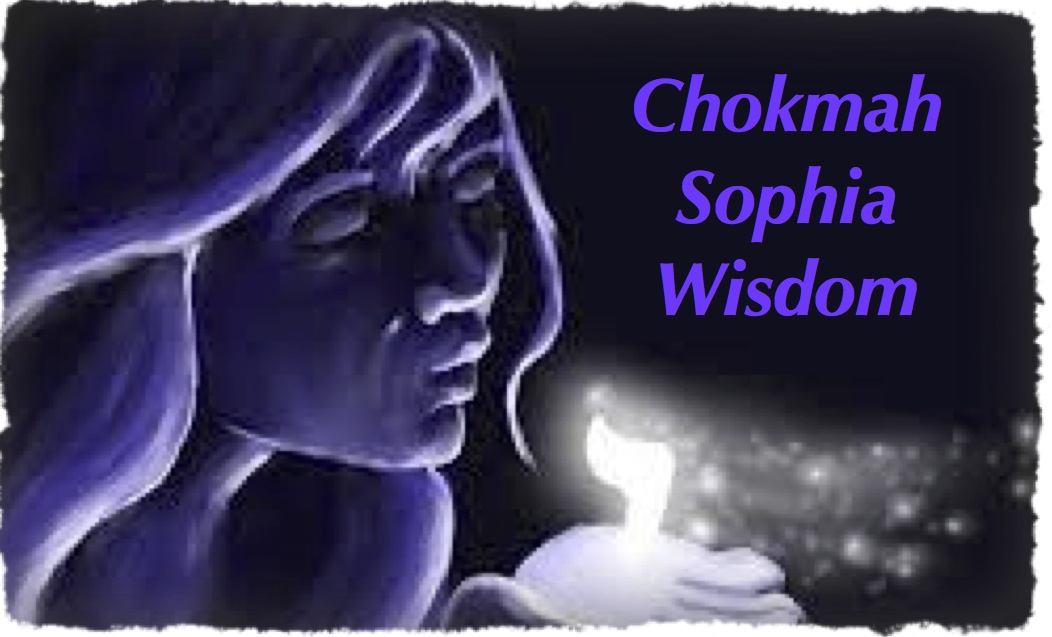
El Shaddai, Eloheim, Rauach, Chokma, Rechem, YAHWEH, these are the ancient biblical Hebrew names for the reality that we call God. El Shaddai which translates as “she – breasted one, ”Eloheim which is the feminine plural for “majesty,” Rauach a feminine word for “wind” “breath” “spirit,” Chokma, a feminine word for “wisdom.” Rechem also a feminine word which translates as “ womb love” mother love, compassion. YAHWEH – I AM, WHO AM or I shall be who I shall be Ancient biblical Hebrew names for the reality that we call God.
During the time of Jesus there was another name for God that was used by the Jewish people: El Shekinah which translates as “she who dwells among us.” There were other words for the reality that we call God which the writers of the New Testament would have been so familiar with; Greek words like: Theos — a feminine noun which translates simply as “God,” Sophia – which is the Greek translation of the Hebrew word Rauach for “Wisdom,” Pnumena – the feminine noun which is the Greek translation of the Hebrew word Chokma which means: wind, breath or spirit. That these names for the reality that we call God are all feminine nouns is remarkable when you look at how these words were translated by the Roman Empire into Latin: Patris et Filii et Spiritus Sancti Father, Son, and Holy Spirit. Stripped of her breasts and her womb-love, the One we call God, the Chokma who Dwells among us, is given the aura of a powerful young Roman God as the word for breasts is translated as “Almighty” and whose Rechem – womb-love is reserved for those who fear HIM.
Yet despite the Empire’s attempt to penetrate the sacred feminine with masculinity’s youthful vigor, (yes, I did mean that pun) this reality we call God will age over the centuries to become a bearded old grandfather-like figure who lives up there somewhere, and woe to those who dare to expose His transgendered history; for God is male and that’s that. The image of the great I AM erected by the male hierarchy to be worshipped and glorified, forever and ever, as Father, Son, and yes, even the nebulous Holy Spirit becomes HE in order to penetrate His Bride the church. No room for talk of breasts or womb as SHE who dwells among us, Chokma, Sophia, Wisdom is banished to the mists of time. That is until women began to be admitted to the sacred halls of the academy; until women began in significant numbers to study the ancient texts and unravel the ancient languages and begin to question the work of their male predecessors and contemporaries. Female academics, female theologians, and female translators’ questions lead to the discover of the long hidden, often denied, and ever present breasts and womb which now that they have been exposed will never again be cast out from their dwelling place among us. Wisdom, Sophia has been emancipated she is woman hear her roar.Continue reading →
For those who were not able to attend our Pub Night, here’s the video that kicked off our conversations. Diana Butler Bass, speaking at All Saints’ in Pasadena in December of 2015 introduces her book Grounded: Finding God in the World, A Spiritual Revolution. The struggle between the conventional images of God and the emerging images of God sparked some interesting conversation!








 pastordawn
